CIA Director’s Visit to Cuba Signals Strategic Intent
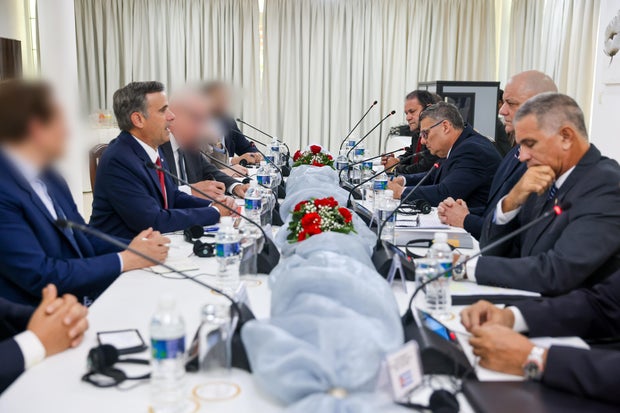
CIA Director John Ratcliffe recently made a visit to Havana, engaging in a rare meeting with senior Cuban officials. This visit included the presence of a paramilitary leader involved in the U.S. mission earlier this year to capture former Venezuelan leader Nicolás Maduro. This operation led to the loss of 32 Cuban military and police officers, highlighting the tensions between the countries.
Ratcliffe’s introduction of the paramilitary leader to the Cuban officials seemed a deliberate move. It underscored the severity of actions taken against a key Cuban ally. This may have been intended as a strategic signal to Havana amidst the fraught relations between the U.S. and Cuba.
The CIA has declined to offer any comment on the visit and its implications.
The visit to Cuba comes amid increased pressure from the U.S. administration, which has imposed significant tariffs on countries exporting oil to Cuba. This has resulted in acute fuel shortages on the island. Secretary of State Marco Rubio stressed the need for economic and political reforms. President Trump has even proposed a “friendly takeover” of Cuba, echoing lingering U.S. frustrations since the communist government took power in 1959.
In the aftermath of the Maduro mission, Rubio called attention to the close ties between Cuba and Venezuela. He asserted that Venezuela’s spy agency was heavily influenced by Cuban personnel, raising concerns in Havana about U.S. intentions.
A CIA official conveyed that Ratcliffe delivered a message to the Cubans, indicating the U.S.’s willingness to engage on economic and security matters, contingent on Cuba making sweeping changes.
During the meeting, Ratcliffe interacted with Raúl Rodriguez Castro, known as “Raulito,” a direct descendant of the former Cuban President Raúl Castro. Shortly afterward, a U.S. federal court indicted the 94-year-old elder Castro on charges related to the downing of two planes in 1996.
This meeting revives memories of the intense Cold War dynamics that shaped U.S.-Cuban relations for decades. Cuban officials likely retain memories of past American covert attempts to destabilize Fidel Castro’s government, notably the Bay of Pigs invasion and Operation Mongoose.
Current relations remain influenced by this disputed history. Rubio highlighted Cuba’s acquisition of weapons from Russia and China, as well as hosting intelligence operations for these nations.
The backdrop to Ratcliffe’s discussion emphasized Cuba’s role in hosting adversaries within the Western Hemisphere. Amidst increasing tensions, the U.S. intelligence community considers potential Cuban responses to military action.
Cuban President Miguel Díaz-Canel Bermúdez claims Cuba poses no threat to the U.S., yet warned of dire consequences should military strikes occur against Cuba.