Unique Genetic Diagnosis Brings Clarity to a Teen’s Health Struggles
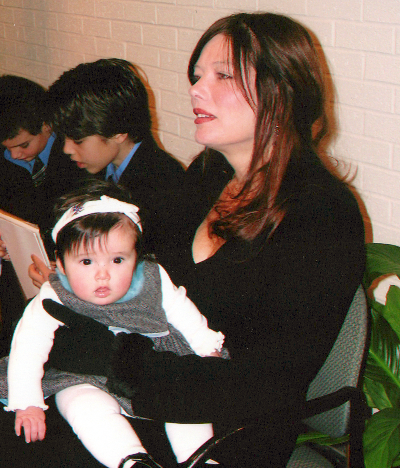
At 18, Lucia Adarve had encountered more doctors than most people do in their entire lives. From birth, she faced numerous challenges: missing developmental milestones, experiencing seizures leading to collapses and concussions, and having difficulties with communication and education. She struggled with coordination and had heightened sensitivity to stimuli like loud noises and bright lights.
Determined to uncover the cause of her condition, her mother, Lisa Adarve, sought answers diligently. Over the years, Lucia received a myriad of diagnoses, ranging from epilepsy to fibromyalgia. However, none of these diagnoses completely explained her symptoms, and treatments proved ineffective.
“Her stack of medical records was getting bigger and bigger,” said Lisa. “I thought, ‘There’s no way this one child has all of these labels and issues. There has to be something underlying.’
Lisa’s concerns prompted her to homeschool Lucia starting in the third grade. In addition to standard subjects, Lisa introduced unique methods like knitting for motor skills and horseback riding to enhance balance. Despite the support, Lucia’s health challenges persisted. She dealt with fainting spells, injuries, and anemia, becoming disillusioned with medical appointments.
“No one listened to me,” Lucia said. “I didn’t see doctors as a good thing. I saw them as something I went to occasionally that didn’t do anything.”
Discovering a Rare Condition
The breakthrough came in 2025, when neurologist Dr. Todd Arthur at Cincinnati Children’s Hospital took a keen interest in Lucia’s case. Listening attentively, he suggested referrals that included the Cleveland Clinic’s Undiagnosed Disease Clinic.
Dr. Adnan Alsadah, director of the clinic, highlighted the lengthy journey many patients endure before reaching a diagnosis. The clinic employs advanced technologies like whole genome sequencing to aid in this process.
Following a comprehensive assessment, Lucia’s genetic sample revealed a mutation on the PPP2R5D gene, diagnosing her with Jordan syndrome. This rare neurodevelopmental disorder affects fewer than 500 individuals globally. It can lead to challenges in movement, speech, and learning, as well as seizures, autism, and ADHD. As individuals age, parkinsonisms can develop.
“I knew something was different,” Lisa expressed upon receiving the diagnosis. “These things were real. I wasn’t being overprotective.”
Lucia’s reaction was more nuanced. Initially, she felt relieved, but later experienced frustration over the lengthy process to obtain an accurate diagnosis.
Creating a Path Forward
The diagnosis enabled a strategic approach for Lucia’s care. Her seizures decreased with medication, and a team at the Cleveland Clinic developed a comprehensive management plan for her symptoms.
Lucia engaged with advocacy groups and support networks, finding community and purpose. She participated in a clinical trial examining new treatments for Jordan syndrome. With a more accurate diagnosis, she has begun reclaiming aspects of her former lively personality.
“She knows what she has, so she can kind of stand up and advocate for herself,” Lisa stated. Lucia is pursuing a degree in criminal behavioral psychology, one of the few Jordan syndrome patients able to live with considerable independence.
“I was extremely lucky to get my mom,” Lucia reflected. “She’s one of the best people I know. She worries way too much, and she is the best person to have during this.”