Closing Arguments and Jury Deliberations in Lindsay Clancy Trial
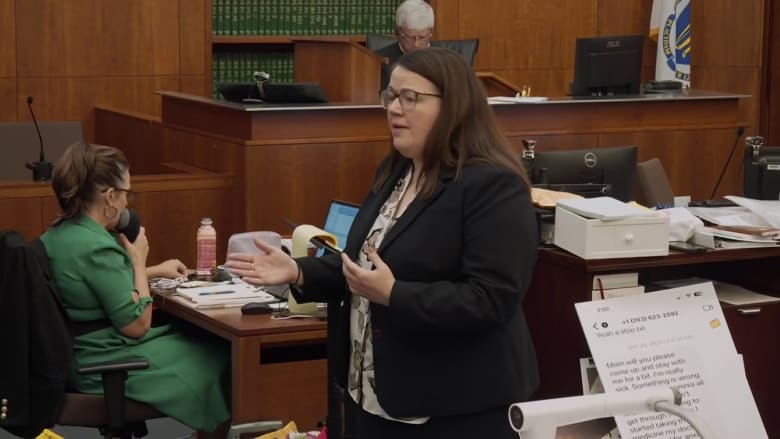
The trial involving Lindsay Clancy, accused of the murder of her three children, is reaching its conclusion as jury deliberations begin. Judge William Sullivan has provided the jury with detailed instructions on considering the charges against Clancy. A foreperson was chosen, and alternates were selected randomly.
Jury Instructions and Deliberations
Judge Sullivan addressed the jurors, expressing confidence in their ability to deliver a fair verdict. He noted their dedication throughout the trial.
Prosecution’s Closing Argument
Prosecutor Jennifer Sprague concluded her closing remarks by emphasizing Clancy’s guilt, referencing how her children were left on the basement floor. Sprague argued this act demonstrated ‘extreme atrocity and cruelty,’ necessary for a first-degree murder conviction.
Sprague addressed criticisms regarding insinuations about Clancy being advised to fabricate hearing voices and asserted that no such claims were made by the prosecution’s witnesses.
In discussing Clancy’s suicide attempt, Sprague argued that the lack of depth in her wounds suggested she was not entirely committed to ending her life, challenging the defense’s narrative.
Invoking the Andrea Yates case prompted an objection from the defense, leading the judge to ask Sprague to shift focus.
Defense’s Argument
Defense attorney Kevin Reddington argued that Clancy was not guilty due to a mental disease or defect, claiming the prosecution couldn’t prove otherwise. He referenced Clancy’s journal entries, drawing a parallel with the movie ‘The Shining’.
Reddington reiterated Dr. Phillip Resnick’s testimony, asserting Clancy’s psychotic state at the time of the killings. He criticized prosecution witnesses as lacking conclusive evidence to counter Resnick’s findings.
The defense highlighted Clancy’s mental condition and suicide attempt, emphasizing the severity and legitimacy of her distress.
Reddington asserted Clancy had previously demonstrated no signs of psychosis and had struggled with mental health issues without receiving appropriate help.
Arguments included pointing out Clancy’s access to medical care and support, challenging claims that she lacked resources or was overmedicated.
The defense stressed Clancy’s role as a functioning mother, arguing she did not mention her troubling thoughts to healthcare providers, indicating she understood right from wrong.
Reddington concluded by reminding jurors of Clancy’s life before the incident, portraying her as a caring mother who experienced a sudden downturn due to inadequate medical care and medications.
Prosecution’s Case
The prosecution countered that Clancy had an abundance of support and medical care. Sprague argued Clancy refused critical mental health treatments and manipulated situations to facilitate the killings.
The prosecution argued Clancy was aware of her actions and responsible for planning the incident on the night of January 24, 2023.
Jury’s Task
The jury’s role is to determine Clancy’s criminal responsibility for the deaths of her children. They must decide whether Clancy acted under ‘extreme atrocity or cruelty’ and whether she comprehended the wrongfulness of her actions due to a mental disease or defect.