Confrontations in Yemen Impact Global Trade and Regional Stability
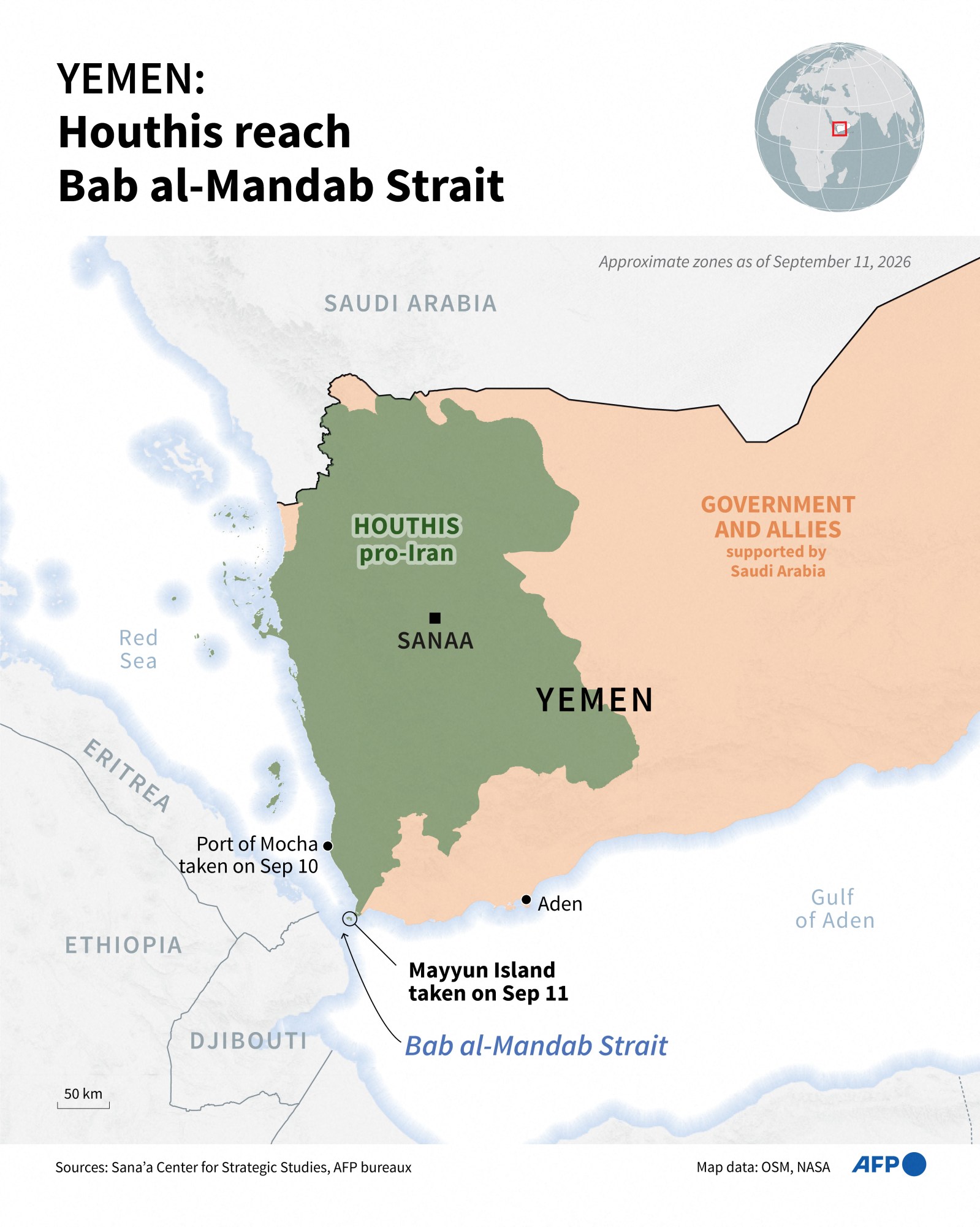
The rapid advance by the Yemeni Ansar Allah movement, commonly known as the Houthis, has positioned a strong ally of Iran along the Red Sea coast. This strategic control poses significant threats to a key maritime corridor linked to the Axis of Resistance. The Bab el-Mandeb strait, located between Yemen and Djibouti, connects the Red Sea to the Gulf of Aden and further to the Mediterranean Sea via the Suez Canal. Spanning a mere 16 miles at its narrowest point, Ansar Allah has previously demonstrated the capacity to halt global shipping operations from much greater distances.
The retreat of Saudi-supported Yemeni government forces may pave the way for a Houthi blockade utilizing missiles and drones, potentially disrupting about 8.1 million barrels per day of oil and petroleum product exports. This amount constitutes approximately 10% of the global maritime oil trade. The Bab el-Mandeb serves as an alternative shipment route, especially since Iran has limited shipping through the Strait of Hormuz following military actions by the United States and Israel starting February 28.
“If the Houthis consolidate control over Yemen’s western coast and the approaches to the strait, this becomes much more than a Yemeni issue,” noted Hisham al-Omeisy, a Yemeni analyst, reflecting on the broader implications.
Triple Threat to Trade and Security
Omeisy pointed out that Ansar Allah’s forces need not close the Bab el-Mandeb entirely to exert influence. They only need to make conditions perilous enough to deter shipping companies from passing through, which would lead to increased insurance costs, rerouted ships around Africa, longer delivery times, and ultimately higher prices for goods.
This situation is compounded by ongoing tensions in the Strait of Hormuz. Pressure from Iran and threats from the Houthis create simultaneous challenges for maritime passages around the Arabian Peninsula. According to Nitya Labh from Chatham House, the Bab el-Mandeb previously handled 30% of global container traffic before the conflict began.
Countries like Saudi Arabia have adapted by diverting oil exports from the Gulf to the Red Sea through overland pipelines, heightening the Red Sea’s significance within global energy markets. However, even these overland routes remain vulnerable. Reports have surfaced of damage from Ansar Allah attacks on Saudi Arabia’s east-west pipeline.
An emerging crisis in the Red Sea also jeopardizes the Suez Canal, described by Labh as the final viable maritime path through the Middle East. A deteriorating regional security landscape has caused a notable drop in traffic through the vital waterway, recalling a pre-1869 era when ships navigated via South Africa’s Cape of Good Hope.
In October 2025, after a U.S.-mediated truce between Israel and Hamas was achieved, shipments eventually resumed to wartime highs. However, renewed instability threatens this recovery. The repercussions for companies and consumers are substantial, as rerouting involves prolonged transit times and heightened costs.
Labh stressed that new shipping paths raise the risk of piracy and accidents and add substantial costs, impacting economizes worldwide. Higher inflation rates could ensue, and certain imports may become prohibitively expensive for small island nations.
Saudi Arabia’s Strategic Dilemma
Saudi Arabia faces mounting threats from Iran to the east, allies in Iraq to the north, and Ansar Allah to the south and west. The Houthis entrenched across Yemen pose a direct military risk. Sanaa-based journalist Hussein Albukhaiti emphasized the repercussions of any intervention in Yemen, potentially prompting the Houthis to block Red Sea shipping altogether in response.
The Red Sea serves as a strategic weapon for Ansar Allah, Albukhaiti noted.
An escalation could involve broad attacks on Saudi infrastructure, including Aramco’s facilities, airports, and ports, combined with ground assaults on southern cities like Najran, Jizan, and Asir. These actions threaten Saudi Arabia’s stability. Furthermore, Ansar Allah forces have launched strikes against southern Saudi cities and key energy assets. Saudi air operations targeting Western Yemen are ongoing.
Saudi Arabia’s intervention in Yemen dates to 2015, following Ansar Allah’s capture of the capital and the government going into exile. The struggle between Ansar Allah-aligned authorities and the internationally recognized government led by President Rashad al-Alimi from Aden underscores the political complexities.
Tensions have intensified since regional conflicts erupted, with the U.S. and Israel conducting military activities against Iran. Ansar Allah alleged Saudi strikes on Sanaa International Airport, as its delegation returned from Tehran. Following past threats to obstruct Red Sea access for Israel, recent actions demonstrate Ansar Allah’s readiness to disrupt maritime activities and apply pressure on Saudi Arabia and its Yemeni allies.
Reflecting on the diminishing frontlines, Hisham al-Omeisy highlighted the operational shortcomings faced by Saudi-backed forces. Disunity and ineffective coordination compounded by Ansar Allah’s tactical maneuvers have overwhelmed government positions swiftly.
Newsweek reached out for responses from Ansar Allah and Saudi Arabia as the complex situation develops.
Global Implications and Future Prospects
While Yemeni government forces have engineered comebacks, like the retaking of Aden in collaboration with Saudi support, the overarching threats to Saudi Arabia and its energy trade demand attention. Omeisy warned of the broader consequences encompassing regional security and global energy markets.
“Securing Yemen’s Red Sea coast is crucial not only for Yemen’s internal stability but for ensuring freedom of navigation and energy security globally,” Omeisy asserted.
Whether Saudi Arabia can stabilize frontline defenses and coordinate a successful counteroffensive remains uncertain. Reports indicate complications arising from denied U.S. air support stemming from U.S.-Iran tensions, further complicating Saudi strategies.
According to Sherwan Hindreen Ali from ACLED, the absence of viable options represents significant risks, forcing Saudi Arabia to weigh prolonged conflict engagement or concessions to Ansar Allah. He noted potential long-term ramifications, including increased Iranian support for Ansar Allah, consolidating control over critical maritime passages.
Labh pointed out the intricate balance at play, with Ansar Allah and Iran exerting leverage over global economies amid heightened international pressures on the U.S. and regional actors to pursue peace.