Confusion and Controversy Surrounding Voter Fraud Charges
In downtown Los Angeles, several green card holders recently faced charges for alleged voter fraud. The defendants, many in bewilderment, claimed no memory of registering to vote. Ana Domínguez, a lawful permanent resident from El Salvador, and others voiced confusion over accusations dating back years.
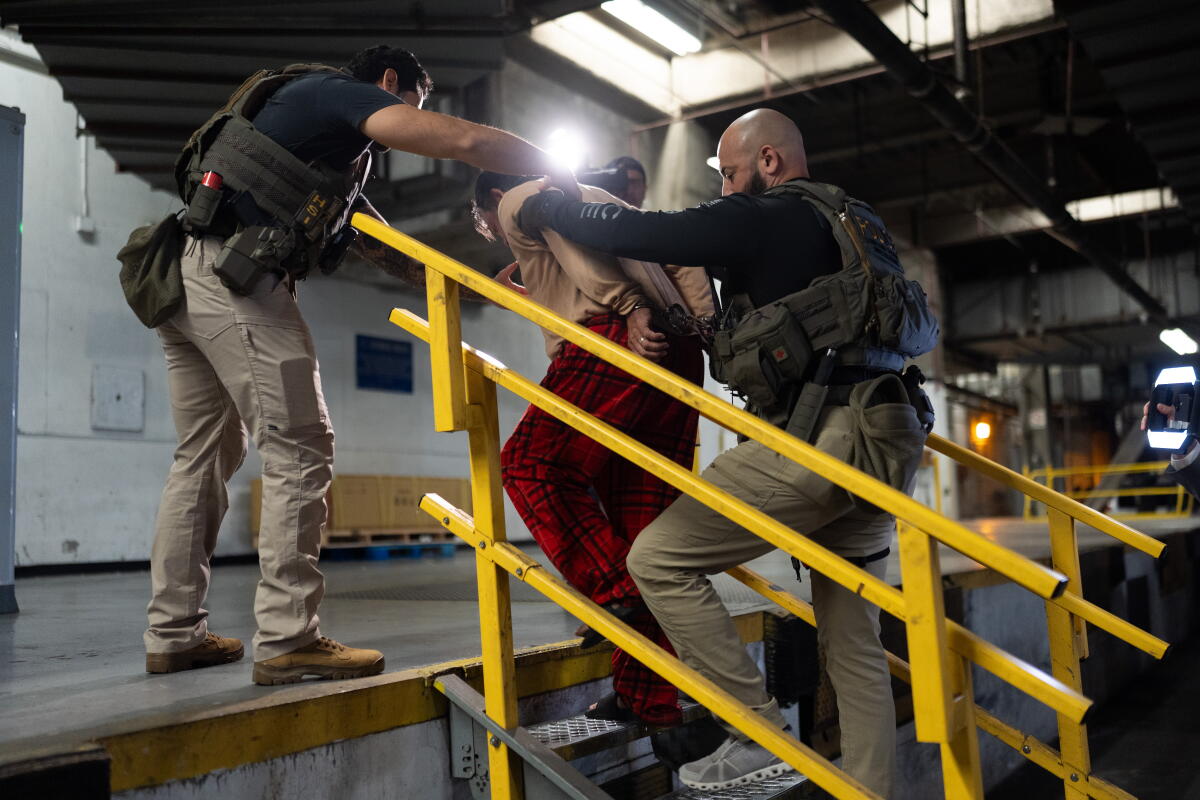
Federal authorities arrested 28 people, accusing them of fraudulent voter registration and making false statements on immigration paperwork. Officials showcased the arrests as evidence of potential voter irregularities in California, aligning with allegations previously made by President Trump.
State officials refuted claims of widescale fraud, emphasizing that errors are often due to administrative mistakes or misunderstanding, rather than intentional deceit. Rick Hasen, a UCLA Law expert, suggested the importance of proving intent in such allegations.
As defendants appeared in court, the emotional strain on families was palpable. Many struggled with logistical and emotional challenges, evident as relatives searched for courtrooms and stood by anxiously during hearings.
Among the high-profile cases, Omar Muñoz, a resident of Belize, wore visible signs of his arrest’s abruptness. Muñoz, like others, faced accusations of voting illegally over the years and falsifying information during citizenship processes. Federal courtroom interactions highlighted the gravity of the situation, with charged individuals affirming their understanding of the allegations.
First Assistant U.S. Attorney Bill Essayli supported the charges, dismissing claims of accidental registration by some defendants. José Antonio Bañuelos-Díaz, arrested en route to work, exemplified the wide-reaching impact of federal actions on individuals’ daily lives.
Despite the pronounced arrests, the defense questioned the merits of federal actions, citing instances where defendants might have been confused with others sharing their names. Families expressed frustration at the publicized nature of the arrests, criticizing the perceived aim of instilling societal fear.
California Attorney General Rob Bonta defended the state’s track record, suggesting isolated legal breaches should not overshadow the overarching integrity of the voter registration system. He underscored the minimal scale of such cases in context with the state’s extensive voter base.
After court proceedings, relatives embraced the released individuals, showcasing mixed emotions of relief and the ongoing challenge of facing federal scrutiny. Domínguez, with visible bruises from handcuffs, questioned the allegations against her, asserting her non-involvement in voting activities on multiple occasions.
Authorities, during a detailed presentation, reiterated accusations involving 21 people who allegedly voted. However, Domínguez was not among those flagged. She emphasized her longstanding legal status and ongoing citizenship application, affected adversely by her recent arrest.
Muñoz detailed his arrest experience, expressing incredulity at the method of his detainment. He advocated for simpler legal communications, questioning the extensive resources utilized during the early morning operation.
Family members, while acknowledging legal processes, criticized the execution of arrest operations considering Muñoz’s health and age. They challenged the necessity of deploying multiple agents and vehicles for his arrest.