Honoring Al Raby’s Legacy in Civil Rights
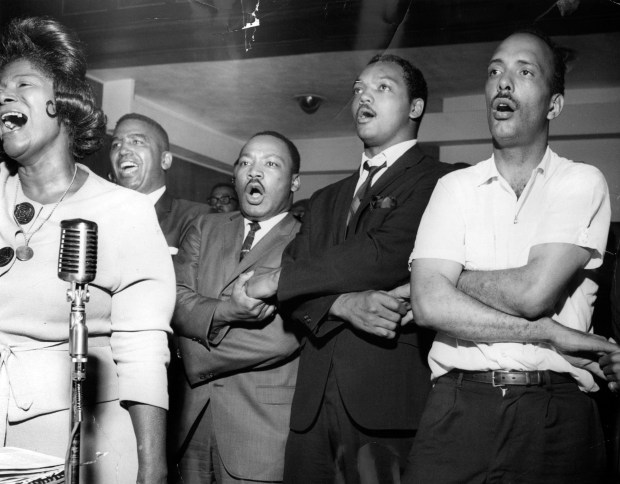
Albert “Al” Raby, born in 1933, transformed his life from a grade-school dropout to a respected elementary English teacher at Hess Upper Grade Center. His journey led to becoming a key civil rights organizer in Chicago. Although he passed away, Raby’s influence remains significant.
During his 55 years, Raby was pivotal in the Chicago Freedom Movement. In 1963, he founded the Coordinating Council of Community Organizations. This group spearheaded a massive walkout of Chicago Public Schools students, protesting CPS’s segregation and overcrowded conditions in Black neighborhoods.
In 1966, Raby invited Rev. Martin Luther King Jr. to Chicago. King lived for eight months in a North Lawndale apartment, protesting inequality in housing, education, and employment. Raby’s political influence extended further as he managed Harold Washington’s 1983 mayoral campaign. Under Washington, Raby served as the director of Chicago’s Commission on Human Relations.
Raby’s ambition led him to the Illinois Constitutional Convention in 1970. His role expanded globally from 1979-82, directing Peace Corps volunteers in Ghana. On October 16th, his legacy was honored with an honorary street sign at 6300 S. Cottage Grove Avenue. Family, friends, and supporters celebrated the unveiling.
Al Raby’s fight was rooted in the simple belief that every child should have a good school to attend, every family should have good neighborhoods to live in, and a government should answer to the people and not to the interests of corporations,
stated Mayor Brandon Johnson, also declaring ‘Al Raby Day’ on Raby’s birthday, February 19th.
Kathy Raby, his daughter, expressed joy at the recognition, high-fiving her daughter, Katanya. They manage the Al Raby Foundation, focusing on community service, activism, and youth leadership in Chicago. Kathy remarked:
My father did a lot of footwork in that community (Woodlawn). We wanted to honor the central part of the community. He was raised on Rhodes…mentored on 63rd and Cottage Grove. He went to school at McCosh. So this is right in the middle of all of that.
Chicago historian Shermann “Dilla” Thomas highlighted Raby’s influence, linking him to famous events like Bernie Sanders’ arrest during CPS protests.
The Al Raby Foundation keeps his legacy alive through social justice and racial equity initiatives. Recent projects include working with the Chicago History Museum to update the “Facing Freedom” exhibit. The Foundation also organizes “Family Chats,” collecting and sharing stories related to Al Raby and the civil rights movement. Kathy Raby discussed these efforts, emphasizing their value in connecting personal and historical narratives.
Another initiative, “Learn With Me,” is Kathy Raby’s video project exploring her father’s life and contributions to civil rights.
Katanya Raby reflected on her grandfather’s impact:
My grandfather was a teacher first. He saw every day what students were being denied. So in 1963, he helped lead a boycott, which led 200,000 kids to stay home so that they could demand the education they deserved, and it has had a massive effect on the way that our children are handled today.
Poet and Urban Gateways CEO Leslé Honoré honored Raby with a poem, describing him as a cornerstone of the civil rights movement and a symbol of service.