Mayor Brandon Johnson Faces Challenges as Chicago Election Approaches
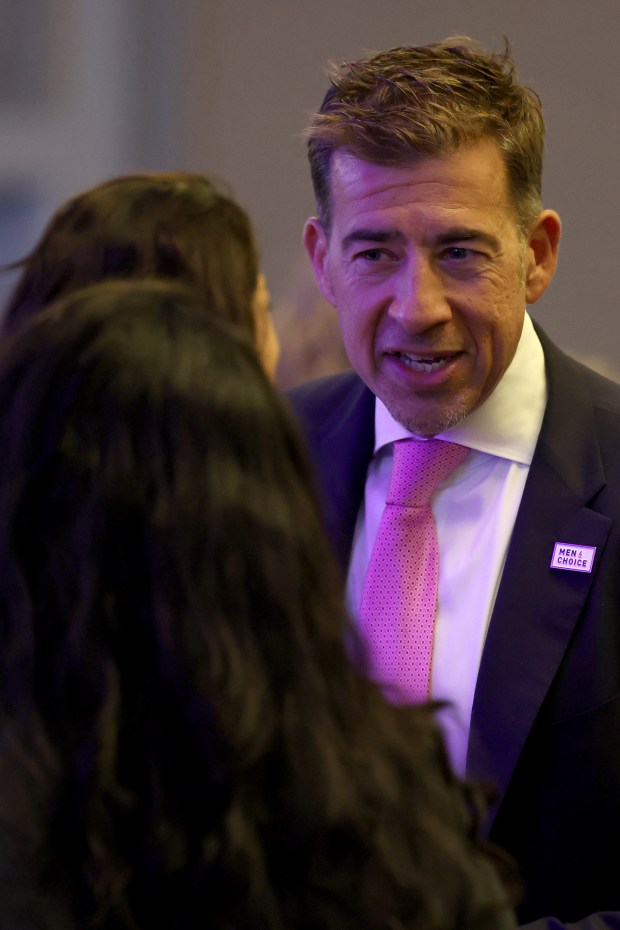
On Monday, candidates begin filing petitions for Chicago’s municipal ballot, set for Feb. 23. Current Mayor Brandon Johnson faces significant obstacles in his bid for reelection. A recent poll indicates widespread disapproval of his performance and limited enthusiasm for his candidacy among likely voters.
The survey, involving 1,108 adult residents of Chicago, included 935 self-identified likely voters. It revealed that 53% disapprove of Mayor Johnson’s performance, while only 22% approve. Notably, 25% of respondents offered no opinion on his performance. Among those likely to vote, 55% express a lack of enthusiasm for Johnson’s reelection bid. Even among those who supported him four years ago, only a quarter consider him their first choice for the upcoming mayoral race in 2027.
The poll was initiated by the Mansueto Institute for Urban Innovation, conducted by the University of Chicago’s NORC from Sept. 13-23. It holds a margin of error of 4.11% for the general population and 4.47% for likely voters.
Johnson, previously a Chicago Teachers Union organizer and Cook County Board member, secured victory over then-Mayor Lori Lightfoot in 2023. He later won against Paul Vallas in a close runoff. His first term, however, has been marred by controversy. His relationships with city aldermen, leaders in Springfield, and some allies have deteriorated. Johnson attributes this friction to opposition from big-business interests seeking to thwart his working-class agenda.
Approval ratings for Johnson have plateaued below 30%, while disapproval rates surpassed 50%, notably apart from a dip in early 2025. The highest disapproval comes from the Northwest Side at 64.5%, while his home base on the West Side shows a lower disapproval rate of 44%.
Racial dynamics play a significant role in the current political climate. Although the city’s fourth Black mayor, Johnson garners only 24% approval among Black residents, with 46.5% disapproving. Disapproval also stands at 61% among white residents and 49.5% among Hispanic residents. Among potential voters, only 32% find his candidacy for a second term exciting, with support distributed evenly across racial lines.
When questioned about their preferences for mayor, 25% of Johnson’s past voters again chose him. The crowded field of candidates includes Illinois Secretary of State Alexi Giannoulias, who leads with support from about a quarter of likely voters. Johnson follows at 14%, with no other candidates reaching double-digit support. Giannoulias, running concurrently for secretary of state reelection, enjoys 59% excitement among likely voters.
State Comptroller Susana Mendoza, choosing not to seek reelection for her current role, inspires enthusiasm from 46% of likely voters in her mayoral campaign. Despite the current leads, 34% of likely voters remain undecided, indicating room for shifts as the campaign gains momentum.
Johnson still holds the backing of the Chicago Teachers Union (CTU), which may contribute significantly to his campaign efforts. As the candidate petition filing period starts, those first in line at the Chicago Board of Election Commissioners could secure a prime ballot position. The filing period ends on Oct. 26, with candidates needing at least 12,500 valid signatures. Typically, more names are submitted to safeguard against eligibility challenges.