Congress Faces Critical Decision on Export-Import Bank’s Future
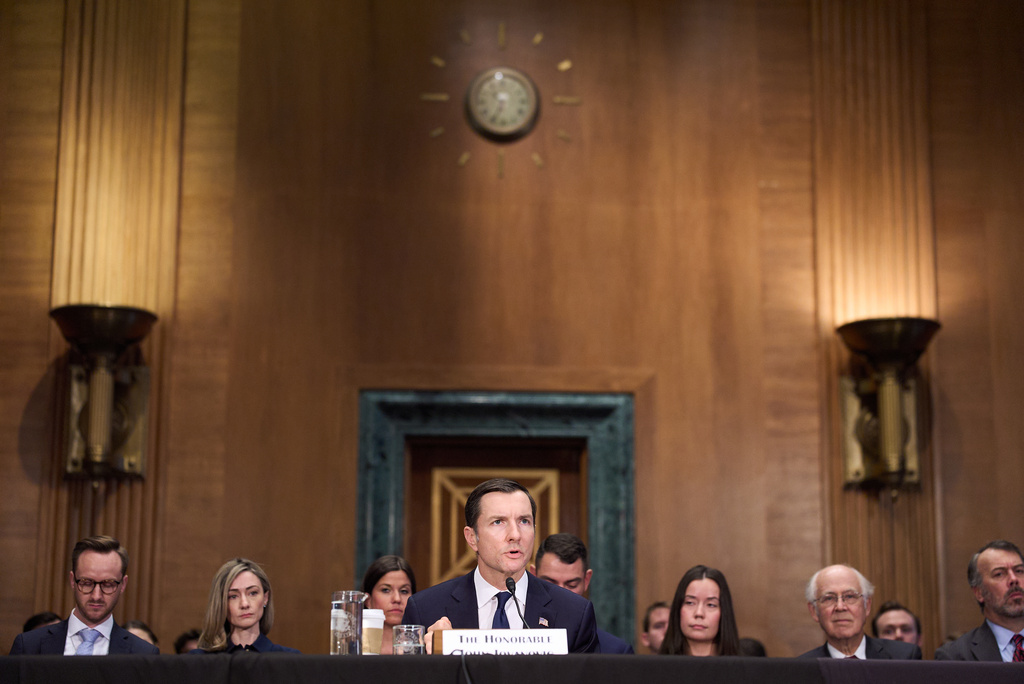
Export-Import Bank President and Chairman John Jovanovic spoke during a Senate Banking Committee hearing on March 26, 2026, addressing the future of the Export-Import Bank of the United States (EXIM). As Congress approaches a deadline, lawmakers must decide whether to bolster America’s ability to compete globally or allow China to strengthen its hold on global markets.
The charter of EXIM is set to expire at the end of the year, putting over $70 billion worth of projects in jeopardy. These projects encompass strategic energy and critical minerals operations, supporting over 45,000 U.S. jobs. Action is required by December 31 to prevent the loss of these opportunities, which would risk American jobs and allow international competitors to gain an advantage.
Reauthorizing and updating EXIM is crucial to amplifying America’s economic competitiveness and leadership in the energy sector, especially as worldwide energy development intensifies. Since 2015, China has invested at least $446 billion in global energy projects, vastly outspending the United States. Despite Chinese energy technologies not being superior, they proliferate due to support from state banks with subsidies and loans.
EXIM operates without cost to American taxpayers. It complements, rather than replaces, private capital by stepping in where private lenders won’t or where foreign governments manipulate markets. Leveraging private capital markets through EXIM empowers American innovators and builders, enabling the export of U.S. energy solutions globally.
A modern, well-resourced EXIM could capitalize on American strengths in nuclear energy, liquefied natural gas, and geothermal technology, converting opportunities into signed contracts. Unfortunately, EXIM struggles with a bureaucracy prone to excessive caution, leaving much of its lending potential unused while foreign competitors invest in advanced projects.
EXIM’s recent Competitiveness Report found that foreign governments are using export credit at unprecedented levels, financing aggressively to secure strategic industry contracts. American exporters are disadvantaged, a situation worsened by any lapses in authorization. Past authorization issues resulted in American exporters losing business to rivals. A bipartisan, ten-year reauthorization of EXIM, the longest in its history, would signal Washington’s commitment to supporting American businesses globally.
To equip EXIM with a real competitive edge and foster technological exports, it needs a contemporary approach to risk management and project selection. In June, EXIM’s advisory committee proposed eliminating the current 2 percent default rate shutdown trigger and adopting more robust risk standards. These changes would enable the bank to back transactions that align with American national and economic interests while maintaining its strong financial performance.
American companies are advancing the energy technologies that the world seeks. The nation funding future energy infrastructure and critical mineral supply chains will influence engagement terms this century, determining if they entail peace and prosperity or governmental oppression. Congress must reauthorize EXIM in the long term, empowering American innovators, workers, and technology to succeed. Otherwise, the coming decade may see China dictate its course independently.
Kevin Cramer is North Dakota’s junior U.S. senator and serves on the Senate Banking, Housing, and Urban Affairs Committee.