Erica Carter Faces Medicaid Challenges While Supporting Students
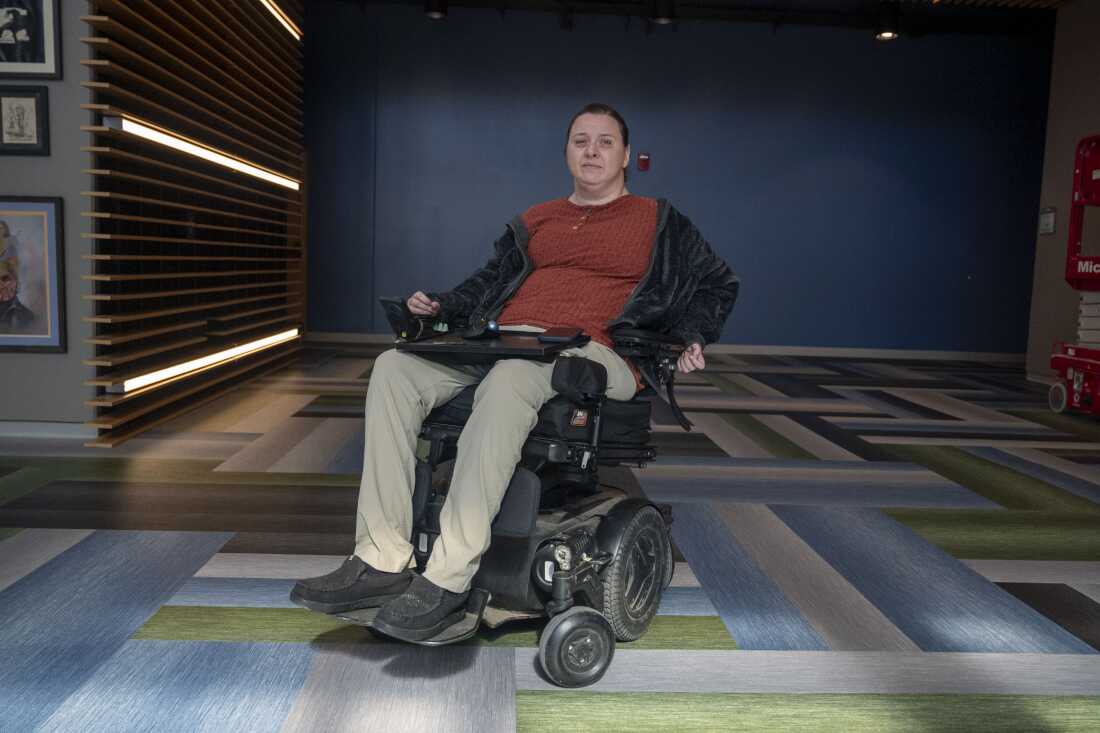
Erica Carter from Sioux City, Iowa, treasures her role as a finance manager for the Omaha Nation public school district in Nebraska. She is dedicated to securing grants and resources for low-income students. Yet, her salary disqualified her from Iowa’s Medicaid program, forcing a tough choice between her job and benefits.
Carter has made significant contributions to the district, including a grant-funded garden that employs students. These initiatives provide young people with their first work experience. Carter, paralyzed from the chest down after an early life accident, has not let her disability slow her progress. She built a successful career in accounting and obtained a master’s degree in human resources.
In late 2023, a letter from Iowa’s Department of Health and Human Services notified Carter of her ineligibility for Medicaid due to her $110,000 annual income. The state’s limit for working disabled individuals was $36,450 for a single person. The letter presented her with a difficult decision: find a lower-paying job or relinquish Medicaid benefits.
Medicaid buy-in programs, available in 47 states, allow working disabled individuals to pay a portion of their income to qualify for Medicaid. Critics argue that these programs’ income and asset constraints deter people like Carter from pursuing raises or saving money due to the risk of losing benefits.
States like Massachusetts, Minnesota, New Jersey, and Rhode Island have removed these limits in recent years. To maintain her benefits, Carter would need a job with much lower pay or switch to the school district’s health plan, which lacked essential disability coverage that Medicaid offered.
Carter opted to keep her position and give up Medicaid, stating, “I enjoy my work and won’t throw that away.” However, the financial burden increased, with Carter spending $35,000 annually on costs previously covered by Medicaid, including nurse visits and wheelchair repairs. To cover these expenses, she picked up extra jobs and accessed retirement funds.
Originally, Medicaid buy-in programs aimed to encourage work among disabled individuals. Iowa was among the first to implement such a program. In January, 11,640 Iowans, 1.7% of the state’s Medicaid beneficiaries, participated in the program. Iowa’s income cap increased slightly since Carter’s notice, now at $39,900. Asset limits remain at $12,000 for individuals or $24,000 for couples, with exceptions for primary homes and vehicles.
Advocates like Carlyn Crowe highlight how these limits hinder disabled individuals from achieving goals, such as home ownership or car purchase. In Iowa, advocates proposed removing income and asset caps, modeled after a Tennessee law allowing buy-ins without such limits, although federal approval is pending.
Amid legislative developments, a 2025 Iowa House committee endorsed eliminating these caps. However, the measure stalled in the legislative session. Federal Medicaid spending cuts also add pressure, as states worry expanded buy-in programs might inflate costs, with premiums not covering expected expenses.
Advocates argue that increased labor force participation among disabled individuals could eventually offset initial costs through increased tax revenue and reduced reliance on government aid. Iowa lawmakers recently considered raising the income limit to 300% of the poverty level and exempting pensions and spousal income from asset calculations. The proposal was excluded from a comprehensive public assistance bill.
Despite advocacy efforts, Carter remains committed to her students. Despite facing financial strain and policy challenges, she continues to balance her role in the school district and additional work to meet her medical and personal expenses.