Germany’s Changing Faces: From Triumph to Turmoil
Germany’s Football and Economic Ups and Downs
When Germany lifted the World Cup trophy in Rio de Janeiro in July 2014, the triumph was seen as the dawn of a “century of German success.” Players, pundits, and politicians considered the moment critical, viewing Germany’s dominance in various fields uncontested. Its technocratic model of problem-solving was admired worldwide.
In 2014, Germany was in a phase of economic growth, with falling unemployment and government debt. Clemens Fuest, President of the Munich-based Ifo Institute for Economic Research, noted the country’s secure political and economic position.
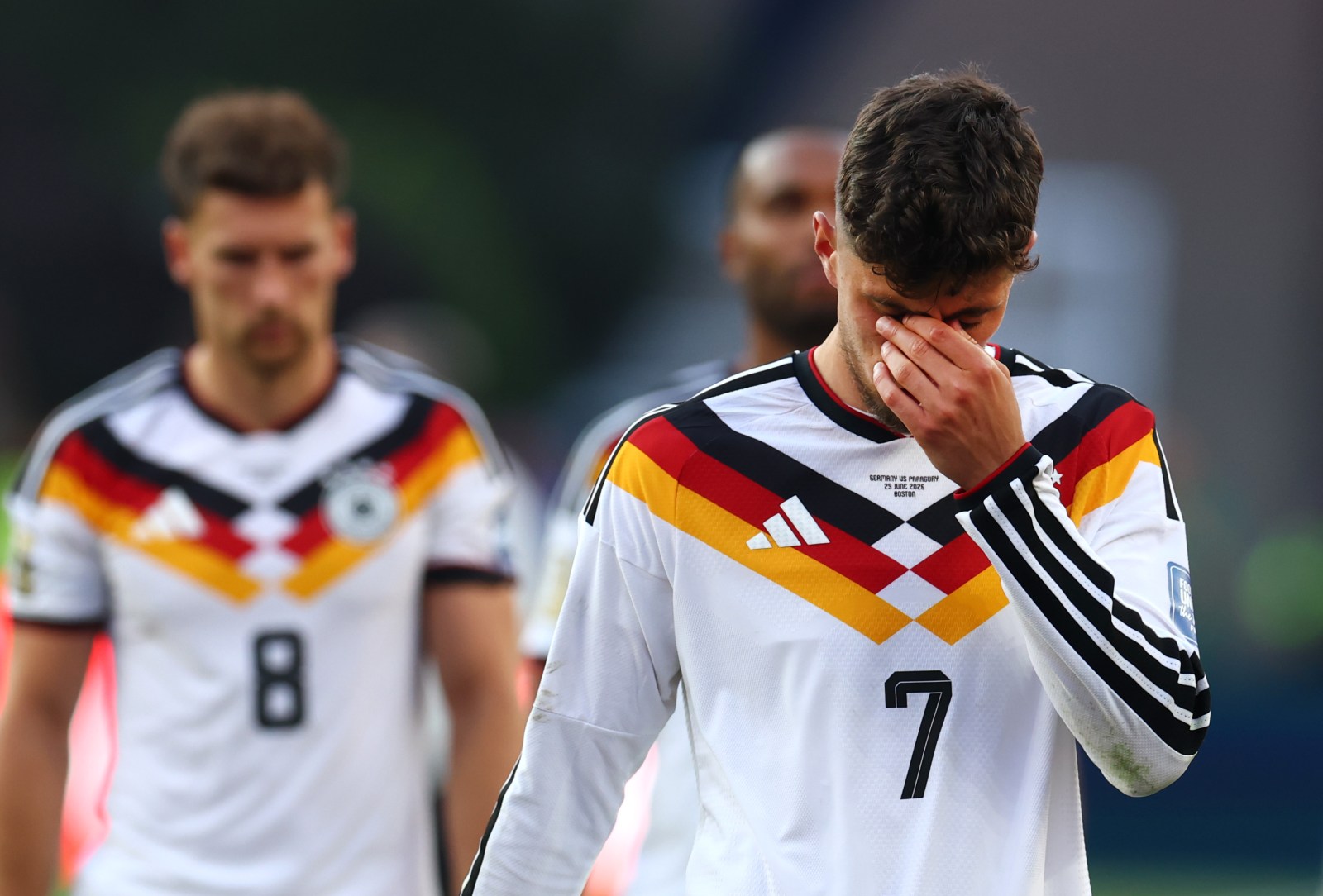
However, Germany has faced setbacks, losing early in the World Cup to Paraguay on penalties. Between 1954 and 2014, Germany reached the World Cup semifinals in 12 out of 16 appearances, but has not won a World Cup knockout match since 2014.
This sports setback symbolizes broader issues beyond football.
2014: Germany’s Moment of Glory
Germany’s victory against Argentina followed a remarkable win over Brazil. The team was praised for technical mastery defining international football, reflecting Germany’s reputation for order in a tumultuous world.
The World Bank praised Germany’s success as a “triumph of strategy.” Germany had solidified its status as an economic powerhouse, driven by exports and manufacturing prowess. Politically, Germany led during the eurozone debt crisis and had high levels of cooperation with Brussels and Washington.
Angela Merkel was seen as the world’s most powerful woman. The triumph of the diverse national football team allowed Germany pride previously avoided due to its history.
Years of Decline
The success seen in 2014 has eroded over the past decade. Germany struggles to reclaim the aura of inevitability that made it Europe’s standard-bearer. Fuest noted how the football team’s decline mirrors Germany’s economic performance and political cohesion deterioration.
Economic Challenges
Germany’s model, built on industrial and export dominance, faces strain. Clemens Fuest reports that since 2019, the economy has stagnated, with GDP at the level of 2019 and private investments falling to the level of 2015.
EU forecasts show slow emergence from stagnation, with growth projected at 0.6 percent in 2026. The COVID-19 pandemic led to a weak recovery, alongside challenges such as U.S. tariffs, Chinese competition, and increasing energy costs.
Russia’s invasion of Ukraine further complicated recovery, affecting energy resource sourcing and raising industrial input prices.
Germany, previously Europe’s default supplier for industrial equipment, faces stronger competition from the U.S. and China in machinery exports.
Industrial Shifts
The automotive sector faces declining production and market share. Car production forecasts for 2026 show a decrease from the peak in 2017. The transition to electric vehicles reveals structural weaknesses.
Germany’s automotive industry witnessed ongoing losses across critical markets like the U.S. and China, with expectations of further crisis years.
Political and Social Turmoil
Germany’s political landscape has changed with the rise of the far-right Alternative for Germany (AfD). The party reshaped the political environment with record support, achieving victories in regional elections.
The refugee crisis influenced political dynamics, contributing to the collapse of the previous political consensus.
Germany’s influence in Europe has waned from the height experienced in 2014, deferring more to France in defense and economic matters.
Facing New Challenges
Germany remains a wealthy, developed country with formidable strengths: a skilled workforce, solid institutions, and industrial expertise. It is still the world’s third largest exporter and economy by GDP, and influential in the EU.
Recent investments in military spending highlight Germany’s adaptation to geopolitical realities. However, economic uncertainties, political fragmentation, and decline in sports achievements showcase a nation facing changes faster than its institutions.
Germany’s journey from triumph in 2014 to facing challenges today serves as a reminder of the rapid changes in the modern world.