Healthcare Workers Face Increasing Workplace Violence
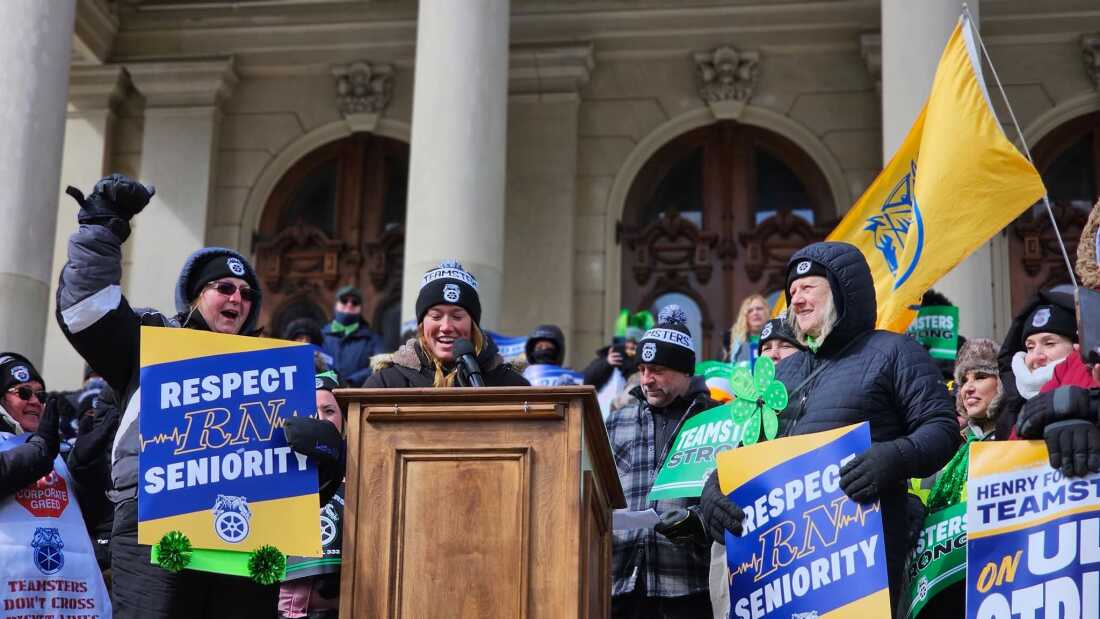
Emergency room nurse Crystal Dhooghe shared her experiences during a rally at the Michigan State Capitol in March 2025. She is one of the many unionized employees at Henry Ford Genesys Hospital who have been on strike since September 1, 2025. Workplace violence in healthcare settings has driven these employees to take action.
Dhooghe, who works at Henry Ford Genesys Hospital in Grand Blanc, Michigan, has witnessed colleagues experiencing violence, including shoving, scratching, and biting. Workplace violence in healthcare has also led to strikes in other states like Louisiana, New York, Pennsylvania, and Rhode Island. Dhooghe continues to work due to strike benefits and additional shifts at another hospital, expressing that the issue is widespread.
Henry Ford spokesperson Dana Jay acknowledged the widespread violence against healthcare workers, calling it a “national epidemic.” Efforts to address this include metal detectors, armed security officers, and de-escalation training, emphasizing that the strike is primarily economic, not safety-based. According to data from the Bureau of Labor Statistics, hospital workers are seven times more likely to suffer job-related injuries due to violence compared to the general workforce.
Rachel Odes, an assistant professor at the University of Wisconsin-Madison School of Nursing, highlighted that emergency rooms can feel like “a powder keg,” where code gray, or combative patients, are common. Research indicates that understaffing and inadequate training elevate the risk of violent incidents.
Mental health worker Andrew Kimball-Mirzaie shared his experience of being assaulted at Butler Hospital in Providence, Rhode Island. After working at the psychiatric hospital for about six weeks, he faced a violent incident resulting in a concussion and a broken nose. Kimball-Mirzaie joined a strike, demanding better safety measures and staffing.
The strike led to wage increases and financial support for workers injured on the job. However, violent incidents continue, with recent events leading to police intervention. Butler Hospital acknowledged the significance of proactive measures to protect staff, indicating a need for ongoing safety discussions.
The American Hospital Association has called for legal measures to deter assaults on healthcare workers. However, safety experts argue that criminalization hasn’t effectively reduced such violence. Striking healthcare workers advocate for “safe staffing” as a solution. The Joint Commission established national performance goals requiring appropriate staffing and training.
Nurse Catherine Maynard from Butler Hospital emphasized the need for legislative changes during a union rally. National Nurses United has pushed for a national staffing standard since 2018. Though California has mandatory staffing ratios linked to lower mortality rates, similar laws in other states have faced setbacks.
Opposition from the American Hospital Association cites potential impacts like reduced clinical judgment and logistical challenges. Former OSHA deputy assistant secretary Jordan Barab suggested alternatives to mitigate workplace violence, such as de-escalation training and enhanced security measures.
Debbie Berkowitz from Georgetown University warned about financial constraints affecting worker protection efforts, especially as hospitals face budget challenges. Ensuring healthcare worker safety remains an ongoing struggle within the healthcare system.