Historic Railway Depot Resurfaces in Thailand, Offering a Rare Research Opportunity
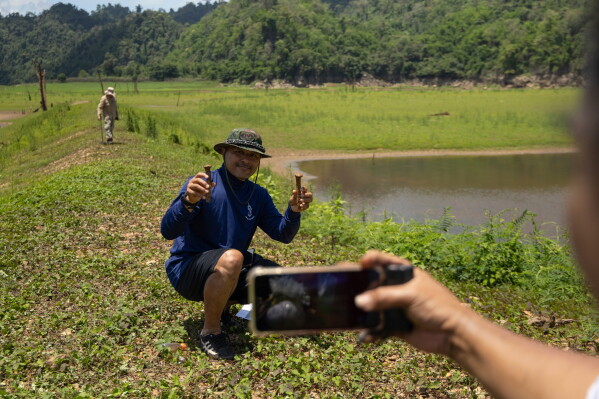
A section of World War II’s notorious “Death Railway” reemerged in Kanchanaburi, Thailand, offering historians a rare chance for study. Drought-related maintenance at the Vajiralongkorn Dam’s reservoir revealed Nithe Station, which had been submerged for decades. This depot played a significant role in the 415-kilometer railway connecting Thailand with Myanmar during Japanese occupation.
The railway, infamous for its brutal construction conditions, claimed the lives of over 12,500 Allied POWs and 75,000 Asian laborers. Built by around 60,000 POWs from Australia, the UK, the US, and Indonesia, along with numerous Asian laborers termed ‘römusha’ by the Japanese, the railway inspired the nickname “The Death Railway.” It was depicted in films like “The Bridge on the River Kwai” and “The Railway Man,” and a novel titled “The Narrow Road to the Deep North.”
Unique Research Opportunity
Nithe Station resurfacing prompted historians and researchers to survey the site urgently. Martyn Fryer, an independent Australian researcher whose grandfather died on the railway, was eager to explore. Fryer utilized a metal detector to find artifacts such as iron dog spikes and bridge staples.
Andrew Snow from the Thailand-Burma Railway Centre used historic aerial photographs to map the Nithe site, aiding efforts to locate former POW camps. The unusually low water level allowed researchers enhanced access to study the site.
Snow remarked on the importance of sharing findings with relatives of those who toiled on the railway. The exposed station has drawn Thai visitors interested in witnessing the site firsthand.
Historical Significance and Preservation
Nearby Hellfire Pass, another challenging railway section, attracts many visitors. The Hellfire Pass Interpretive Centre, funded by Australia, sees significant tourist interest, marking the importance of preserving war history. Last year’s visitor numbers reached a record 169,000 during the 80th anniversary of World War II’s end.
Mick Clarke, a manager at the Interpretive Centre and Australian Army veteran, emphasized the importance of sites like Hellfire Pass in connecting people with wartime history, preserving personal stories, and understanding the war’s enduring impact. Australia’s Department of Veterans’ Affairs notes that 22,000 Australians were POWs during the war, with 13,000 working on the railway and 2,800 losing their lives.