Humanoid Robot Surgeons Perform First-Ever Remote Surgery
A significant medical advancement has been realized with the successful execution of remote surgery using humanoid robots. Doctors at UC San Diego utilized $20,000 humanoid robots to perform gallbladder surgery on a pig from a distance. Such innovations underscore the potential of artificial intelligence (AI) to tackle the global shortage of surgeons and enhance healthcare accessibility.
Privacy Concerns with Advanced AI Robots
As these technological advancements emerge, they also spark discussions about privacy issues related to AI robots. Concerns extend beyond medical applications and include new $8,000 home robots designed for household chores.
Dental Robot Innovation in Switzerland
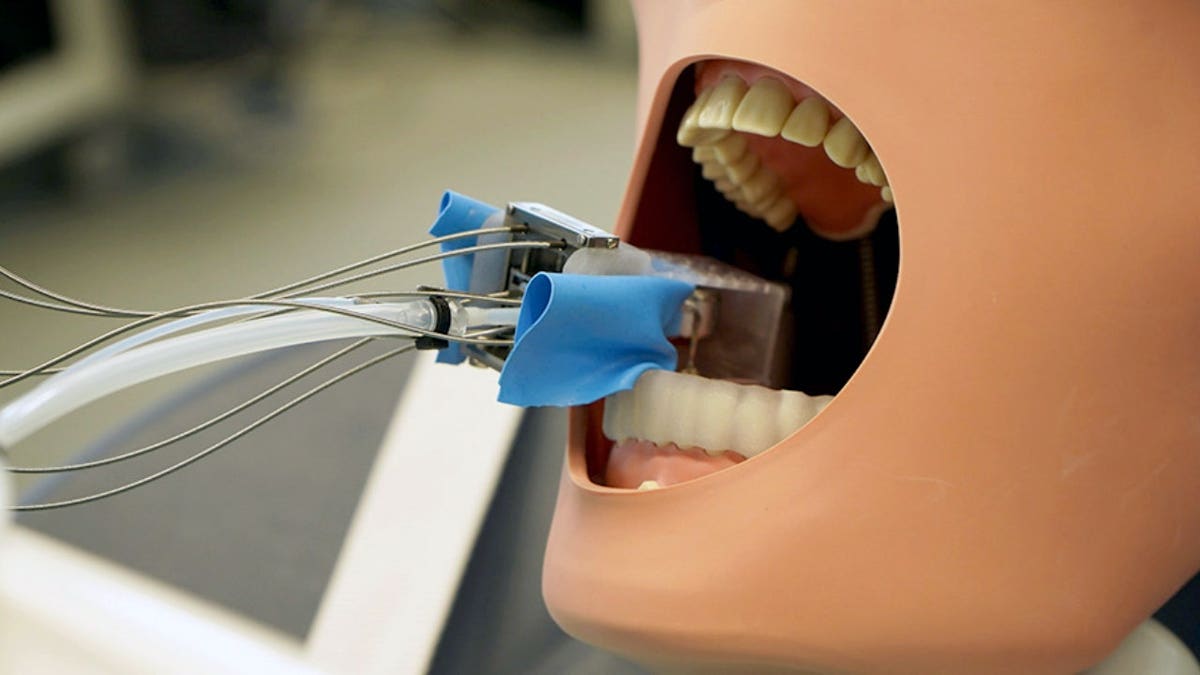
Meanwhile, researchers at the University of Basel in Switzerland are focused on revolutionizing dental procedures. They are developing a prototype called Miniature Intraoral Robot (MIR) aimed at streamlining crown preparation and minimizing dental visits.
The MIR prototype offers a digital workflow for dentists, potentially reducing the time and number of appointments required for crown fittings.
Functionality and Design of MIR
Despite the unconventional concept of a drill-equipped robot inside the mouth, the design cleverly situates major parts outside the oral cavity, interfacing through flexible mechanisms. This unique approach ensures essential procedures are executed with precision.
MIR is attached to a custom dental splint, facilitating a secure connection to the patient’s teeth. Remarkably, it remains stable if a patient inadvertently shifts, highlighting the meticulous design.
Testing and Future Developments
The prototype has demonstrated potential in initial tests on synthetic models, showing positional errors of less than 0.2 millimeters. For safe application in real dental settings, plans include adding sensors and cameras for enhanced operational accuracy.
Collaborative Efforts for Medical Robotics
This project is a result of collaboration between the University of Basel, the University of Zurich, Camlog Biotechnologies, the University of Bern’s ARTORG Center, and sponsors like Innosuisse. The research has been published in IEEE Transactions on Medical Robotics and Bionics.
Implications for Dental Practices
Although MIR is still under development, its potential for transforming dental practices, especially in simplifying crown appointments, is promising. Future innovations may allow for immediate crown preparation post scan, reducing repetition and hassle involved in traditional procedures.
Professor Georg Rauter emphasizes the importance of integrating sensors to ensure the robot’s precision and adaptability, even during unforeseen disruptions.
Conclusion
Though MIR isn’t ready for immediate deployment in dental clinics, the advancements it represents could revolutionize dentistry, aligning it increasingly with digital and robotic technologies.