Humpback Whale’s Grieving Behavior Offers Insight into Marine Mammals
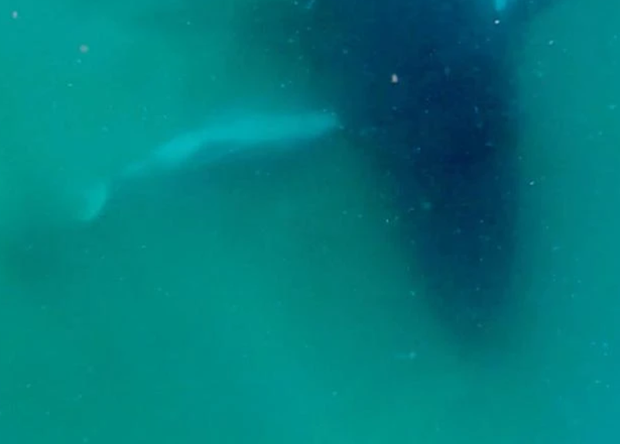
New research released Wednesday documents a female humpback whale grieving a stillborn calf, shedding light on the complex emotions of sea mammals. The footage, captured off Australia’s Gold Coast last year, shows the whale near the motionless calf on the seafloor.
Accompanied by another whale, the grieving whale maintains eye contact and touches the calf with her head and fin. “At first sight, I thought it was just two whales resting on the surface, but their behavior was unusual,” noted Andrew Mulville from Sea World Foundation, who witnessed the emotional scene. “It was definitely not what I was expecting to see out at sea that day.”
Researchers observed the whale staying with the deceased calf for several hours, possibly even days. “It’s really sad,” commented Olaf Meynecke of Griffith University’s Whales and Climate Research Program. “It’s pretty heartbreaking to watch this female making continuous contact with the deceased calf.”
According to the study by Meynecke and Mulville published in Discover Animals, this is the first documented instance of such behavior in humpback whales. The whale’s lack of effort to bring the calf to the surface suggests she might have known it was dead shortly after birth. This behavior could indicate grief-related responses in these animals.
Meynecke highlighted the strong bond between mother and calf, noting that socially complex mammals experience emotional stages following the deaths of their offspring. Marine mammals have shown similar behavior before, such as an orca in 2018 that carried her dead calf for over two weeks.
Many non-human mammals engage in complex grieving rituals. Elephants and apes are known for such behavior, said Meynecke. “On land, we witness this more often. At sea, it’s really rare to document something like this.”
The footage release follows other significant marine mammal observations. A photographer in Australia recently captured a humpback whale giving birth, believed to be the first such instance recorded by a drone. In May, researchers documented two humpback whales traveling record-breaking distances between breeding grounds, with one whale spotted over 9,383 miles apart in Brazil and Australia.