Impact of Supreme Court Decision on Homelessness Management
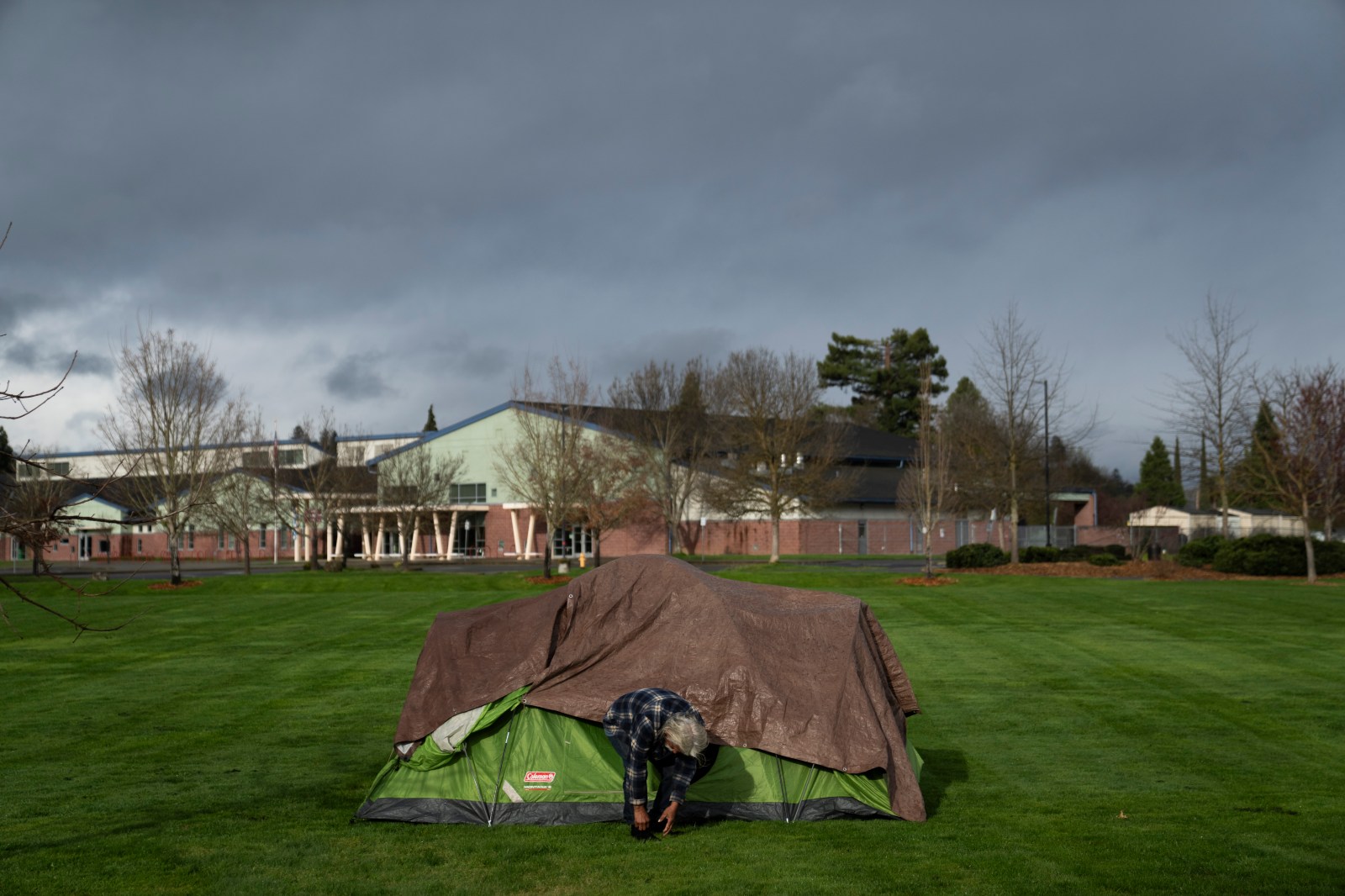
Recent research highlights the impact of a Supreme Court decision allowing cities to enforce stricter measures against homelessness. The study, published in the American Journal of Public Health, focused on Oakland, California, and found a significant increase in the number of homeless encampment ‘sweeps’ following the Court’s ruling.
Supreme Court’s Ruling Explained
In June 2024, the Supreme Court ruled on the case City of Grants Pass v. Johnson. The decision allowed a city in southern Oregon to enforce anti-camping laws, even if shelter space was limited. Plaintiffs claimed the city unfairly penalized unhoused individuals for sleeping outside using items like sleeping bags as temporary shelter. In a 6-3 vote, the Supreme Court determined that this enforcement did not breach the Eighth Amendment’s protections against cruel and unusual punishment. This ruling empowered cities to clear homeless encampments and enforce camping bans more effectively.
Data from Oakland
Using 785 reports from Oakland’s database, researchers found encampment closures more than doubled post-ruling. Before the decision, monthly closures averaged 14.4 from 2021 to 2024. After the decision, this rose to 32.2 closures on average. Many sites faced repeated closures, with one encampment cleared 18 times over four years.
The study also revealed a pattern regarding race and ethnicity. Following the ruling, closures occurred more in neighborhoods with higher Hispanic and Black populations. This suggested two interpretations: the ruling allowed expanded enforcement in new areas, or new encampments formed as previous ones closed.
Expert Opinions on the Sweeps
Jamie Chang, a senior author of the study, raised questions about the effectiveness of encampment sweeps. She highlighted the significant costs involved and the repetitive nature of the enforcement. C.J. Gabbe, another co-author, expressed concern that the sweeps dispersed vulnerable individuals into more challenging environments without providing stability.
The Broader Picture of Homelessness in the U.S.
Homelessness remains a challenging issue across many U.S. cities. The U.S. Department of Housing and Urban Development’s 2024 report identified California as having the largest homeless population in the country, with about 187,000 affected individuals. New York followed with 158,000, while Florida and Washington each reported over 31,000 homeless people.
On a single night in January 2024, more than 770,000 people were homeless, marking an 18% rise from 2023. President Donald Trump committed to addressing this issue, utilizing federal resources to remove homeless encampments, particularly in Washington D.C. In March 2025, he signed an executive order to clear such encampments from federal lands as part of a beautification effort.