Impact of Supreme Court Ruling on Voting Rights Act
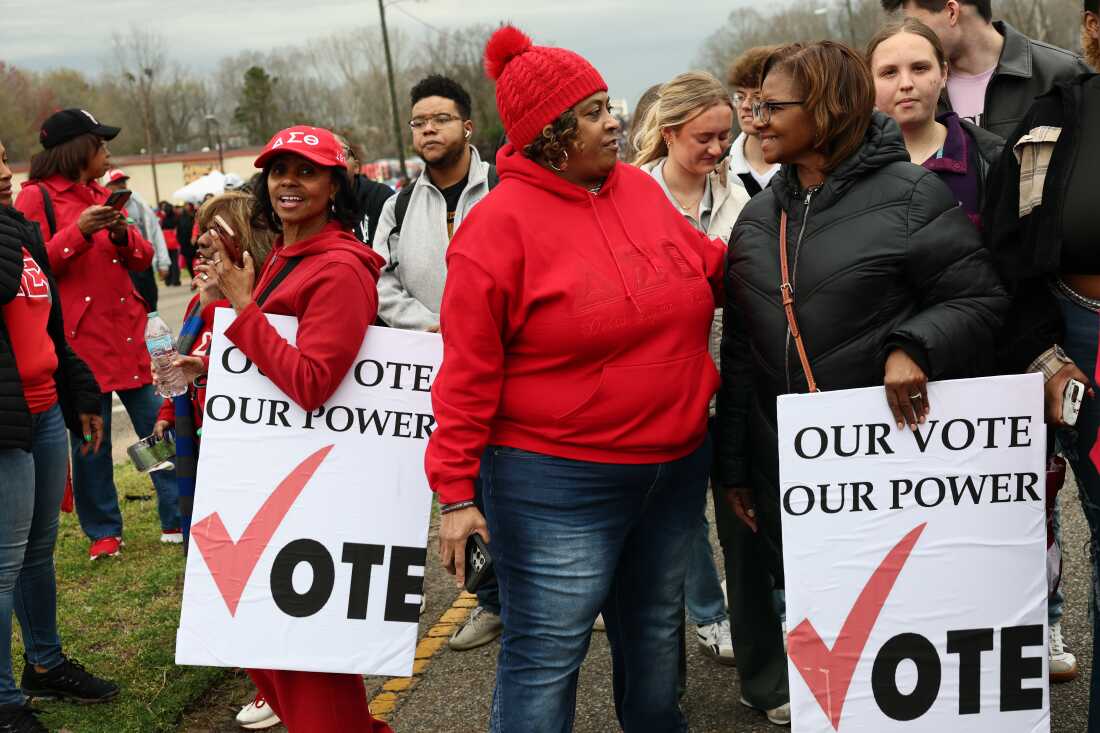
In 2025, members of Delta Sigma Theta sorority and others will march in Selma, Alabama, commemorating the 60th anniversary of the Bloody Sunday protest that helped pass the Voting Rights Act. Yet, as Republican-led Southern states redraw their congressional maps following the U.S. Supreme Court’s decision that weakened the Act’s protections, this impact will likely be most noticeable at the local level.
An NPR analysis of federal court records reveals ongoing legal battles against at least 17 voting maps or election systems in state and local governments, influenced by the court’s ruling. After the decision in Louisiana v. Callais, lawyers have been crafting briefs discussing how the revised interpretation of Section 2 of the Voting Rights Act in redistricting should be implemented. The Supreme Court’s conservative majority now demands proof of intentional racial discrimination, a challenging legal standard to demonstrate.
This change poses risks to minority representation and may encourage partisan gerrymandering across government levels. North Carolina state Rep. Rodney Pierce, a Democrat, has already dropped his case challenging the state’s Senate map, citing the ruling’s ramifications. “It’s a sad day for our democracy,” Pierce remarked.
Most affected legal challenges primarily emerge from the South, where racial polarization influences voting patterns. However, states like Washington, Pennsylvania, and North Dakota also face Section 2 lawsuits from Latino and Native American voters. These cases now face a higher legal threshold, necessitating justifications that these voters have opportunities to elect preferred candidates.
Historically, Section 2 has focused on municipal government, evident in federal court rulings. Michael Li from the Brennan Center for Justice notes that Section 2 helped dismantle political strongholds in the South. The concern is a resurgence of majority dominance in these areas, affecting redistricting maps to maintain power.
Seven years after the conservative justices declared partisan gerrymandering outside federal court jurisdiction, the Supreme Court’s new limitations may lead to more communities reverting to at-large voting systems. Gilda Daniels, University of Baltimore law professor, explains that proving a Section 2 violation now means separating race from partisan preference, which complicates matters due to the unavailability of local partisan data.
Under the Trump administration, the Justice Department shifted priorities, abandoning multiple cases safeguarding minority voting rights. The Supreme Court’s latest decision might encourage local governments to “dismantle as much as they possibly can,” warns Daniels. Awareness and participation at the local level are crucial, as some jurisdictions could opt for at-large systems, potentially diminishing minority representation.
An at-large system allows the majority to dominate, as Maureen Edobor from Washington and Lee University points out. In communities with racially polarized voting, majority populations can secure all seats, which could render minority votes ineffective.
In Fayette County, Tennessee, Elton Holmes of the local NAACP is monitoring potential changes to the county’s voting districts. After a new voting map was agreed upon, providing three majority-Black districts, concern remains about potential reversion if election results are unsatisfactory to white commissioners.
Other advocates predict changes to state and local voting maps. The advocacy groups Fair Fight Action and Black Voters Matter Fund estimate that nearly 200 Democratic-held state legislative seats, predominantly representing majority-Black districts in the South, are at risk following the Supreme Court’s action. Continued vigilance is necessary as future Supreme Court decisions may further impact the Voting Rights Act.