Indiana Wetlands Program Faces Federal Compliance Issues
Annette Hansen felt unsettled when she learned of federal concerns regarding Indiana’s wetlands program. As the executive director of Porter County’s chapter of the Izaak Walton League of America, Hansen has worked tirelessly to restore wetlands. She highlighted the challenges faced in achieving large-scale restoration despite her organization’s success with smaller projects.
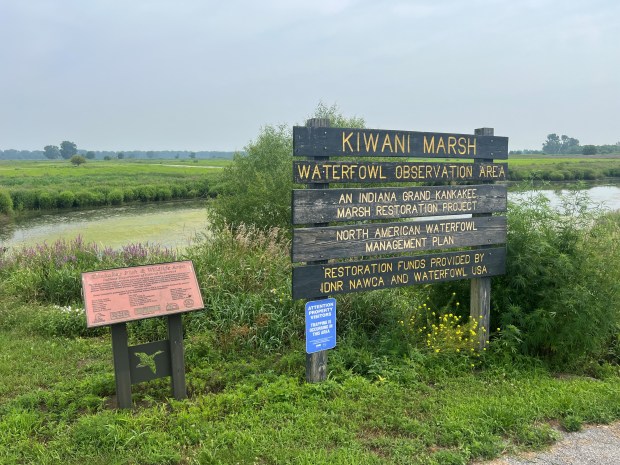
Kiwani Marsh, managed by the Indiana Department of Natural Resources (DNR), spans over 125 miles in Starke County and serves both as a waterfowl observation area and as a restoration project dating back to 2010 for the Indiana Grand Kankakee Marsh.
The Indiana Capital Chronicle reported that the U.S. Army Corps of Engineers found the Indiana DNR’s wetlands program not in compliance with its three-season growth timeframe across all areas. Despite having collected over $109 million in wetlands payments, many projects have stalled since the program began in 2018.
The Indiana Stream and Wetland Mitigation Program allows developers to buy mitigation credits to meet environmental requirements. A DNR spokesperson stated that efforts are in place to complete approved projects, with some anticipated to start construction between 2027 and 2028, dependent on the Corps’ approvals.
The Izaak Walton League completed its own successful restoration project, the Frame Family Little Calumet Conservation Area, focusing on habitat quality and the removal of invasive species.
“We’ve created spaces that help manage floodwaters, crucial due to the impacts of climate change,” Hansen remarked.
According to Hansen, the DNR monitors the restoration’s progress ensuring conservation boundaries are respected.
Hansen stressed the importance of community-focused land preservation to counteract economic-driven decisions.
The Army Corps requires Indiana’s program to adhere to the 2008 Compensatory Mitigation Rule, demanding comprehensive planning and compliance checks. Amid these challenges, concerns have been raised regarding the impacts of data center developments on wetlands. Susie McGovern, associated with Hoosier Environmental Council, warned about expedited permit processes leading to wetlands loss without replacement.
“Our wetlands are crucial for reducing flooding, maintaining water quality, and providing habitats for endangered species,” McGovern emphasized.
Indiana faces decisions that juxtapose business interests against conservation efforts. McGovern advocates for collective actions to preserve wetlands as valuable environmental resources.