Intense Heat Wave Threatens Southeast U.S.
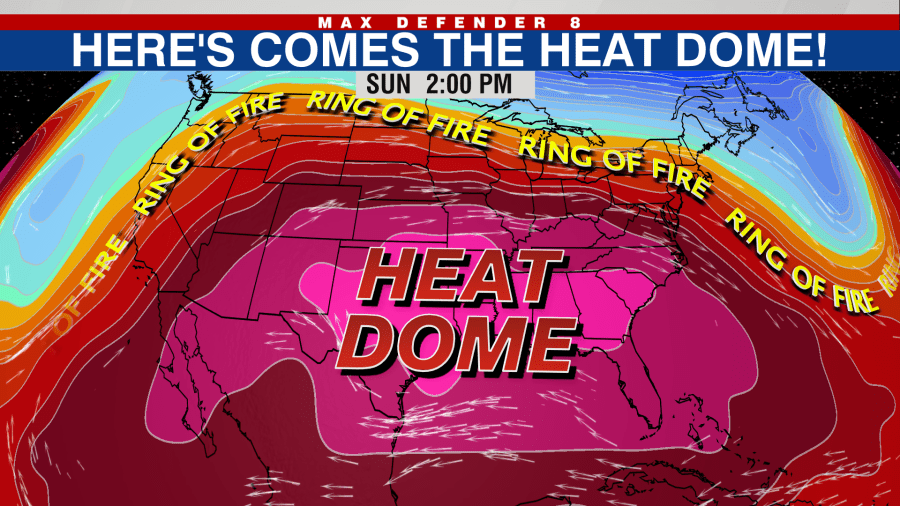
Major heat is forecasted for the Southeast and Florida as a near-record heat dome expands in the region. Starting this weekend, the heat is expected to persist through most of next week, possibly longer. The heat dome impacts a large portion of the U.S. with a focus on the Southeast.
A heat dome forms when high pressure traps warm air and prevents clouds and rain from entering the area. This high-pressure system could set monthly records for its intensity. As a result, numerous temperature records might be broken. The National Oceanic and Atmospheric Administration (NOAA) predicts over 30 million people could face ‘extreme’ heat, with another 50 million experiencing ‘major’ heat.
Heat will increase throughout the week, peaking over the weekend. Extreme conditions will stretch from Kansas and Oklahoma on Thursday to eastern regions by the weekend. By Sunday, states like Missouri, Arkansas, Kentucky, Tennessee, southern Illinois, Alabama, Mississippi, Georgia, and Florida will be under the heat dome. Florida may see highs in the mid-90s, while many areas in the Southeast, including Oklahoma and Texas, could reach around 100 degrees. Heat index values are expected to reach between 105 and 115 degrees due to humid air. Nighttime temperatures will remain high, creating hazardous conditions.
If you’re talking heat waves, that nighttime low is incredibly important for determining total heat stress.said meteorologist Jeff Masters of Yale Climate Connections.If it doesn’t cool off at night, your body doesn’t have time to readjust to all the heat.
Although the heat will be most intense this weekend into early next week, the heat dome might persist for an extended period. It might still be present by next weekend. This event follows the contiguous U.S. recording its hottest month ever in July, with an average of 76.89 degrees Fahrenheit, just surpassing the previous record set in July 1936 during the Dust Bowl.
It’s not good when you’re breaking records from the Dust Bowl, which we are in this case,said Masters.And that was a crazy sort of situation where you put tens of millions of people in motion. You had this great migration because of the drought and the heat that hit the center of the U.S. — just a cataclysmic event in U. S. history.
Breaking records from the Dust Bowl era signals significant concern.