Japan’s Imperial Inheritance Law Revision and Its Implications
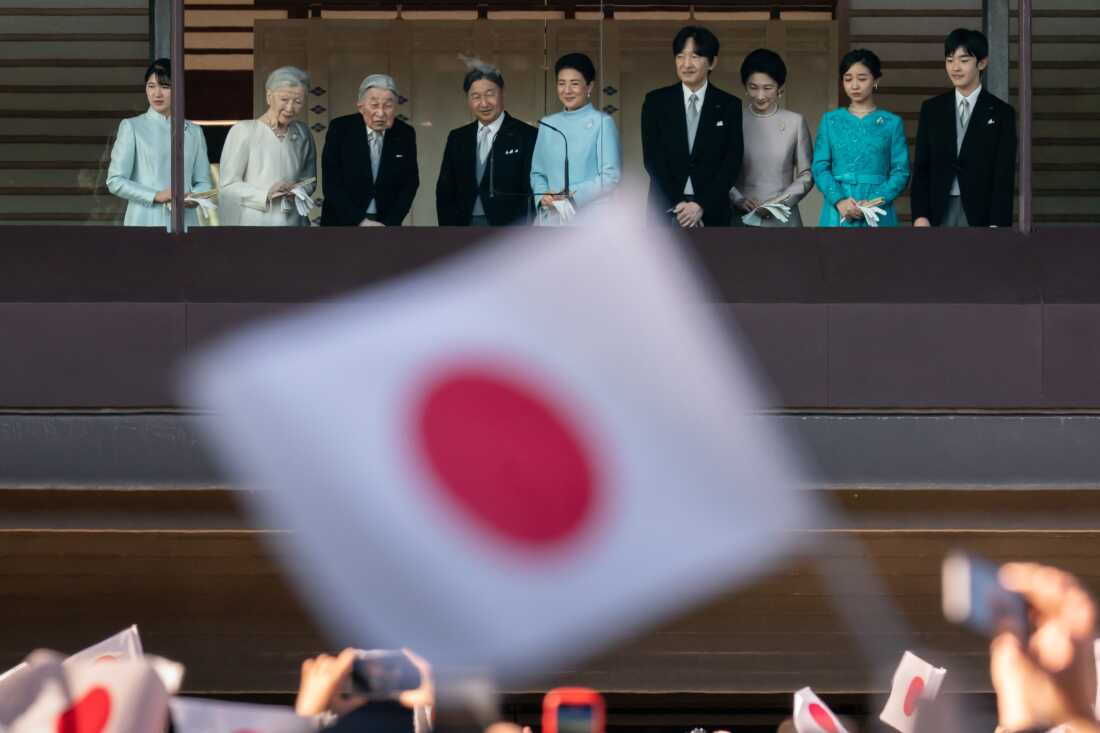
Emperor Naruhito of Japan departed following a ceremony at the Imperial Palace in Tokyo in 2019, marking the proclamation of his enthronement. The upper house of Japan’s parliament recently approved revisions to a law that governs throne inheritance in the world’s oldest hereditary monarchy. These changes, passed by the lower house days earlier, aim to secure the number of imperial family members and ensure their public duties amidst declining and aging family ranks.
Critics, including former diplomat Seiichiro Noboru, argue that the revisions aim to prevent the emergence of a female emperor. Public support and Japan’s constitutional monarchy’s stability are vital, especially as Japan moves beyond post-war military restraints and positions itself as a defender of international rules. The revisions allow princesses to remain in the imperial family after marrying commoners and permit adopting male descendants from former imperial family branches.
Princesses can remain part of the royal family after marriage but must perform royal duties without ascending the throne. Adopted men, originally commoners, cannot inherit the throne, yet their male offspring may be eligible. Concerns arise as Prince Hisahito, Emperor Naruhito’s 19-year-old nephew, represents the family’s last young heir, fostering a public sense of crisis.
Princess Aiko, Naruhito’s 24-year-old daughter, is seen as a candidate for emperor by many. With a degree in Japanese literature and full-time work at the Japanese Red Cross Society, crowds often gather for her public appearances. Polls indicate 60% to 90% support for female emperors, driven by Princess Aiko’s popularity.
However, Japan’s first female Prime Minister Sanae Takaichi opposes this. She asserts the male line’s maintenance over 126 generations as fundamental to the emperor’s legitimacy. Historically, Japan has seen eight female emperors from male-line descent, similar to Princess Aiko.
The male-only succession practice began in 1889, under the Meiji government’s Imperial Household Law. Emperors were commanders-in-chief and patriarchs, semi-divine descendants of Shinto. Married women were legally powerless, unable to own property or sign contracts independently. A safety valve in the law allowed concubines, due to high rates of infertility and mortality.
Many emperors were born to concubines, described as “of illegitimate descent” by a 2005 government report. Noboru argues that barring women from the throne violates constitutional assurances against gender discrimination. He notes that Japan’s constitution, granting sovereignty to the people, specifies the emperor as a symbol determined by public will.
Emperor Naruhito diplomatically commented, expressing hope for public understanding in discussions about maintaining imperial family numbers. The discourse reflects broader tensions between tradition and evolving societal norms.