Rising Mortgage Rates Impacting U.S. Homebuyers
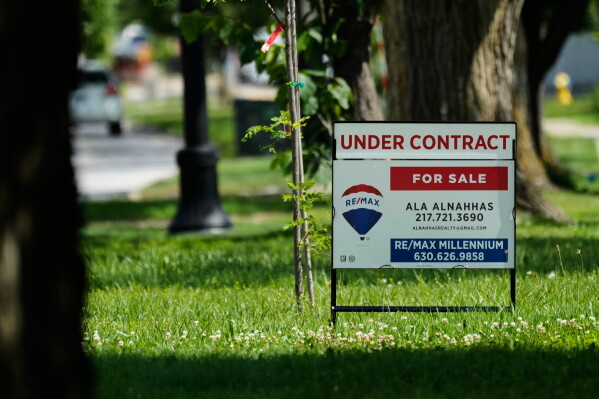
The average long-term mortgage rate in the U.S. increased this week, reaching its highest level in almost a year. This rise is affecting borrowing costs for those looking to buy a home. According to Freddie Mac, the benchmark 30-year fixed mortgage rate grew to 6.55% from 6.49% in the previous week. One year ago, it stood at 6.75%.
Higher mortgage rates can significantly increase monthly costs for borrowers, hindering the purchasing power of potential homebuyers. This is happening while many face challenges in affordability, preventing numerous aspiring homeowners from entering the market.
Several factors influence mortgage rates. These include the Federal Reserve’s interest rate decisions and the expectations of bond market investors regarding the economy and inflation. Mortgage rates often mirror the path of the 10-year Treasury yield, which lenders use to guide home loan pricing.
Rates have mostly increased this year. The conflict involving Iran has driven up crude oil prices, fueling inflation expectations. Consequently, long-term bond yields have risen compared to pre-conflict levels, causing mortgage rates to increase.
On the bond market, the 10-year Treasury yield reached 4.57% on Thursday, up from 4.54% the previous week. Before the conflict began in late February, it was 3.97%. The average rate on a 30-year mortgage is now the highest since August 28, when it was at 6.56%. Earlier, in late February, the average rate dipped slightly below 6% for the first time since late 2022.
Borrowing costs for 15-year fixed-rate mortgages, popular among those refinancing a home loan, also increased this week. The average rate climbed to 5.93% from 5.82% the previous week, reported Freddie Mac. A year ago, it was 5.92%.
A recent report indicated a cooling in prices paid by consumers for items like gas and clothes. This development could alleviate some pressure on the Federal Reserve, which is considering adjustments in interest rates. While the Fed does not directly set mortgage rates, its actions on short-term rates are observed closely by bond investors, affecting the yield on 10-year Treasurys.
“This cooler inflation reading is a step in the right direction, but until mortgage rates follow suit, buyers will continue to face high borrowing costs,” said Hannah Jones, senior economist at Realtor.com.
Despite the long-term mortgage rates being lower than they were last year, their upward trend has impacted home sales this year. Recent data from the National Association of Realtors showed that pending U.S. home sales fell by 5.4% in June compared to the previous month and were down 0.3% from June last year. Since there is typically a one to two-month delay between a contract signing and the finalization of a sale, pending home sales serve as a short-term indicator for the housing market.
Mortgage applications, which cover loans for purchasing a home or refinancing an existing mortgage, dropped by 2.7% last week compared to the previous week, as reported by the Mortgage Bankers Association. This decrease was largely due to a 7% fall in applications to buy a home.