Michigan Senate Race and El-Sayed’s Apology
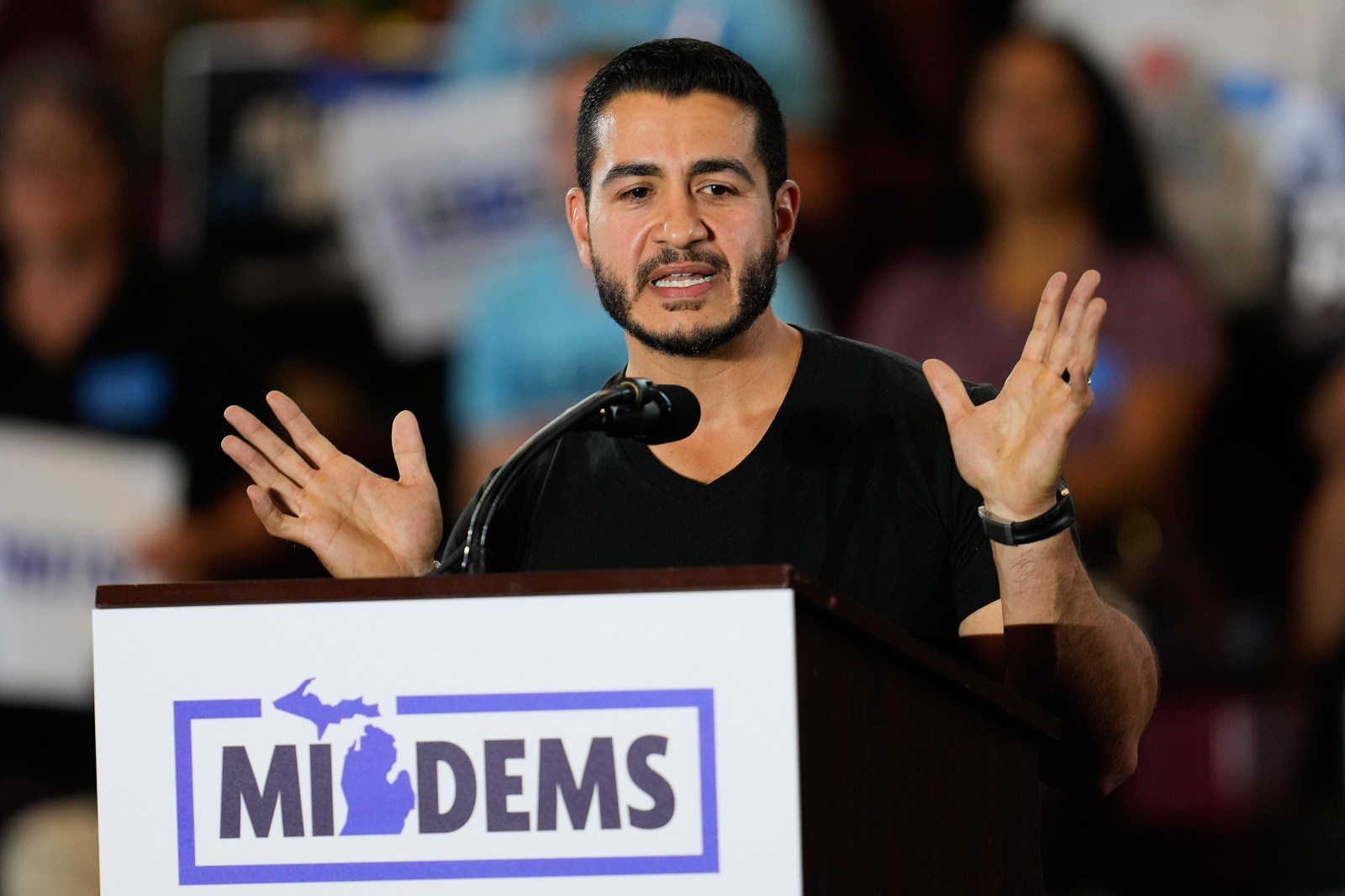
Abdul El-Sayed’s Apology
Abdul El-Sayed, the Democratic Senate nominee in Michigan, recently apologized to Jewish Democrats for remarks he made after a March attack on a synagogue near Detroit. His apology follows new polling that indicates a highly competitive race against Republican Mike Rogers. The Senate race is crucial, as it could influence control after the 2026 midterm elections. The Democrats are defending an open seat due to the retirement of Senator Gary Peters. El-Sayed’s candidacy has attracted attention for his progressive policies and criticism of the Israeli government.
The controversy over his comments post-attack has highlighted concerns among Jewish Democrats and moderates. These groups are essential for a win in a battleground state. El-Sayed said his comments were possibly misunderstood as justifying the attack, which was not his intention. Speaking in Lansing to the Michigan Democratic Jewish Caucus, El-Sayed expressed regret for any distress his remarks caused. He emphasized he did not mean harm.
The Attack on Temple Israel
El-Sayed’s apology is linked to his comments following a March attack on Temple Israel in West Bloomfield Township, Michigan. The FBI reported that Ayman Ghazali, inspired by Hezbollah, crashed his truck into the synagogue, intending to harm many. He recorded a video aiming to “kill as many as possible,” according to FBI Special Agent Jennifer Runyan. Ghazali’s violent act was labeled as a Hezbollah-inspired terrorist attack targeting the Jewish community.
Ghazali arrived at the synagogue early, remaining on-site for hours before driving into the building, injuring a security guard. He later exchanged gunfire with another guard and shot himself. El-Sayed’s statement, “hurt people hurt people,” drew criticism from Jewish Democratic leaders and Michigan Attorney General Dana Nessel for seemingly excusing the attacker’s actions. Nessel voiced concerns, interpreting the comment as excusing a deadly intent toward schoolchildren. El-Sayed later admitted his mistake and acknowledged that his attempt to provide context was ill-timed. He assured that his intention was never to disregard the Jewish community’s suffering.
Polling and Voter Sentiment
Despite the controversy, El-Sayed remains competitive in polls. The New York Times’ tracker shows a tight race with no clear leader. Public polls often have the candidates within a few percentage points. A RealClearPolling average shows El-Sayed slightly ahead of Rogers at 46.3 percent to 44.5 percent. An EPIC-MRA survey shows El-Sayed leading Rogers 47 percent to 43 percent, with a 4-point margin of error. A Fabrizio/Anzalone poll reflects a narrow 1-point lead for El-Sayed, 48 percent to 47 percent, with a 3.3-point margin of error.
Conversely, a Fox News poll gave Rogers a lead of 51 percent to 47 percent, with a 3-point margin of error. El-Sayed enjoys strong support among progressives and younger voters. Republicans argue his positions on Israel could challenge his appeal to moderates and suburban voters. As the election approaches, his strategy must balance these dynamics to secure victory.