Northern Michigan Wrestles with Ice Storm Aftermath and Future Climate Challenges
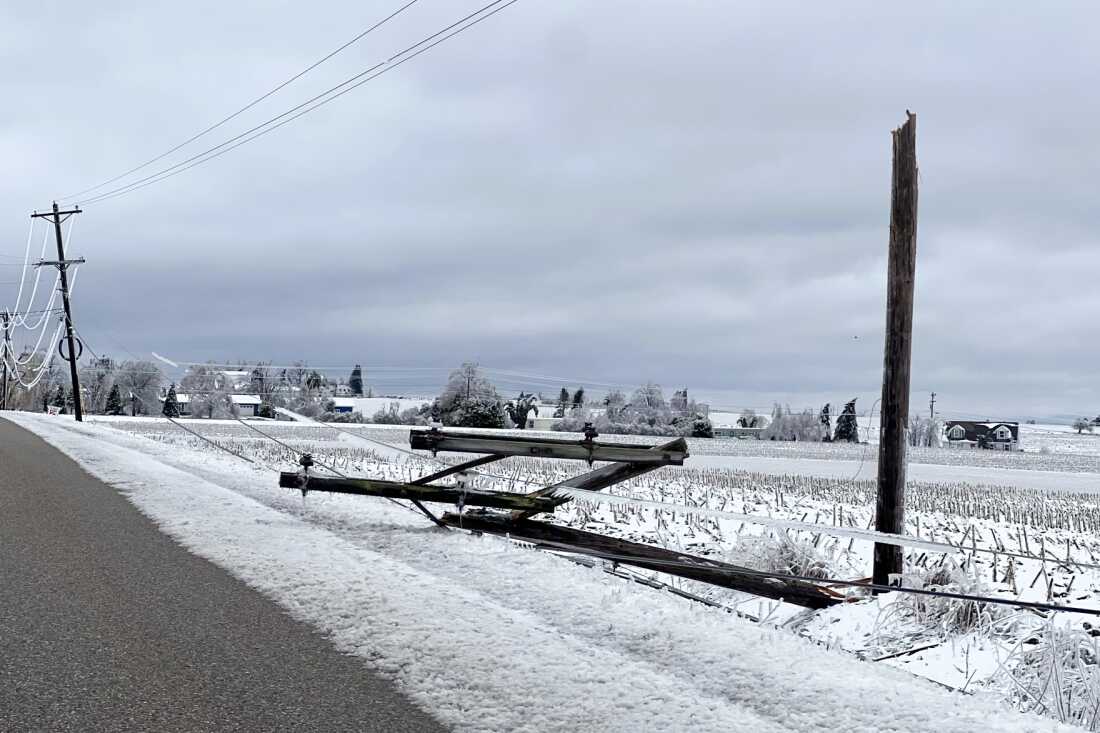
Impact of the March 2025 Ice Storm in Northern Michigan
An ice storm in northern Michigan in March 2025 led to significant damage and power outages, bringing down trees and power lines across the region. This event underscored the challenges associated with changing weather patterns in a warming climate. Research indicates that the area will experience more freezing rain instead of snow, potentially leading to more damaging ice storms.
During the blackout, Lewiston resident Wanda Whiting faced immense difficulties, including getting lost on dark roads when trying to reach the hospital with her husband, Dave, who was experiencing heart issues. Downed cables continued to pose risks, being potentially live even with power outages. Although Dave safely reached the hospital and recovered, power was not restored in the area for two weeks, highlighting vulnerabilities within Michigan’s power grid.
Preparing for a Different Future
The increasing frequency of severe weather events due to climate change suggests a need for changes in infrastructure. Michigan experiences some of the longest power outages nationally, a situation likely to worsen with future climatic shifts. Richard B. Rood, a professor emeritus at the University of Michigan, emphasizes the importance of acknowledging ongoing changes. He argues that current weather conditions represent a transition rather than a static state.
In response to these challenges, Michigan’s largest electric cooperative is now committed to burying all new power lines underground. This strategy aims to improve reliability during future storms.
Cost Considerations in Burying Power Lines
Despite its advantages, burying power lines comes with substantial costs. Utility companies and external researchers stress the financial burden, with Consumers Energy estimating costs of up to $400,000 per mile for underground lines in Michigan, and even higher costs in urban areas. Installing overhead lines remains significantly cheaper. Burying new lines during construction, when it is less expensive, often provides a compromise.
Tony Chartrand, Director of Electric Engineering and Operations for Traverse City Light & Power, notes the need to balance costs with reliability benefits. Great Lakes Energy plans to bury all new power lines responding to last year’s storm, despite the higher expenses.
Challenges and Community Buy-In
While buried lines reduce outages, they introduce challenges such as the need for digging up streets for repairs. Consequently, utilities need to weigh costs against benefits. Across the U.S., the prevalence of longer outages due to severe weather prompts more utilities to consider underground lines, according to Andrew Phillips from the Electric Power Research Institute.
The financial burden falls on consumers, warns Tao Sun, a Stanford University scholar. Utilities must transparently communicate costs and benefits to garner community support, ideally before disasters strike. This proactive approach contrasts with the typical reactive measures seen after disastrous events.
Reflecting on the storm’s aftermath, Wanda Whiting from Lewiston questions the resilience of newly installed overhead lines near her home. She advocates for underground lines as a solution to future outages and weather events.