Projected Winter Heating Costs and El Niño’s Influence
The U.S. Energy Information Administration (EIA) released its Winter Fuels Outlook, highlighting expected changes in heating costs for households this winter. The report considers four major heating fuels and anticipates average U.S. temperatures. It also evaluates the impact of the potential historic El Niño weather pattern.
Heating Costs Overview
According to the EIA, those relying on natural gas or propane for heating may benefit from reduced energy expenditures due to lower fuel costs. In contrast, households using electricity or heating oil may face increased costs.
- Natural gas users could see a reduction of about 9% in costs this winter.
- Propane users might experience a cost decrease of approximately 3%.
- Electricity users are expected to face a cost rise of around 4%.
- Heating oil costs could jump by about 21%, affecting roughly 3% of U.S. households.
Regional Temperature Impacts
Regional temperature variations are expected. Generally, similar or warmer temperatures are predicted for the South, Midwest, and Northeast. However, the West might encounter a colder winter, impacting cost changes. For instance:
- In the West, natural gas and electricity costs might increase by 7% and 9%, respectively.
- In the South, natural gas costs could decline by 15%, while electricity costs might rise by 3%.
- In the Midwest, natural gas costs might decrease by 10% with a 3% rise in electricity costs.
- In the Northeast, natural gas costs may fall by 14%, with a 3% drop in electricity costs.
Influence of El Niño
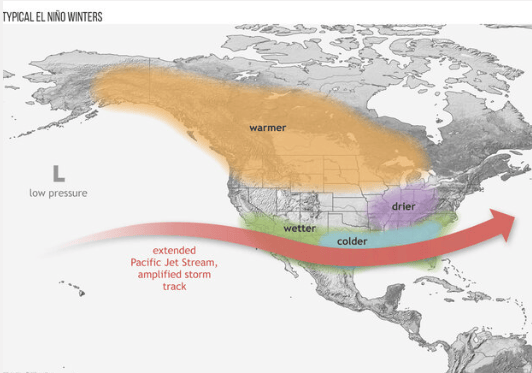
The EIA notes that this year’s El Niño, projected to be the strongest in recorded history, might cause significant temperature deviations. El Niño typically peaks between October and December, affecting North American weather. It usually results in warmer, dry conditions up north and a wetter south.
During El Niño years, regions like the West Coast might encounter increased high-tide flooding. According to Columbia University climate scientist Azhar Ehsan, this year’s atmospheric conditions resemble those of 1997, a year marked by disruptive weather events due to a strong El Niño.
In 1997, while the Northeast faced ice storms, the Southeast and California dealt with flooding rains. Florida experienced deadly tornadoes. Interestingly, 1997 saw nationwide heating costs 10% lower than usual, which could be a silver lining for 2026 amid rising energy expenses.
The National Energy Assistance Directors Association forecasts the average U.S. household will spend over $1,000 for heating this winter.