Record Number of Book Bans in U.S. Schools Raises Censorship Concerns
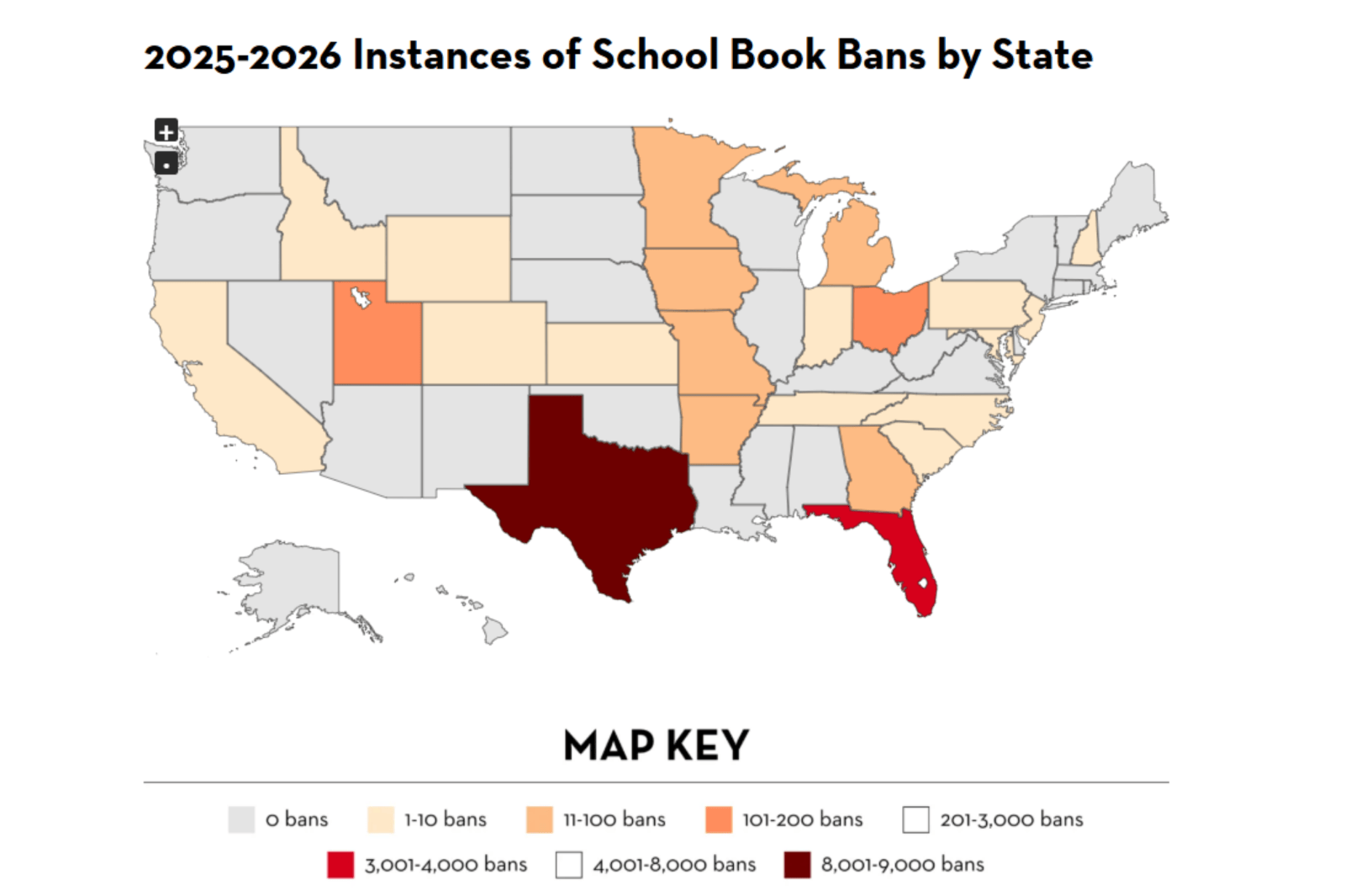
Nearly 12,000 books were removed from U.S. public schools during the 2025-26 school year, according to a recent PEN America report. This marks the highest number of recorded bans since the organization began tracking the issue in 2021. The free-speech organization found that public schools banned 11,982 books, which included 7,370 unique titles. Among them are classic novels, bestsellers, and popular manga series such as Jane Eyre by Charlotte Brontë, Lessons in Chemistry by Bonnie Garmus, and Tokyo Ghoul by Sui Ishida.
Texas and Florida led the number of bans, with Texas recording over 8,000 and Florida over 3,000 during the school year. Supporters of book bans argue against the notion of censorship, insisting parents and local communities should control the material available to children in public schools. They focus primarily on books containing sexual content, graphic imagery, or mature themes and argue the removal is about age appropriateness, not a restriction on speech.
Reasons Behind the Bans
PEN America highlights that state legislation and pressure from advocacy groups and officials drive many removals. Linking bans in 72% of the tracked districts to state laws or policies, the report notes that books featuring LGBTQ+ characters, people of color, discussions of race, and sexual themes are often targeted. The report also notes a trend in targeting manga and graphic novels due to specific illustrations depicting sex, violence, or gender identity, often taken out of context. Authors like Hajime Isayama (Attack on Titan), Atsushi Ohkubo (Fire Force and Soul Eater), and Rumiko Takahashi (InuYasha) are frequently affected.
AI’s Role in Book Evaluations
An emerging trend is using AI in reviewing books to comply with state laws. Public records reviewed by PEN show AI systems sometimes suggest removing books merely because other districts banned them, instead of assessing if they meet the legal standard for removal. This practice could lead to a “snowball effect” of spreading bans based on precedent rather than independent content review.
Supporters of Book Removal
Those in favor of restrictions argue that schools should review materials potentially containing explicit or inappropriate content for students, especially younger ones. For instance, Texas’ SB 13 requires districts to assess materials for “indecent” content. However, PEN America opposes these efforts, emphasizing that bans limit students’ access to diverse literature and viewpoints. They argue this curtails the freedom to read and meet literature that reflects various experiences and identities.
National Debate Over Book Bans
The surge in book bans has sparked a national debate on censorship, parental rights, and free expression. Illinois became the first state to respond by making public libraries ineligible for certain state funding if they banned books. Democratic Governor JB Pritzker framed the law as protecting free expression, stating young individuals should learn about worldly realities and develop critical thinking. Other influential voices opposing the bans include authors like Margaret Atwood, Judy Blume, and LeVar Burton. They warn against censorship, likening current events to past book suppression patterns.
As book bans in schools reach unprecedented levels, the conflict between advocates of free speech and those supporting increased oversight of library materials remains intense. This issue highlights ongoing debates in American education regarding students’ access to literature.