Reflecting on Religious Security Measures as America Turns 250
As Americans commemorate the 250th anniversary of their nation, discussions around freedom, pluralism, and religious liberty are expected. George Washington’s 1790 letter to the Hebrew Congregation in Newport, Rhode Island, remains a powerful expression of these ideals. He assured that the United States would “give to bigotry no sanction, to persecution no assistance.” Over two centuries later, it is crucial to evaluate how well this promise is being honored.
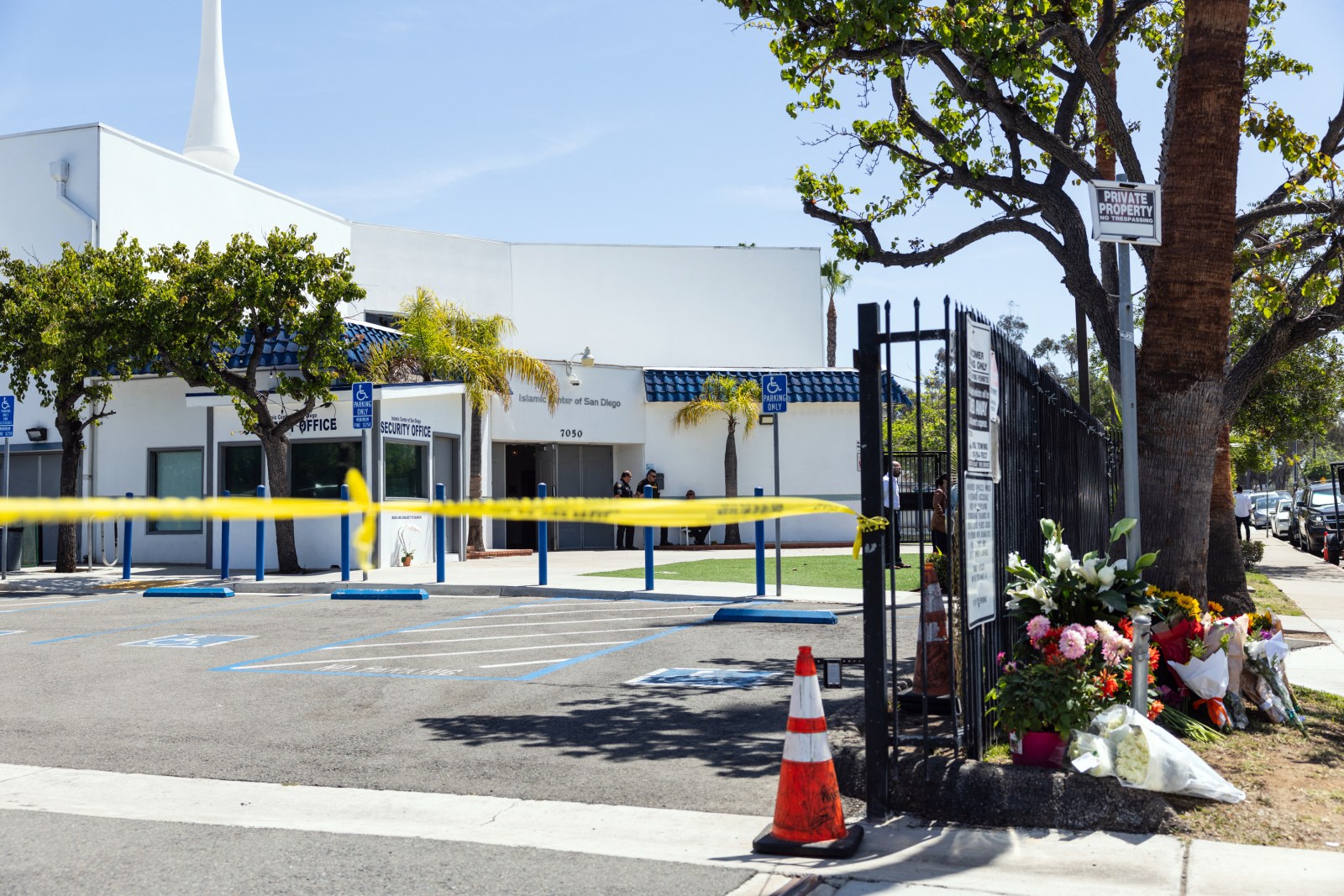
Recent incidents present a stark reality. On the fourth Friday following the tragic attack at the Islamic Center of San Diego, I attended prayers at a mosque in Los Angeles. The scene was marked by the presence of five armed guards overseeing over a thousand worshippers. Families arrived, friends greeted each other, and volunteers managed traffic. The security measures seemed routine.
On a visit from Canada three weeks earlier, my daughter joined me for Friday prayer. She paused to photograph a guard wearing a bulletproof vest and carrying what appeared to be a semiautomatic rifle. Her question, “Is this normal?” has an unsettling answer: yes. This troubling reality reflects the aftermath of the San Diego attack, which left three fatalities, including a security guard reportedly protecting worshippers. The day saw over 130 children present.
The Center for Strategic and International Studies notes this might be the first ideologically motivated lethal attack on a U.S. mosque this century, drawing parallels with the mosque attacks experienced in Christchurch, New Zealand, and Quebec City, Canada. The Islamic Center was prepared, having received federal and state security funding for various protective measures—yet tragedy struck. These precautions arguably mitigated a greater disaster, revealing how regular extraordinary security protocols have become for American worship spaces.
The security challenges are not exclusive to Muslims. Various faith communities, including Jewish, Christian, Sikh, Hindu, and others, face similar threats and vandalism. The prevailing question remains: how can houses of worship be kept open and inviting without vulnerability?
Security costs are significant, diverting funds from education, charity, counseling, or community projects. This was apparent as I donated at the mosque post-prayer. Since the attack, my contributions have doubled to help with increased security expenses. I understand the necessity, yet it is concerning that donations increasingly support protection over services.
According to the Muslim Public Affairs Council, attacks on Muslims have surged elevenfold. UC Berkeley’s Othering and Belonging Institute suggests over 80 percent of anti-Muslim hate incidents remain unreported, indicating a deeper issue than statistics reveal. Fear often escapes official data but surfaces in daily considerations: parents debating safety for their children, worshippers checking surroundings, and leaders assessing security affordability.
Security funding is crucial. California’s Council on American-Islamic Relations chapter has questioned the equitable distribution of security grants amid rising threats. The broader concern is not just the amount of funding religious institutions receive but the escalating need for such measures.
Since 9/11, American Muslims have experienced increased scrutiny, with mosques subjected to surveillance, vandalism, threats, and attacks. Anti-Muslim conspiracy theories have transitioned into mainstream dialogues. While most exposed to such rhetoric do not resort to violence, it shapes perceptions of belonging versus suspicion. Violence thrives in environments where fear and dehumanization are normalized.
The need for security guards at worship places, illustrated by the San Diego attack, did not arise in isolation. As the nation celebrates its 250th year, we should honor its progress and reflect on San Diego as a reminder. The issue is not merely about Muslim protection but about safeguarding America’s religious freedom.
The challenges facing mosques today resonate with all American worship spaces. As faith communities increasingly secure themselves, the nation risks drifting from Washington’s assurance of “no sanction to bigotry, no assistance to persecution.” A quarter millennium after the country’s inception, the crucial question remains: why do so many Americans feel worship requires such security?
Faisal Kutty, a law professor at Southwestern Law School and affiliate faculty at Rutgers Center for Security, Race and Rights, contributes editorially to the Washington Report on Middle East Affairs. The perspectives expressed here are his own.