Reflections on Emmett Till’s Legacy Through Art
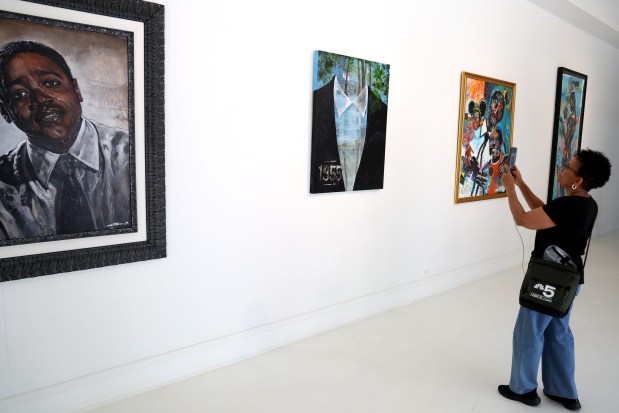
The questions surrounding social justice are profound, particularly when considering the legacy of Emmett Till. There is speculation on the impact if Till had lived, potentially altering the course of the Civil Rights Movement. Till was murdered in Mississippi in 1955, a tragedy that propelled national attention, largely due to his mother, Mamie Till-Mobley’s decision to reveal his body through an open casket. This act highlighted the brutality of racism, leaving an indelible mark on history.
At the time, Roy Bryant and his half-brother J.W. Milam, accused of the crime, were acquitted by an all-white jury despite confessing to the murder. Questions also remain about the lack of served warrant against Carolyn Bryant Donham, involved in the events leading up to Till’s death. These considerations arise as Till would have marked his 85th birthday.
Raymond Thomas, creative director of The Emmett Till and Mamie Till-Mobley Institute, organized an exhibit titled “From Memory to Movement: Emmett at 85” at Bronzeville’s Blanc Gallery. The exhibit features works from 11 Black Chicago-based contemporary artists, emphasizing Till’s humanity and the social structure of current times. Thomas described the assembly of art as akin to forming a band, highlighting how different works complement one another.
“We all have a connection to this legacy… everyone took their own personal journeys to find where they wanted to be with it,” Thomas stated.
Artists included in the exhibit are Paul Branton, Roger Carter, Gerald Griffin, Candace Hunter, Tonika Lewis Johnson, Bryant Lamont, John Caleb Pendleton, Max Sansing, Norman Teague, Bernard Williams, Kevin Williams, and Thomas himself. Candace Hunter, whose past work has focused on Trayvon Martin, contributed a surrealist piece reflecting Till’s final day and the rebirth symbolized by his casket.
Hunter remarked on her lifelong awareness of Till’s legacy, citing her proximity to Till’s last attended school, James McCosh, renamed Emmett Till Fine & Performing Arts School. She explained this ever-present influence shaped her and others in the community.
John Caleb Pendleton brought a unique perspective with his piece “Tallahatchie Chiffarobe,” showing an abstract woodwork incorporating symbols representing regeneration and chivalry. Pendleton, inspired by Southern elements and the impactful narrative of Till’s story, designed the piece to resonate with secrets and privacy characteristic of the South. He linked these themes to Till’s tragic narrative.
“At the base of it, I wanted it to feel like this chifforobe got busted up and got pulled out of the Tallahatchie River, and inside of the chifforobe is Emmett,” Pendleton noted.
Pendleton emphasized Mamie Till-Mobley’s resilience and the joy she reclaimed in life, connecting it to broader themes of confronting adversity and embracing joy.
Raymond Thomas contributed a mixed media collage “We Love You Paw Paw,” envisioning a future where Till grows up, marries, and has children, celebrating his 85th birthday as Paw-Paw surrounded by family. This work highlights the persistent neglect of Black dignity despite progress.
“This legacy is for everyone; that’s one thing I wanted to show in this work, to humanize, to show Emmett as a child, as a Black boy, and to show the joy of that too,” Thomas explained.
The exhibit runs until July 25 at Blanc Gallery, offering a reflection on Till’s impact through the prism of contemporary art. This initiative is part of broader programs recognizing what Till’s life symbolizes in the ongoing struggle for equality, linking arts and history to wider public consciousness.