Republican Election Challenges in Rural America
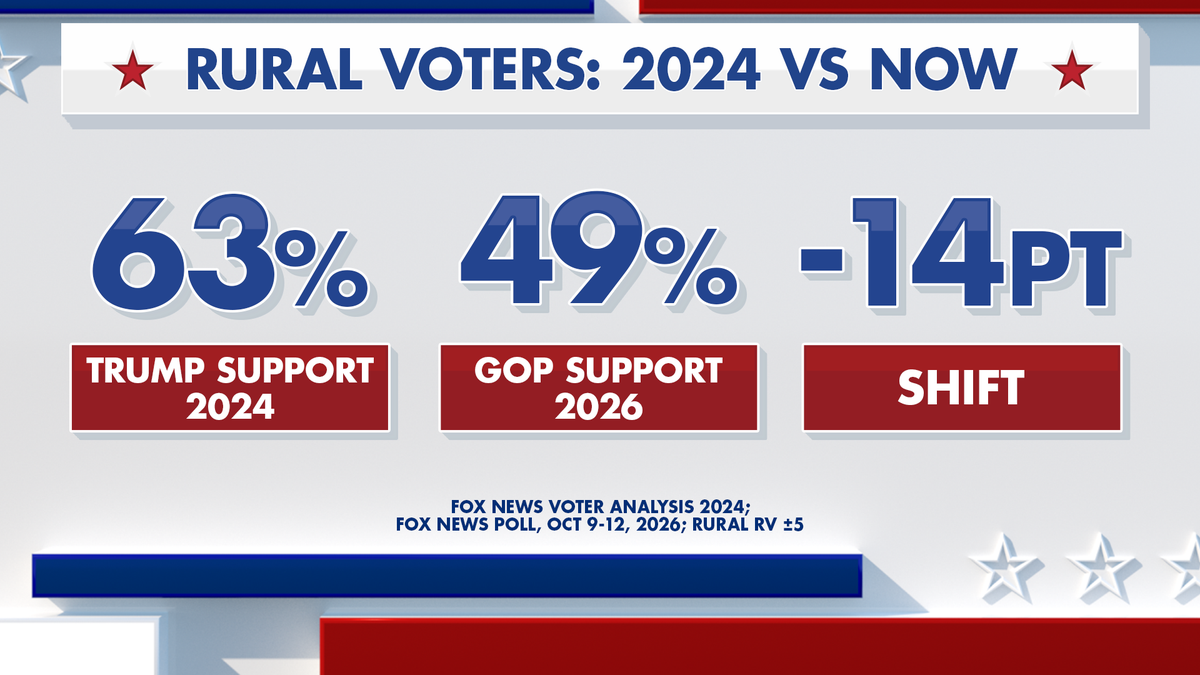
In recent years, Republicans have witnessed both favorable and unfavorable election nights, often relying on support from rural areas. Initially evenly divided, these rural voters have increasingly leaned towards the Republican party over the past two decades. Two-thirds supported former President Trump in the 2024 election.
Current Concerns Among Rural Voters
Despite previous support, under half of rural voters are currently indicating GOP support for upcoming elections in November. Economic concerns weigh heavily on these communities. A survey showed 19% of rural voters cite the rising cost of living as their primary economic worry, with gas and energy prices as notable issues.
The Trump administration attempted to address these concerns by discussing job growth and AI developments, but frustration persists among rural voters. Less than 25% perceive the economy as strong, with unemployment being a significant concern. Only 8% label lack of jobs as a major issue, while 28% believe good job opportunities exist locally.
Interestingly, data centers emerge as an unexpected issue for some rural voters, deemed a larger problem than housing or job availability by a small but noteworthy segment.
Impacts on Republican Political Landscape
These economic and social factors challenge Republicans across various states. Ohio and Iowa, traditionally heartland Republican states, have experienced heightened electoral competition throughout the year. Additionally, even rural districts that heavily favored Trump are witnessing narrower margins in polling.
The political climate is shifting, as evidenced by Wyoming TV ads for Republican Chuck Gray that avoid mentioning Trump or the party. This changes the dynamics for states like Florida, Mississippi, and South Carolina where historically strong Republican support might waver due to turnout issues or voter realignment.
Independent Candidates Influence
Another dynamic is the participation of independent candidates in Senate races within rural-focused states like Idaho, Montana, Nebraska, and South Dakota. Their platforms emphasize anti-establishment ideas like term limits and lobbying restrictions, with corruption as a principal voter concern.
Independents opting to avoid caucusing with either party complicate matters further. In Montana, despite diminished support for a Democrat remaining in the race, other Democratic factions have withdrawn from contests to avoid dividing votes.
This situation might lead to narrowed margins as voters disenchanted with traditional party choices turn to independents.
Historically, these states have demonstrated electoral competitiveness. For example, in 2018, Democrat Sen. Jon Tester retained his Montana seat, and prior Republican victories in South Dakota and Nebraska have been on the marginal side.
Key Gubernatorial Races
– Florida: Trump and Gov. Ron DeSantis represent influential figures in Florida’s political landscape. While Republicans benefit from structural strengths like significant voter registration margins and effective mobilization strategies, current dynamics differ. Hispanic voters, who historically influence outcomes, are showing decreased Republican preference, with only 31% supporting GOP candidates compared to higher past engagement.
Rep. Byron Donalds contends with Democrat David Jolly, receiving endorsement from DeSantis, yet facing challenges from shifting voter sentiments. Consequently, the race transitions from Likely R to Lean R.
– Nebraska: Republican Gov. Jim Pillen seeks reelection amidst new political pressures. Pillen’s prior victory cast him as a strong GOP figure, but wavering support from various voter segments poses challenges this cycle.
Factors impacting Nebraska’s gubernatorial contest include independent candidate Dan Osborn potentially amplifying Democratic turnout for challenger Lynne Walz, Pillen’s budgetary decisions receiving local critique, and the presence of America First party candidate Brett Lindstrom.