Rising Interest Rates and Economic Challenges: Implications for the U.S. Economy
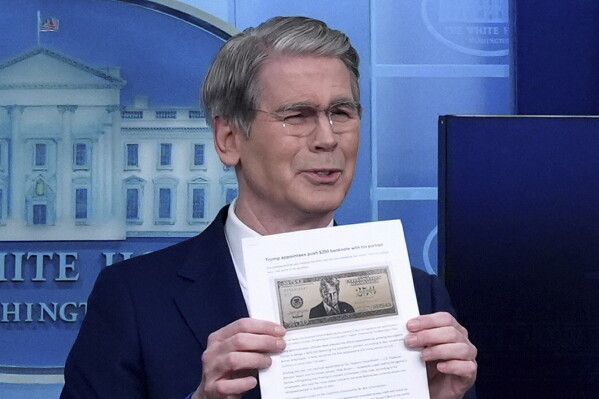
The global financial environment is increasingly wary of lending to the administration of President Donald Trump. This wariness is pushing interest rates higher, impacting affordability, hampering economic growth, and potentially affecting Republican prospects in the upcoming November midterm elections.
Impact of Global Events on U.S. Interest Rates
The recent conflict involving Iran has contributed to a surge in energy prices, which has influenced the cost of bonds that help fund the U.S. government. Interest rates on a 10-year U.S. Treasury note have risen to 4.44%, up from 3.95% prior to the conflict’s onset in February. Concurrently, average mortgage rates have climbed to their highest in nine months, and auto sales are experiencing a downturn.
This issue is not limited to the U.S. Interest rates are rising globally as countries grapple with higher inflation, concerns about government debt sustainability, and a significant increase in investment in artificial intelligence.
Trump’s Deficit Reduction Strategies Under Scrutiny
President Trump has attempted to reassure Americans with a plan to reduce the approximately $1.8 trillion annual budget deficit. In his approach, he has highlighted revenue from tariffs, visa fees, Department of Government Efficiency spending cuts, and anticipated economic growth. Recently, he indicated Vice President JD Vance’s fraud task force could unlock substantial savings.
“If he does really great, we’ll have a balanced budget without having to do anything,” Trump said.
However, economists are skeptical about the feasibility of Trump’s strategies to significantly reduce the deficit. Jessica Riedl, a budget and tax fellow at the Brookings Institution, points out that the national debt’s servicing cost has tripled since 2021, reaching over $1 trillion annually. She highlights that Trump’s tax cut legislation is projected to add $5 trillion to 10-year deficits, with tariffs offsetting only a small portion of those costs.
Further, deficits are expected to escalate as Social Security and Medicare expenses exceed tax revenues. While the 10-year U.S. Treasury rate climbed to 4.67% in May, it subsided as Iran ceasefire negotiations progressed.
The Bond Market’s Warning
Kent Smetters from the Penn Wharton Budget Model estimates that 60% of the rise in 30-year Treasury yields is due to continued extensive borrowing, with the remaining 40% attributed to inflation from the Iran conflict and Trump’s tariffs. Glenn Hubbard, a former chairman of the White House Council of Economic Advisers, expresses concern that the U.S. may not have the borrowing capacity to address an economic crisis akin to the 2008 crash or the coronavirus pandemic.
“I don’t think we have the space that we had in 2008 or 2020 to deal with it,” Hubbard said.
Political Ramifications and Democratic Strategies
Higher interest rates provide Democrats with a viable line of attack during their campaign to control Congress. Voters are already concerned about high costs for essentials, and these rising rates make it more challenging to afford mortgages, new cars, and manage credit card debt.
In Colorado’s fifth congressional district, Democrat Jessica Killin is emphasizing the detrimental effects of persistent deficits and higher interest rates. Joe Reagan, also pursuing the Democratic nomination, focuses on fiscal responsibility, noting that every dollar spent servicing debt interest is a dollar not invested in infrastructure or other crucial sectors.
They are both challenging Republican Rep. Jeff Crank, highlighting Trump’s deficit management as inconsistent with stated intentions.
Fraud and Deficit Reduction Hopes
The administration asserts that it will gradually reduce deficits. Though last year’s deficit, as a percentage of the economy, was lower than in 2024, this relied partly on tariffs deemed illegal by the Supreme Court. Treasury Secretary Scott Bessent recently cited potential savings from eliminating fraudulent government spending. However, these estimates are partly based on pandemic-era figures.
Despite attempts to tackle deficits, there remains skepticism about the administration’s targets. The bond market’s role remains pivotal, capable of exerting pressure for necessary financial reforms.
Glenn Hubbard underscores the critical role of trust in the debt market system.
“That is what debt is about: I believe you will pay me back,” Hubbard remarked. “That works until it doesn’t.”