Robots Mastering Disassembly for Repairs and Recycling
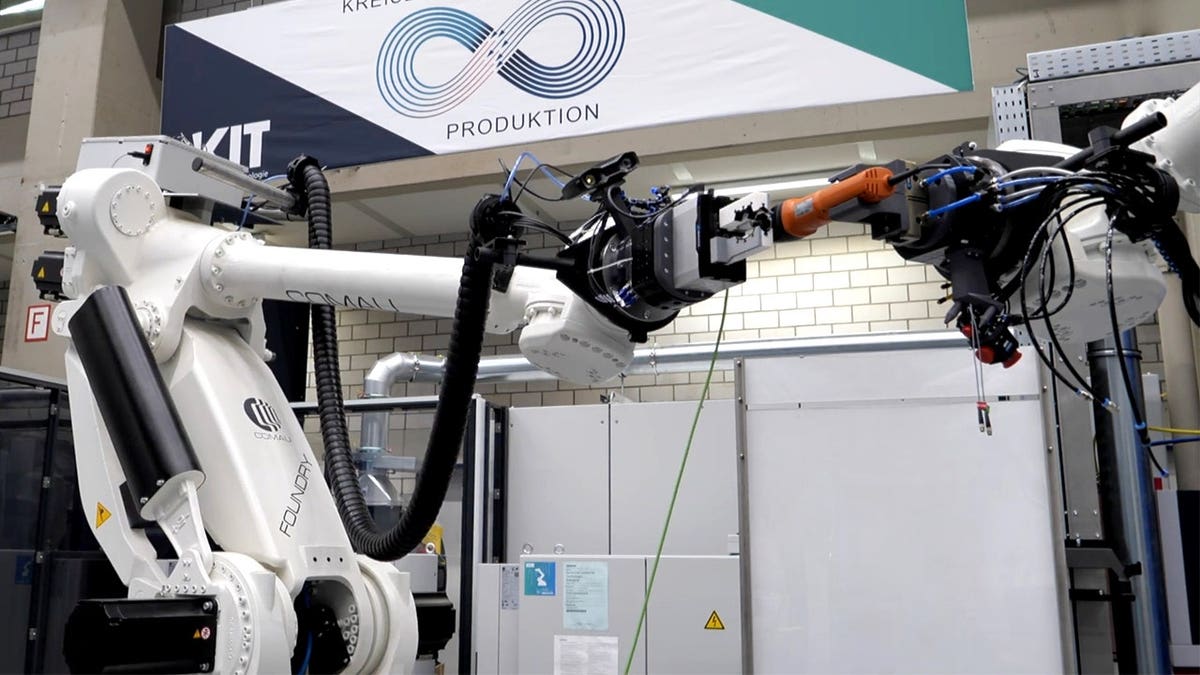
Robots have long been integral in assembling the products surrounding us. Now, researchers are guiding these machines to acquire a crucial skill: effective disassembly when products malfunction.
Currently, over 4.6 million industrial robots are operational worldwide. Demand for these machines is rising as manufacturers incorporate more automation into production. This trend raises an important question. What becomes of these machines and other complex products when parts wear out?
Adapting Robotic Systems for Disassembly
The Karlsruhe Institute of Technology in Germany has pioneered a robotic disassembly system to address these challenges. Typical disassembly requires assuming every screw and part operates seamlessly. However, this system prepares for the intricacies of worn machinery. Inconsistent screws, missing components, or machines differing from their original design are considered. The robot modifies its approach based on unfolding realities.
This system utilizes a probabilistic planning approach known as a Partially Observable Markov Decision Process (POMDP). This process acknowledges incomplete information, allowing the robot to adapt to new developments.
Tackling Uncertainty in Dismantling
Building something new in a factory is predictable. Robots follow precise movement and sequencing. However, dismantling old machines demands a different strategy. Parts can corrode, prior repairs can alter configurations, and unexpected obstacles can disrupt traditional automation.
Researcher Jan Baumgärtner exemplifies this. While assembling instructions are clear, dismantling a broken unit involves multiple uncertainties. Robots need not just instructions but the capability to reassess their environment.
System Performance and Potential
In their experiments, researchers simulated scenarios like stuck screws in electric motors. The robot, initially following expected steps, adapted upon encountering resistance, switching to alternatives like milling tools.
The underlying strategy necessitates adaptability. In trials, robots performed comparably on new components. Yet, probabilistic plans excelled when stuck parts complicated routes, providing quicker disassembly alternatives.
The Future of Automated Repairs
The researchers envision an environment where numerous robotic arms, each equipped for different tasks, work collaboratively. This could include both gentle disassembly and aggressive removal methods.
A crucial ambition is fostering a circular economy where manufacturers retain valuable parts from older units, negating the need to recycle entire machines. This could make repair more economical compared to replacing devices.
Such a system could prioritize high-value components during dismantling, allowing for strategic conservation and replacement.
Implications for Consumers
While fully automated repair stations in retail outlets remain distant, this study suggests a shift in manufacturer perspective regarding faulty products. Automated systems could aid in recovering valuable parts, especially in industries where refurbishing might prove more feasible.
The greater realization of this technology could hinge on whether manufacturers design future products for seamless robotic disassembly. Repair logistics often simplify when engineers anticipate dismantling needs during assembly planning.
Kurt Knutsson from CyberGuy indicates that adaptability to uncertainty is noteworthy. Robots historically function well in predictable settings, but acknowledging deviations could unlock significant applications in repair and recycling. If automation turns repairs cost-effective, it may challenge current consumption habits, paving the way for a more sustainable future.
Feedback on technology development can be shared at Cyberguy.com, where updates and insights into tech advancements continue.