Russia’s Advancing Submarine Capabilities Challenge NATO’s Northern Defenses
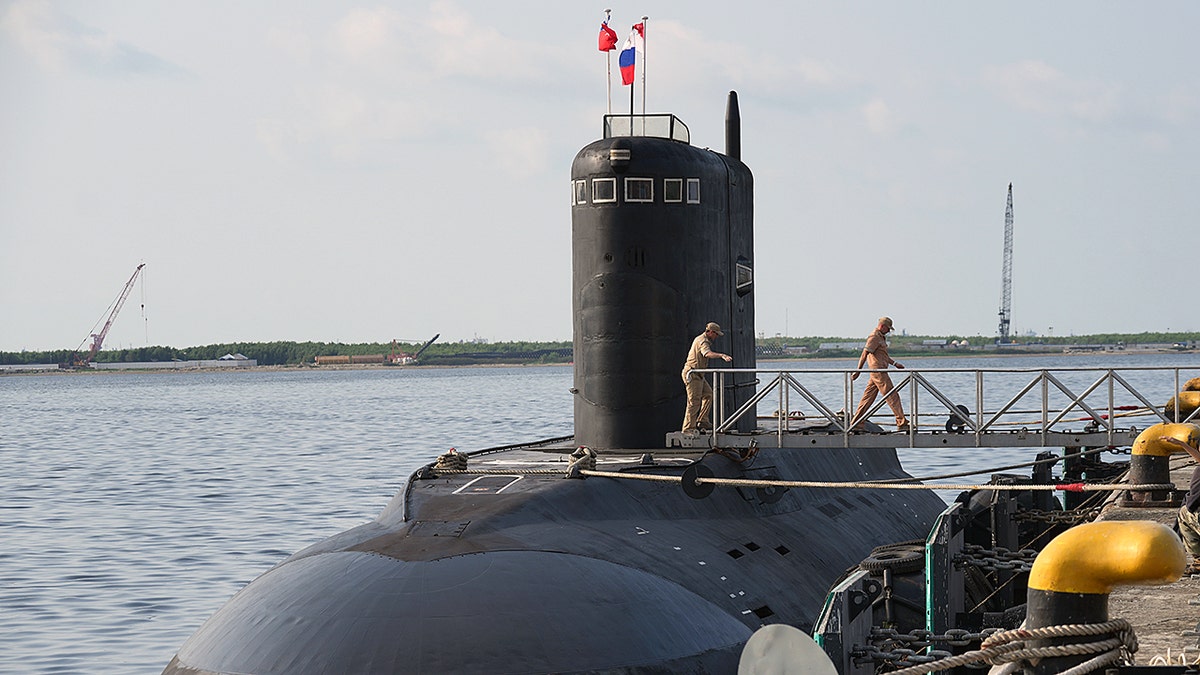
Russia’s next-generation nuclear-powered submarines are creating significant pressure on NATO’s northern defenses. These quieter submarines are advancing into the Arctic and North Atlantic, challenging NATO to secure its approaches in these regions. A former NATO commander highlighted this as part of President Vladimir Putin’s strategy involving new weapons and enhanced capabilities.
The situation is complicated by Russia’s fortified Kola Peninsula. Moscow has expanded military infrastructure there, including airfields and ports, to strengthen its hold over the Northern Sea Route and the strategic GIUK Gap (Greenland-Iceland-United Kingdom Gap).
NATO’s Allied Joint Force Command Brunssum emphasized on September 2 that the Russian submarine threat is serious.
The GIUK Gap represents a crucial chokepoint for Russian naval movements from the Arctic to the Atlantic Ocean. Retired Gen. Philip Breedlove, a former NATO supreme allied commander, noted the difficulties NATO faces in detecting and tracking these submarines. The submarines pose a significant risk, being capable of carrying submarine-launched ballistic and cruise missiles.
NATO is adapting to these developments with an increased northern military presence. Recently, NATO commenced ‘Arctic Sentry,’ a multidimensional military effort to coordinate activities in the Arctic and High North better.
Breedlove outlined the growing threat as Russia and China develop advanced submarine fleets, posing risks to coastal nations. Russian Yasen-M-class submarines, in particular, incorporate advanced stealth technology and are equipped for long-range strikes.
Breedlove indicated that Russia might be overemphasizing its advancements to divert attention from its challenges, such as the ongoing conflict in Ukraine. He stressed the need for NATO to improve its detection and tracking capabilities.
Russia sees economic opportunities in potentially controlling the Northern Passage, created by receding Arctic ice, as it offers quicker trade routes between Europe and Asia.
In response, Denmark has promised to protect Greenland, a critical geographic area influenced by these developments. Meanwhile, NATO’s increased military activity has drawn criticism from Russia, warning of potential instability in the Arctic.
Russian Foreign Minister Sergei Lavrov expressed concerns on August 30, emphasizing that Western military activity in the region poses a direct threat to Russian security.
With ongoing military developments and the race for Arctic control, geopolitical tensions continue to rise.