Santa Clarita’s Impressive Growth and the Urban Expansion of L.A.
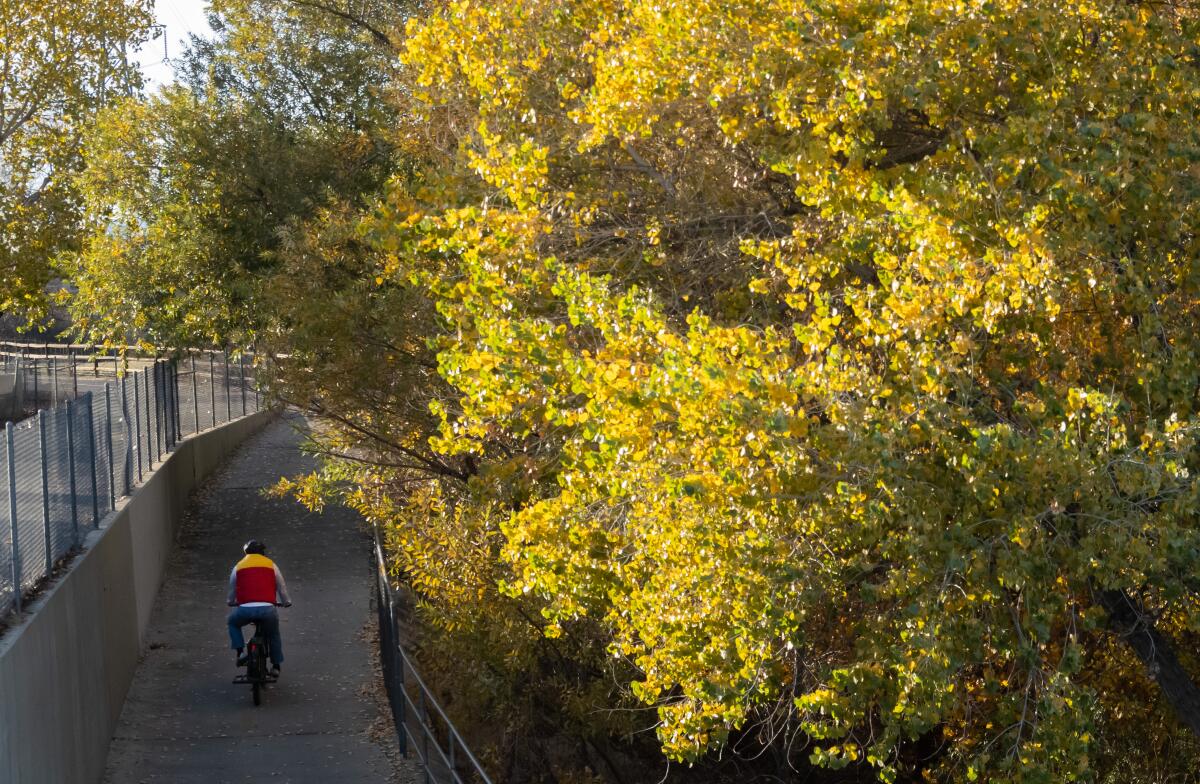
Nearly 30 years ago, discussions began about forming a city in the Santa Clarita Valley. At the time, the area consisted of distinct communities: suburban Valencia, historic Saugus and Newhall, and the rural Canyon Country. Developers recognized the potential for growth in this region 45 miles north of downtown Los Angeles. Over time, Santa Clarita has become the third-largest city in Los Angeles County, following L.A. and Long Beach.
Santa Clarita’s growth stands out as L.A. County’s overall population has grown slowly, from 9.76 million to 9.81 million between 2010 and 2024, a mere 0.5% increase. A significant factor in this limited growth is the scarcity of land available for new housing development. Meanwhile, Santa Clarita has led in expansion over the past 25 years, according to an analysis by the Times using U.S. census data. Neighboring Antelope Valley, known for affordable housing, is also experiencing growth.
“We don’t encourage growth, people have babies,” said Santa Clarita Mayor Laurene Weste.
The city’s development includes annexing unincorporated nearby areas, allowing it to expand and absorb more residents. Mayor Weste notes that the area has constructed 43 parks and secured 16,000 acres of open space to cater to its growing population. However, rapid growth brings challenges, especially concerning infrastructure, and there’s pressure from the state to add more housing.
Santa Clarita benefits from its closeness to job opportunities, particularly in the entertainment sector. Disney’s movie ranch and production facility contribute to local employment. Despite this, many residents still face long commutes, though services like commuter buses and Metrolink rail help.
Antelope Valley, encompassing Lancaster and Palmdale, attracts people with its affordable single-family homes. The region saw a population increase from 383,000 to 423,000 in 14 years. Compared to more developed parts of L.A., this area adds housing with minimal resistance from neighbors, given its available space.
Affordability remains crucial for those moving to these expanding areas. Former L.A. city councilmember Zev Yaroslavsky highlights that many Los Angeles County residents can’t afford the new housing developments, as nearly half earn below $90,000 a year. Proposed developments, like the significant housing project in Tejon Pass, face regulatory challenges.
L.A.’s Downtown and Playa Vista Expansion
Downtown Los Angeles has seen substantial high-rise construction over the past 15 years, especially in South Park near Crypto.com Arena. Despite issues like crime and homelessness, the area is shifting towards residential development. The downtown population increased by 44% from 2010 to 2024, reaching 82,000, according to the Department of City Planning.
Nick Griffin, a DTLA Alliance executive, noted that “25% of all multifamily growth in L.A. County” during this time was downtown.
Office spaces have seen higher vacancy rates post-COVID-19, but residential growth supports the area. There’s interest in converting offices into residential spaces to accommodate more residents.
Playa Vista, a planned community on the Westside, has witnessed even more growth. It doubled its population within ten years by utilizing unused lands, formerly part of the Hughes aircraft facility, for thousands of housing units. Playa Vista offers something rare in Los Angeles—a planned community that feels more like Irvine than LA, with manicured streets, park spaces, and new development opportunities.
Initially, Playa Vista had wetlands, but development reshaped the area into a community with planned infrastructure accommodating modern living.