Smog Worsens in Southern California in 2026
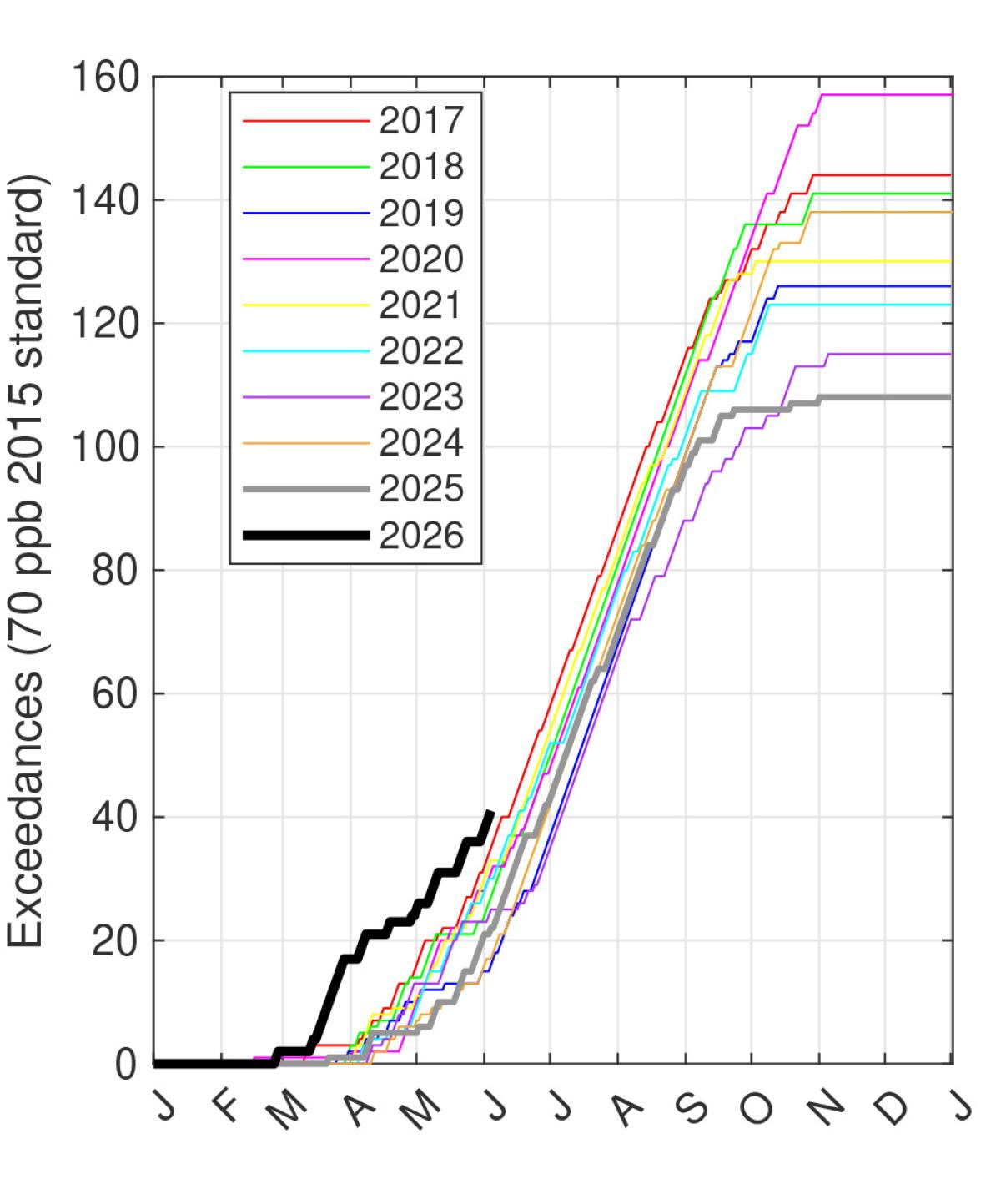
The initial five months of 2026 have marked the worst period for air quality in Southern California in over ten years. Statewide air monitoring data indicates an increase in unhealthful air days, particularly in the South Coast air basin. This area, which includes the counties of Los Angeles, Orange, Riverside, and San Bernardino, has recorded 39 days of elevated ozone levels surpassing federal standards.
The situation is more alarming compared to 2017, noted for its intense heat and pollution, which had 36 unhealthful air days by early June. Ultimately, that year recorded 145 such days. The elevated levels of ozone, a corrosive gas known to exacerbate asthma and other respiratory conditions, impact nearly 18 million residents in the air basin.
Adrian Martinez, from Earthjustice’s Right to Zero campaign, expressed concern over this year’s developments. He emphasized that Southern California already suffers from the worst summer smog nationwide and that 2026 could become one of its worst years.
April saw severe pollution in valleys, with the San Fernando Valley’s Reseda monitoring site measuring a decade-high spike in hourly ozone levels. The South Coast Air Quality Management District associates the raised ozone levels with unusual early heat waves. However, no increase in the primary pollutants that spur ozone production has been reported.
March recorded unprecedented warmth in California, with Riverside experiencing 13 days of temperatures above 90°F. Sarah Rees of the air district highlighted that such conditions, typically seen in the summer, appeared in March, worsening ozone levels.
Residents receive advisories to track pollution levels via the agency’s website and app and limit outdoor activities when ozone levels remain high. Unlike visible and odorous wildfire smoke, ozone pollution is difficult to detect.
The region’s dependency on gas-powered vehicles disproportionately contributes to smog formation. Sunshine and geographic features exacerbate the issue by trapping pollution in populated areas. Air quality regulations have progressively reduced pollution over 50 years, but the area still struggles to meet federal standards.
A recent air district meeting honored William Burke, who chaired many initiatives aimed at emission reduction. Despite advances, speakers and residents, including Erik Morden, stressed the need for ongoing improvement. Morden, recalling decades of poor visibility, acknowledged progress but noted persistent problems with particulates and chemicals.
Martinez called for government action to encourage transitions to zero-emission technologies, emphasizing that while the agency cannot control the weather, it can address pollution levels. He highlights the need for regulation to mitigate the impact of rising temperatures and ongoing pollution.