SpaceX Falcon 9 Rocket Fragment Expected to Impact Moon
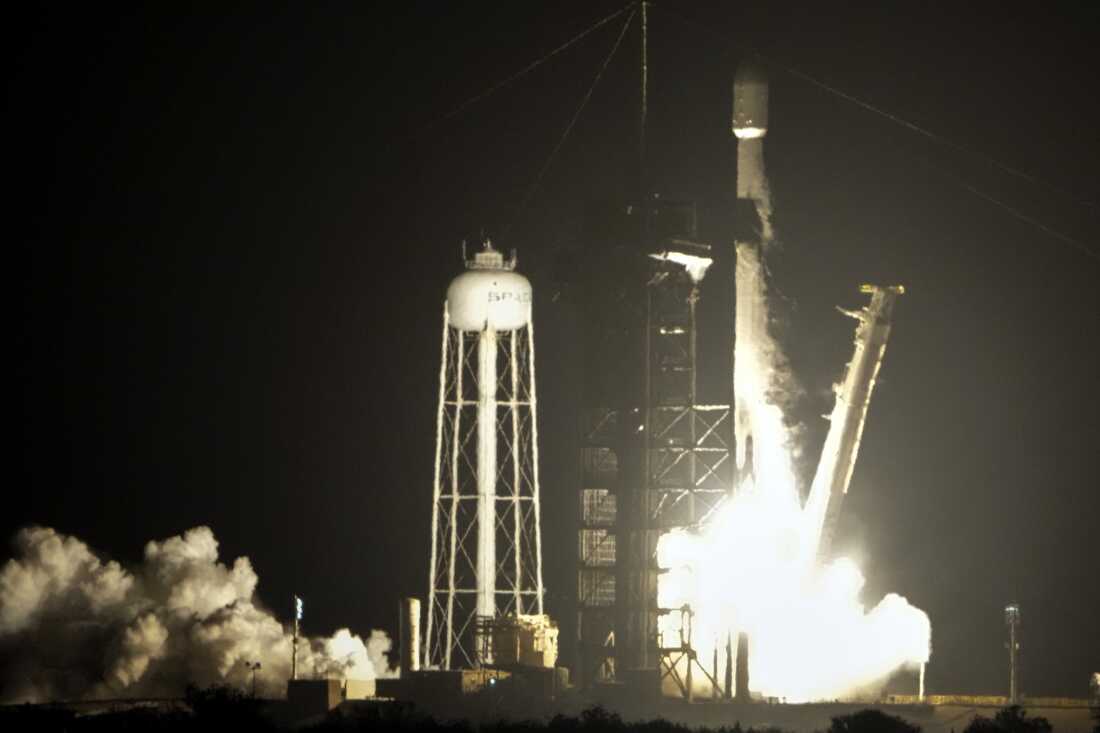
A segment of a SpaceX Falcon 9 rocket is anticipated to collide with the moon. Scientists predict this will happen on Wednesday at approximately 2:35 a.m. ET, moving at over 5,000 miles per hour. This information comes from Bill Gray, a developer of software for tracking objects in space. The fragment is comparable in size to a five-story building and originates from the upper part of a Falcon 9 rocket.
This rocket previously delivered two lunar landers and scientific instruments to the moon in January 2025. The fragment is expected to impact the sunlit side of the moon facing Earth. It will likely land near the northwestern part of the Einstein Crater, with potential to create a crater at least 17 meters wide.
SpaceX did not plan for this piece to strike the moon, as noted by the Associated Press. NPR reached out to SpaceX for a comment but has not yet received a response.
Observations and Implications
Brent Garry, a project scientist at NASA Goddard Space Flight Center for the Lunar Reconnaissance Orbiter (LRO), indicated the orbiter would survey the area before and after the impact. This will help to assess any changes in the lunar surface. He mentioned potential for further targeting of the site about a week following the incident.
“After the impact, we might have slightly more information on its location. We will conduct additional targeting soon after,” Garry mentioned during a NASA discussion.
While the impact might not be easily visible, there is a possibility for rocks ejected to form a visible plume against the moon’s dark background, as noted by Bill Gray. However, some researchers believe that although detection can be difficult, sensitive telescopes could provide observation opportunities.
According to Ben Fernando, a researcher from Los Alamos National Laboratory, the impact could present a rare opportunity for scientific observation. He encourages those interested, and aware of the risks, to attempt observation with appropriate equipment.
“This event is rare, so for those equipped and willing, it could be worth a try,” Fernando stated.