Supreme Court Examines Modern Implications of Video Privacy Protection Act in Salazar v. Paramount Global
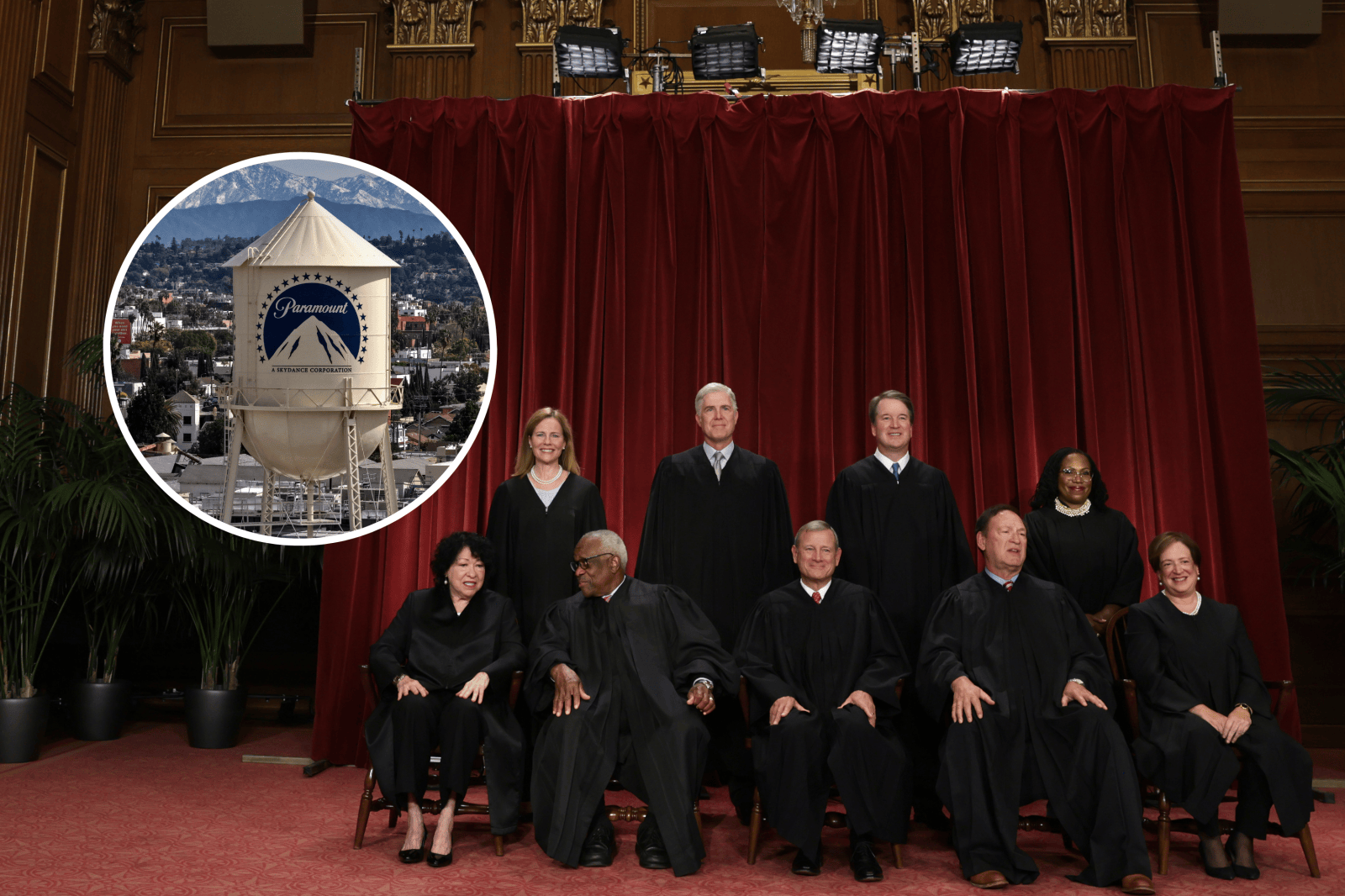
The Supreme Court recently addressed a case with significant implications for digital privacy litigation: Salazar v. Paramount Global. This case revolves around the Video Privacy Protection Act (VPPA) of 1988, a law initially instituted to safeguard the personal information of consumers. The Court is evaluating how this legislation holds up in today’s digital environment.
Case Background
Michael Salazar filed the lawsuit, accusing Paramount of infringing upon the VPPA by sharing his video viewing history from the website 247Sports.com to Facebook without securing his consent. Salazar cites the 1988 law that prohibits the sharing of personal identification and viewing data unless consumer consent is provided. He has pursued a similar case in the past against the NBA.
Paramount contends that Salazar does not fall under the category of a protected consumer. Their defense is based on the argument that he was only subscribed to a newsletter, rather than a direct video service.
The Hearing and Legal Arguments
During the Court’s hearing, Paul Clement, Paramount’s attorney, posited examples such as Chick-fil-A, which hosts videos on its site but is not primarily a video service provider. Videos automatically playing on websites were also highlighted as commonplace occurrences.
Chief Justice John Roberts challenged Clement’s position, suggesting that relying on simple hypotheticals like Chick-fil-A may not be entirely relevant. He mentioned that many retailers have diversified offerings that could include video services, prompting dialogue among the justices that resulted in laughter during explanations of easy versus complex legal scenarios.
Paramount vs. Salazar Arguments
Newsweek reached out to the legal teams for both Paramount and Salazar but did not receive immediate responses.
According to court documents, Salazar claims that 247Sports.com improperly shared his personally identifiable information with Facebook to facilitate targeted advertising. A lower court previously sided with Paramount, stating Salazar’s newsletter subscription did not equate to a video service subscription.
Other court decisions have contradicted this, potentially designating newsletter subscribers as consumers under the VPPA when associated with video content providers.
The Central Legal Question
The key issue facing the Supreme Court is whether “goods or services from a video tape service provider” includes all services provided by the entity or specifically focuses on audiovisual offerings.
During the Wednesday arguments, Salazar’s attorney, Joshua Hammack, argued against narrowing the law’s definition to include only audiovisual content, asserting Congress applied audiovisual limitations selectively within the law.
Ultimately, Hammack emphasized that establishing video service provider status requires more than occasional videos on a platform. He underscored the necessity of being actively engaged in video service provision to fall under the VPPA.
The Video Privacy Protection Act of 1988 Explained
The VPPA came into existence in response to a privacy scandal involving the unauthorized release of Supreme Court nominee Robert Bork’s video rental history during his confirmation hearings. The controversy, although not impacting Bork’s nomination directly, instigated bipartisan support for creating the law to prevent similar breaches of privacy.
Next Steps
The Supreme Court is expected to deliver a decision on this matter by the end of its current term, likely by June 2027. This case is among several crucial cases the Court will rule on, addressing significant issues such as voting rights and climate change litigation.
This article includes content reported by the Associated Press.
For further information about this case, contact Gray R. Thomas at Newsweek.