The Abandoned Prospects of a Venus Flyby Mission
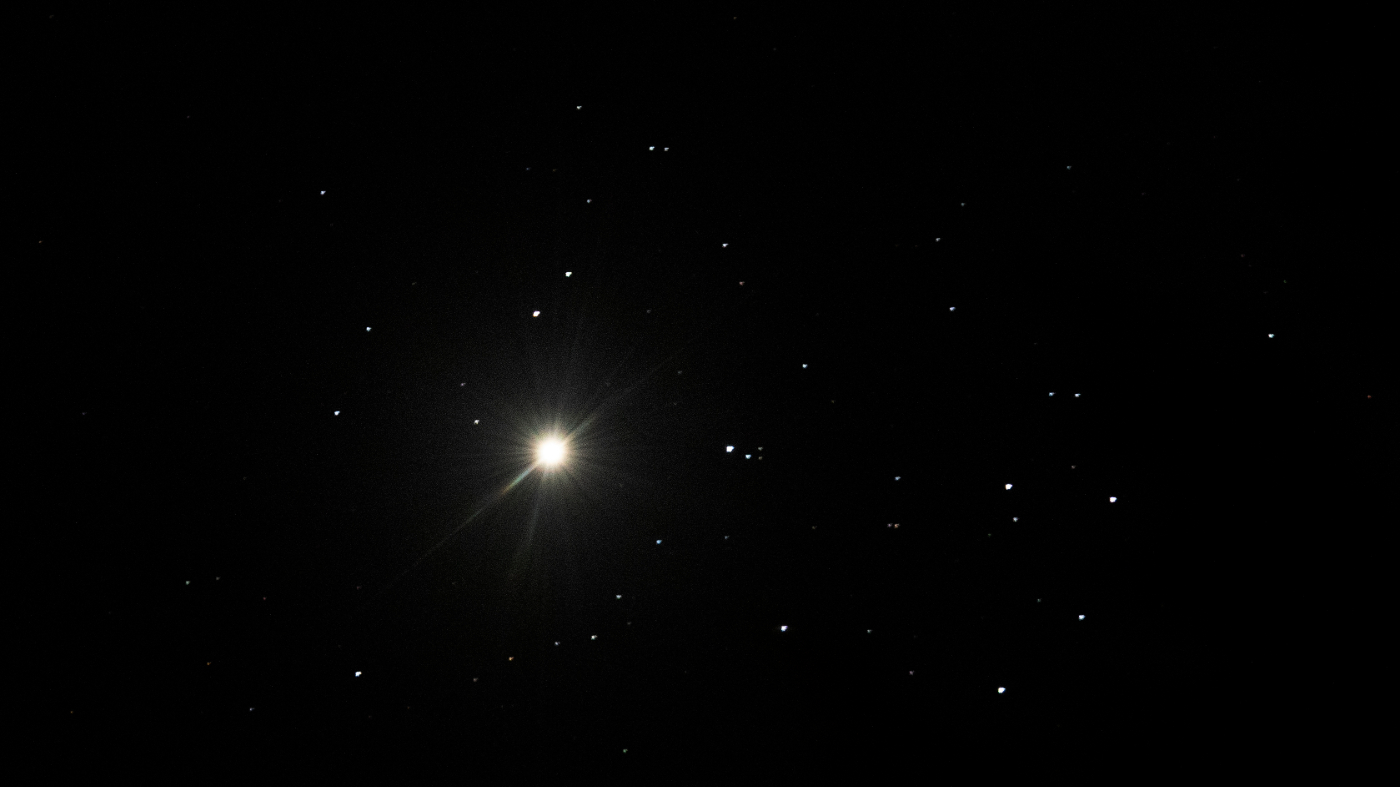
The bright planet Venus aligned with the Pleiades star cluster on April 3, 2020, as observed from Olympia, Washington. Known as the ‘seven sisters,’ this celestial gathering occurs roughly every eight years. In the realm of entertainment, Apple TV+ highlighted a fictional Soviet Venus flyby in its series ‘Star City,’ connected to the ‘For All Mankind’ universe. What many might not know is the reality that NASA earnestly considered similar missions in the 1970s.
The Apollo Applications Program, a NASA initiative, explored various space missions utilizing Apollo/Saturn technologies. These included extended lunar missions and crewed space stations. NASA assessed these ideas even before Apollo 11’s historic landing. Among the ambitious concepts was a crewed Venus flyby, a prospect made daunting by the period’s technological limitations and limited understanding of long-duration space travel’s impact on humans.
Bellcomm, a Bell Labs subsidiary, conducted NASA’s study into the Venus mission. Kirk Sorenson, an engineer, summarized the study on the Selenian Boondocks blog. The mission envisioned launching an Apollo capsule via a Saturn V rocket into low Earth orbit, using a modified Environmental Support Module for the journey. The S-IVB stage of Saturn would propel the craft towards Venus, with the remaining fuel expelled into space. Astronauts would adapt parts of the fuel tank into living quarters, a process dubbed the ‘wet workshop.’
The envisioned spacecraft, equipped with solar panels, would travel for 123 days to reach Venus. As the spacecraft neared Venus, it would conduct radar scans and perform spectroscopic and photographic research. Plans included launching an orbiter and deploying 14 atmospheric probes to gain insights into Venus’ environment. These probes aimed to study atmospheric density, meteorological phenomena, surface conditions, and local weather patterns.
Upon return, the Apollo command module would rely on an enhanced heat shield to safely re-enter Earth’s atmosphere, concluding the 396-day mission. Despite its potential, the Venus flyby project never materialized. NASA experienced budget constraints due to Congressional cuts, even before the Apollo 11 success. This fiscal downsizing led to the cancellation of the final three Apollo missions, with Skylab as the sole realization of the Apollo Applications vision.
In recent decades, NASA and other agencies, like the European Space Agency and Japan’s space program, have executed numerous unmanned missions to Venus. These missions have revealed a planet shrouded in harsh conditions, with high atmospheric pressure and scorching surface temperatures.
Presently, the focus of space exploration lies on the Moon and Mars. However, the idea of a crewed mission to Venus remains speculative but not entirely dismissed. With advances in technology, a SpaceX Starship could theoretically accommodate a crewed voyage around Venus, though landing remains impractical due to Venusian conditions. Mark R. Whittington, an expert on space policy issues, has explored these topics extensively in his writings.