The Eastern Cottonwood: A Fascinating Native Tree
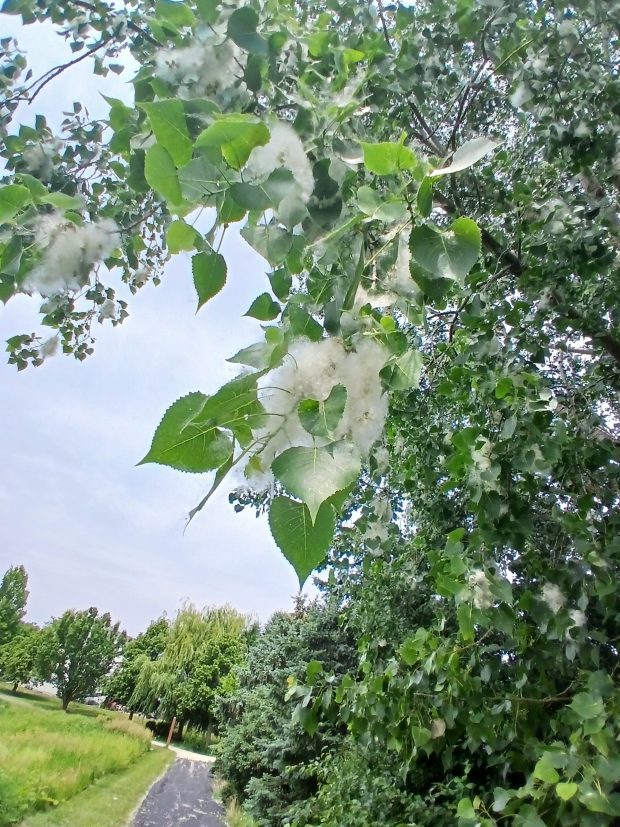
Growing up, many notice small cotton-like fluffs in the air during June. These fluffs are seeds from the eastern cottonwood tree. As children, it’s easy to imagine these as summer snow gently accumulating on sidewalks.
Recently, I visited two Lake County forest preserves to spot more eastern cottonwoods. They are identifiable by their 3- to 7-inch-long, triangular leaves with tiny, rounded teeth and pointed ends. In Half Day Woods, I observed mature eastern cottonwoods reaching heights of 100 feet or more. The largest in Illinois, found in Ogle County, stands at 122 feet, estimated to be 200 years old.
Cottonwoods, part of the poplar family, thrive in moist areas near rivers and lakes. Young ones have greenish-gray bark, while mature trees display a furrowed, gray texture. Their leaves flap rapidly in the wind due to long stems connecting them to branches. The cottonwood begins producing seeds around 10 years old, with prolific seeding at 30 years old. Only the female trees produce the cotton fluff, which forms on catkins in early spring. Pollination occurs when pollen from male flowers drifts to female flowers. The flowering leads to seeds attached to white hairs known as pappi, allowing wind and water to disperse them.
The seeds symbolize summer’s start for some, like Bill Richmond of Palatine. Others dislike the mess and associated sneezes. Botanists clarify that cottonwood fluff doesn’t trigger allergies; pollen from other trees like oaks often do.
Cottonwoods may pose challenges. Their large roots can disrupt septic systems and pipes, and brittle limbs may break during storms. Some towns ban planting them on public property, considering them a lesser quality tree. The Lake County Forest Preserves removes some cottonwoods to promote diverse native plant growth, as does the Forest Preserves of Cook County.
Historically, Native Americans used cottonwood bark for food and medicine. In modern times, its bark serves for pulpwood and kitchen utensils. Various birds, such as Baltimore orioles and great blue herons, nest in these trees. Rose-breasted grosbeaks enjoy the seeds, cedar waxwings consume the flowers, and beavers eat the bark and leaves. The tree also helps prevent streambank erosion.
Cottonwoods play a vital role in ecosystems, deserving recognition alongside trees like oaks. They contribute magic to environments such as the Des Plaines River area.