The Innovation Legacy of the United States
The innovations that propelled the United States to global superpower status are woven into the fabric of daily life. From the lightbulb to flight, medical advancements, and the digital era, America’s intellectual prowess has dramatically shaped the last 250 years. The patent system is the cornerstone of these developments, according to Eric S. Hintz, a historian at the Smithsonian Institution’s National Museum of American History.
U.S. Patent System
The Constitution laid the foundation for the intellectual property clause in 1788, with the first patent statute signed by George Washington in 1790. This legislation was designed to support both individuals and the nation. Hintz notes the first patent law awarded rights to the original inventor, providing opportunities long before societal equality was fully realized.
By 2026, the United States Patent and Trademark Office had granted over 12,650,000 patents. This system provides government protection to inventors, after which inventions enter the public domain to foster further creative work.
Agricultural Innovations
Agriculture was one of the earliest fields impacted by U.S. patents. European settlers expanded indigenous American crops and introduced new ones like cotton, driving innovation after discovering profitability in farming.
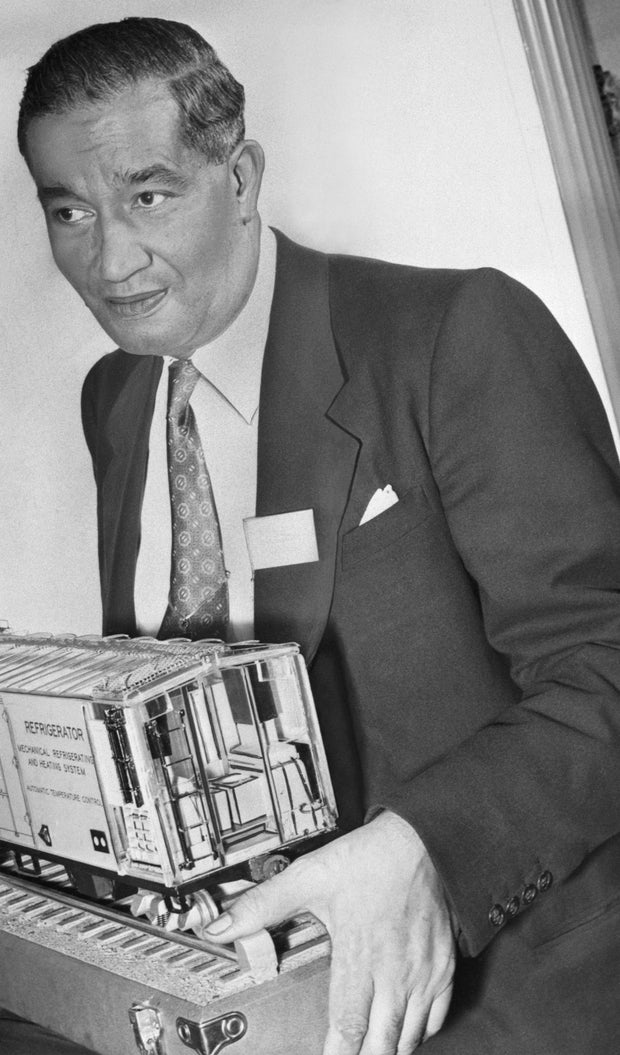
Eli Whitney’s cotton gin revolutionized raw cotton production, while Francis Cabot Lowell’s power loom transformed Lowell, Massachusetts into a textile hub. Innovations continued with Cyrus Hall McCormick’s mechanical reaper and Frederick McKinley Jones’ refrigeration system for trucks, enabling efficient transport of perishable goods.
Advancements in Transportation
Early American transportation relied heavily on walking, horse-drawn carriages, and waterways. Challenges like upstream navigation were addressed by steamboat patents granted to John Fitch and James Rumsey, leading to Robert Fulton’s commercialized vessel.
The 19th-century boom in railroad tracks provided coast-to-coast coverage, and in 1903, the Wright brothers achieved powered flight with the Wright Flyer. Katherine Wright, often overlooked, played an essential role in their success, demonstrating the contributions of women to technological advancement.
Electricity and Its Transformative Effects
Electricity eradicated the restrictions of daylight. Charles F. Brush’s arc lamp illuminated Cleveland’s Public Square, marking a milestone in electric street-light systems. Electricity is deemed America’s most vital invention, opening avenues for safety, entertainment, and industry.
Communication Evolution
Thomas Edison’s enhancement of Alexander Graham Bell’s telephone transmitter improved call clarity and volume, leading to numerous innovations including the phonograph and expanded communication networks.
Manufacturing and Fuel Innovations
The U.S. transitioned from a bespoke artisanal system to mass production via innovations like Eli Whitney Jr.’s weapons manufacturing contract and the standardization techniques introduced by Samuel Colt.
Edwin Drake’s oil well in 1859 spurred America’s petroleum age, with ongoing political impacts and a gradual move toward alternative energy sources like nuclear, solar, and wind.
Medical Advances
Major breakthroughs in medical science enhanced public health. Germ theory led to vaccines, including polio, while penicillin during World War II marked medical collaboration efforts. Modern techniques like imaging and rapid vaccine developments continue to drive health improvements.
Computing Revolution
The U.S. Census spurred early computational developments, leading to machines like ENIAC at the University of Pennsylvania. This laid groundwork for subsequent advances in personal computing and smartphones, sparking a digital revolution.
The Era of Video and American Culture
Motion pictures, photography, and television reshaped American culture, providing new avenues for entertainment and information dissemination. The Telstar satellite further expanded this by enabling cross-continental broadcasts.
Considering the impact of innovations, Hintz imagines how pre-modern America would appear to extraterrestrial observers. America’s development has brought dramatic change, highlighting the transformative power of innovation across sectors.