The Mosquito Bowl: Unveiling World War II’s Human Cost Through Film
By October 25, 2026 / 10:10 AM EDT / CBS News
The battle of Okinawa remains the last and most damaging conflict of World War II in the Pacific. Director Peter Berg aims for this event to stay etched in our memory with his upcoming film, “The Mosquito Bowl.” The movie seeks to provoke reflection on what society demands from its young men and women during wartime.
Berg’s film is inspired by Buzz Bissinger’s book, also the writer of “Friday Night Lights,” a film that marked Berg’s breakthrough. Despite its title, “The Mosquito Bowl” isn’t about football games. “It’s a film about the war’s human toll,” Berg emphasized.
The film narrates the true story of four All-American football players who enlisted in the Marines after Pearl Harbor. They trained at Parris Island, South Carolina, where Berg discussed the film. “These young men joined the Marine Corps thinking they’d triumph like they did in sports,” Berg explained. Encountering the Japanese, who believed their emperor was divine and opposed surrender, proved a different reality.
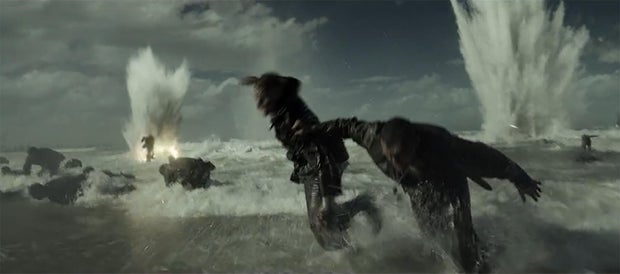
Their first confrontation was on Tarawa, an obscure coral island. The images of American casualties there brought the human cost of war into American homes for the first time, a narrative central to Berg’s film. “I wanted the battle scenes real and terrifying,” Berg said.
Berg’s filmmaking style uses authentic flamethrowers and explosions. His preparatory approach mirrors this authenticity. For “Friday Night Lights,” he immersed with a Texan high school football team, and for “Lone Survivor,” he spent time with Navy SEALs in Iraq. Berg crafted much of “The Mosquito Bowl” script at Parris Island, aiming for an authentic experience.
At Parris Island, the recruits remind Berg of future wars’ human costs. “It’s a dangerous, powerful group of humans,” he remarked, acknowledging both the potential and the weight of that responsibility.
Berg’s personal connection to the story runs deep: his father served as a Marine in the Korean War. “My father rests in Arlington, a place I often visit,” Berg shared emotionally, noting his father would have appreciated the film.
The film’s title derives from a Guadalcanal football game preceding the Marines’ deployment to Okinawa. This game signified a moment of life appreciation for the young soldiers. Neal McCallum, a veteran who attended the game, recalls its significance. “It’s a great game that ended in a tie,” McCallum said, prevented from a rematch due to imminent battle preparations.
Berg, who began his career as an actor, portrays the commanding general emphasizing the battle’s rigors in the movie. The grueling Battle of Okinawa is recreated in Australia, highlighting the war’s extensive sacrifices. More than 12,000 Americans perished in Okinawa, including 15 football players from the Mosquito Bowl. Japanese military and Okinawan civilian losses were devastating.
The magnitude of war’s destruction remains unforgettable for witnesses like McCullum. “The intensity ensures you remember,” he said. Berg aims to ensure the film lets audiences feel and acknowledge the war’s human cost. “I want viewers to feel they experienced it,” Berg expressed.
“The Mosquito Bowl” premieres in theaters on October 30 and will be available for streaming on Netflix starting November 25.
For further information, readers may explore “The Mosquito Bowl: A Game of Life and Death in World War II” by Buzz Bissinger available in various formats.