The U.S. Strategy Toward Cuba: Parallels and Divergences with Venezuela
The U.S. Strategy: Cuba vs. Venezuela
The United States government’s strategy against Cuba closely mirrors the one implemented in Venezuela. Experts note that similar pressure campaigns do not guarantee similar outcomes, despite President Donald Trump’s frequent warnings that “Cuba is the next.” Brian Finucane, senior advisor at the International Crisis Group and former State Department lawyer, remarked on Trump’s view of intervention in Venezuela as a fantastic success. Trump sought to replicate Venezuela’s model elsewhere, including in Iran, but Cuba, like Iran, differs greatly from Venezuela.
If the U.S. overthrew Cuba’s government, no clear successor might work with Trump. This contrasts with Venezuela, where the U.S. captured President Nicolás Maduro in January, leading to his deputy, Delcy Rodríguez, taking over with U.S. approval. Anonymous Cuban officials stated, “there is no Delcy in Cuba.”
U.S. Military Presence
Finucane noted a reduced and less intimidating U.S. military presence in the Caribbean compared to the massive deployment near Venezuela before Maduro’s capture. Additionally, indictments against a 94-year-old former Cuban president, Raúl Castro, carry less weight than drug trafficking charges against Venezuela’s sitting president.
“The likelihood of results in Cuba like those in Venezuela seems remote,” said Finucane.
Threats and Military Operations
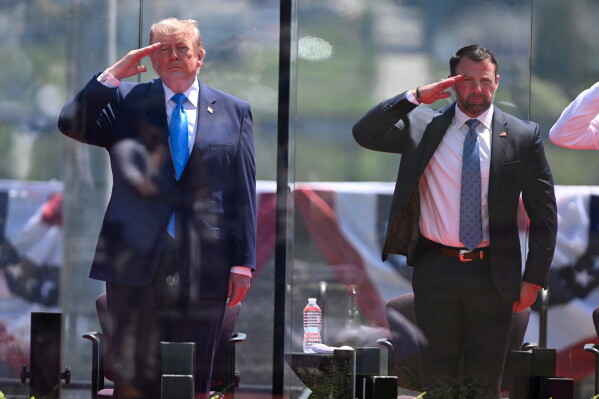
Trump has threatened Caribbean leaders to align with U.S. power or face consequences. Prior to the military operation capturing Maduro, Trump appeared with security advisors in Florida, issuing one of his last public threats to Maduro. After Maduro’s extradition to the U.S., Trump shifted focus to Cuba, naming it next on his list. On January 5, Trump told reporters that Cuba seemed ready to fall.
Later, Trump threatened tariffs on countries selling or supplying oil to Cuba, expressing that the U.S. might “honorably take Cuba.” On Thursday, he labeled Cuba a “failed country,” predicting he would be the president to address the issue.
Oil Embargoes
U.S. oil embargoes against Cuba and Venezuela aim for similar pressure on ruling elites but utilize opposing methods. For Venezuela, Trump’s government targeted oil exports, denying Maduro’s government revenue. Post-Maduro, the focus shifted to blocking Venezuela from exporting oil to Cuba without cash payments. Much Venezuelan crude now goes through U.S. refineries.
For Cuba, the embargo restricts oil imports amid an energy shortage, although limited shipments are allowed despite Cuba announcing depleted reserves. The oil blockade, part of the broader decades-long embargo, drastically impacts Cuba’s ability to provide power and fuel.
Finucane warned that excessive pressure might push Cubans toward Florida in makeshift boats, reminiscent of the 1990s.
“Trump is especially concerned about immigration. Too much pressure on Cuba could destabilize the island, risking a refugee crisis.”
Charges Against Officials
The U.S. Department of Justice charged Maduro with criminal conspiracy tied to narcoterrorism in Trump’s first term, 2020. This facilitated Maduro’s capture; he’s currently in New York awaiting trial, having pleaded not guilty. The indictment changed U.S.-Venezuela relations, permitting sanctioned Venezuelan oil sales to U.S. companies and globally—a major shift from years of embargoing Venezuela’s government and oil sector.
William LeoGrande, Latin American politics professor at American University, explained the formal charges against Castro for 1996 Cuban exile aircraft downings as another step in Trump’s pressure campaign. Capturing Castro on charges including murder and aircraft destruction would not alter Cuban governance.
“Castro remains influential, consulted on major decisions but not directing daily government operations,” LeoGrande stated.
Increasing U.S. Military in the Region
Prior to Maduro’s capture, the U.S. deployed warships near Venezuela in its largest Latin American military operation in generations. The USS Gerald R. Ford, the country’s most advanced aircraft carrier, shifted from Europe to join the mission. Three amphibious assault ships carried roughly 2,000 Marines, helicopters, and Osprey aircraft. U.S. forces targeted small vessels accused of smuggling drugs in the Caribbean and eastern Pacific. Combat aircraft patrolled the Venezuelan Gulf.
More than 150 aircraft participated in the hemisphere-wide mission to capture Maduro. The current U.S. force in the Caribbean is smaller, yet includes two amphibious assault ships with Marines. Notably, the USS Nimitz and accompanying warships arrived the day Castro’s charges were announced. However, Nimitz is on its final tour, engaged in regional maritime exercises before being decommissioned.
“The situations differ greatly, making similar outcomes difficult to foresee,” commented Finucane. “A swift raid to capture Raúl Castro or any actual leader seems unlikely to achieve the same result as seen in Venezuela.”