Timber Industry Faces Challenges Amid Policy Changes and Economic Pressures
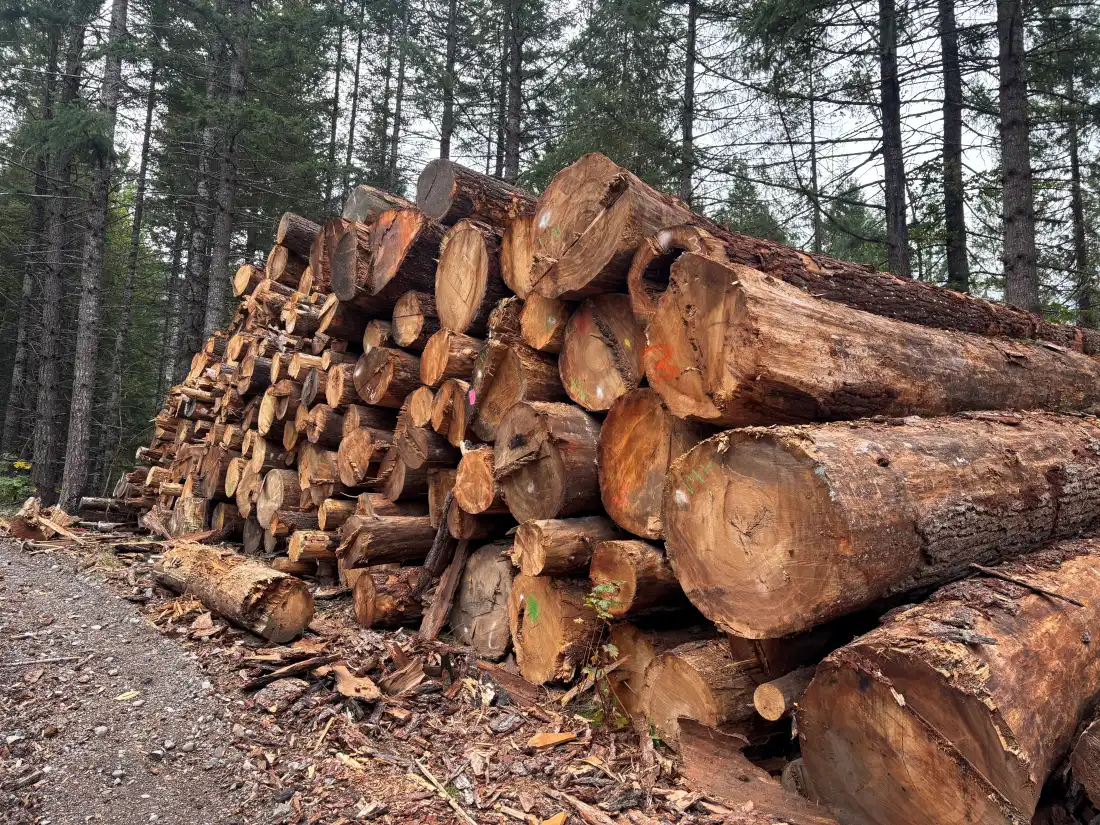
Logs from a salvage timber sale are seen after a recent wildfire in the Willamette National Forest in Oregon. President Trump is expected to open up 44 million acres of untouched national forests. This move aims to increase timber jobs in small towns and reduce wildfire threats in overgrown regions.
Trump’s executive actions last year hinted at a significant increase in timber sales on U.S. Forest Service lands. These actions aim to reverse the 25-year Roadless Rule, which restricted new logging on undeveloped national forestlands. With the formal repeal expected next year, the situation for the timber industry seems complicated.
Those in the industry, like Sean Smith, CEO of Starfire Lumber in Cottage Grove, Ore, believe larger issues exist beyond access to forestry. Standing amidst stacks of timber, Smith points to high diesel fuel prices affecting operations. Economists attribute this to geopolitical tensions. Inflation further raises costs for essential parts like sawblades and ball bearings, making the Roadless Rule’s repeal a lower priority than other immediate challenges.
While the administration supports the repeal, claiming benefits for wildfire prevention and job creation, the reality is complex. According to Jeff Brink, a logger near Eugene, Ore, labor shortages and high diesel prices threaten smaller businesses. Since the 1990s, environmental laws and market forces reduced federal timber sales by 90%. Rural mills suffer or close as a result.
Ingalsbee, a former Forest Service firefighter, criticizes the plans for more road building and logging. He argues these actions won’t aid firefighters but rather increase wildfire risks due to human activity. Ingalsbee views Trump’s policies as ideologically driven, lacking real economic benefit for the industry.
Another key issue is the inconsistency in federal policies. Congress’s inability to solidify protections or development provisions exacerbates this. When President Clinton signed the Roadless Rule, Republican-controlled Congress showed little interest in wilderness legislation. The rule remains a controversial topic, reflecting deep national divisions.
At Starfire Lumber, Smith expresses frustration with the policy swings between administrations. This inconsistency complicates long-term business planning. Although cynical about Congress’s inaction, he recognizes that constant legal changes hinder business stability.