Trump Challenges Presidential Records Act
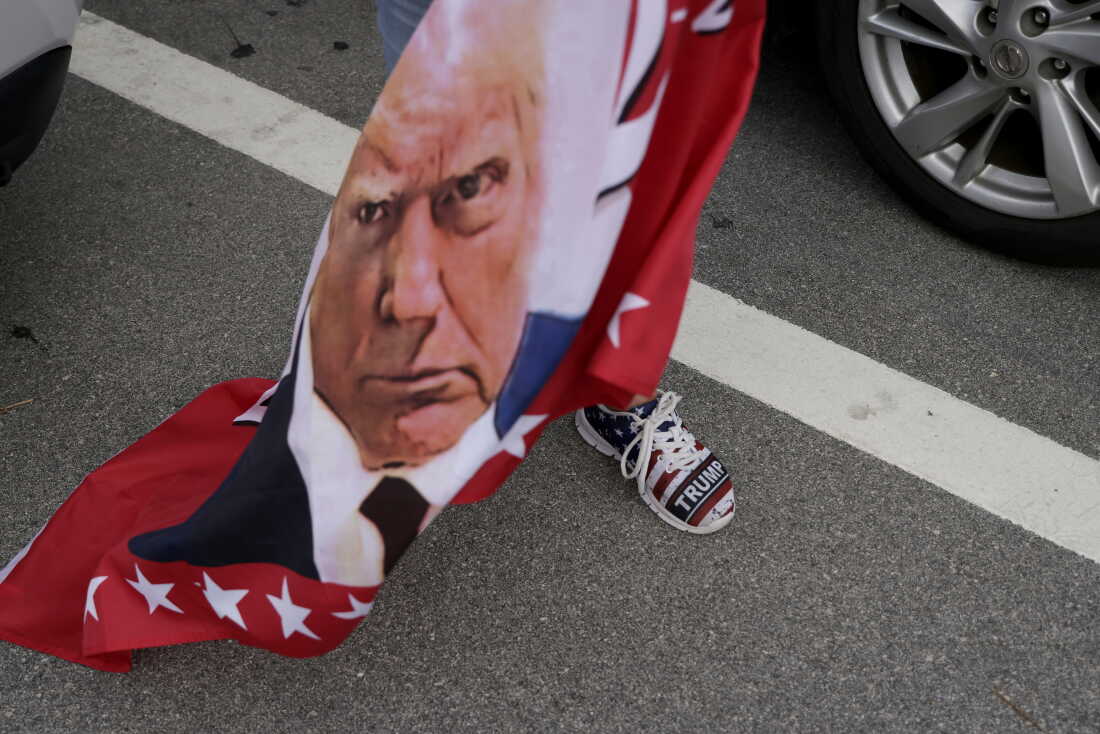
In 2024, a flag displaying Donald Trump waves among his supporters in Mar-a-Lago, Florida. President Trump is again challenging the boundaries of executive power after returning to the White House. On Friday, administration lawyers presented a bold argument before a federal appeals court in Washington: they claimed that papers created in the White House should belong to Donald Trump, not the American people.
This move aligns with actions during Trump’s second term that question limits established post-Watergate. The case may eventually reach the Supreme Court, which currently leans conservative. The Department of Justice recently attempted to invalidate the Presidential Records Act, a law enacted in 1978. Conservative lawyer Michael Edney has criticized the move, viewing it as part of efforts to reduce laws from the Watergate era. Edney commented during a webinar sponsored by the Federalist Society, “This is a story about a post-Watergate, overbroad statutory incursion into the prerogatives of the executive branch.”
Before the 1978 law, presidents had autonomy over their office papers, a practice halted due to conflicts with Richard Nixon. Every president since has adhered to the records law until now. “The Presidential Records Act is unconstitutional and a clear violation of the separation of powers,” White House spokeswoman Lauren Bis asserted.
This reinterpretation follows Trump’s indictment on obstruction charges related to classified document storage at Mar-a-Lago. A judge dismissed the case for technical reasons, and the Department of Justice dropped it after Trump secured reelection.
Concerns Over Public Access to Presidential Papers
Nikhel Sus, chief counsel for Citizens for Responsibility and Ethics in Washington, challenges Trump’s move in court. “If the courts were to accept it… it would mean the people really have no right of access to the president’s papers,” Sus explained. Such a decision would impact archivists, historians, and the American public. Senior Judge John Bates, appointed by George W. Bush, opposed the Trump administration’s position. Bates began his ruling with a quote from George Orwell’s 1984: “Who controls the past controls the future; who controls the present controls the past.” The U.S. Court of Appeals for the D.C. Circuit is reviewing the issue.
The Trump administration argues that maintaining these records burdens the White House and dissuades advisers from having open discussions with the president.
Importance of Record Access for Government Continuity
Former officials stress the necessity of accessing these documents. “Access to records on national security issues of former presidents is vital for government continuity,” said John Bellinger, former legal adviser for George W. Bush’s National Security Council. Bellinger noted that Bush’s team often requested papers from Bill Clinton’s presidency to grasp Clinton’s conversations with leaders and Congress. “Often the only record of what a president has said to a foreign leader… is in a written document,” Bellinger stated, emphasizing that future presidents would face disadvantages without these documents.
Edney, who also served under Bush, suggests Congress could enact a “thoughtful” records preservation law. He considers automatic congressional access and the presumption of public disclosure as “constitutionally problematic” in the current Act. He questions whether watchdog groups have legal standing to challenge Trump. Nonetheless, the Trump administration seems intent on reaching the Supreme Court. “They want this resolved on their terms, with their chosen arguments, in their preferred court,” Edney remarked.