Trump Organization Lawsuit Against Capital One Over Account Closures
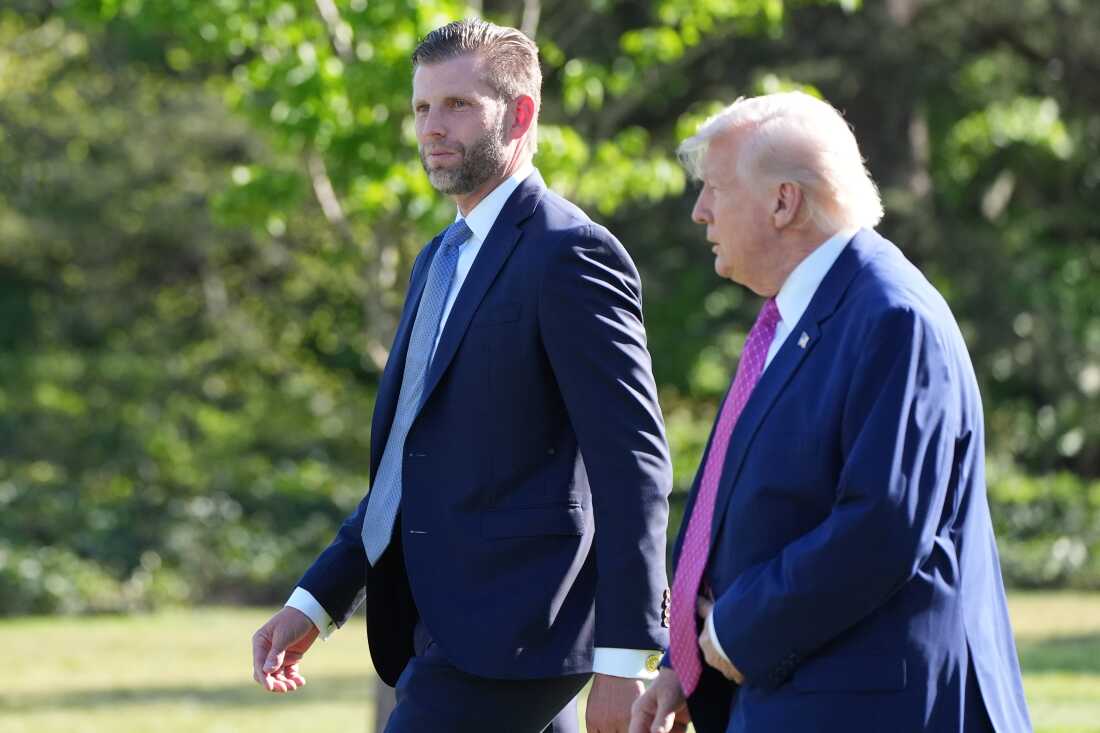
President Donald Trump and Eric Trump were seen departing on Marine One from the White House on April 10, 2026. Meanwhile, Capital One has requested a federal court to dismiss a lawsuit brought by the Trump Organization over the closure of numerous accounts in 2021. The bank states that the shutdowns resulted from an extensive anti-money-laundering review, not a repercussion of the January 6 Capitol riot, as alleged by the Trump businesses.
In a motion to dismiss, filed in a Florida federal court, Capital One’s lawyers argued that both the bank’s own filings and the Trump Organization’s claims demonstrate the accounts were closed for anti-money laundering reasons. The bank explained that the decision was preceded by extensive analysis and scrutiny by its financial-crimes team, which includes employees with substantial law enforcement experience.
However, the documents reveal that the Trump Organization and its affiliates had no chance to address any compliance concerns before the closures. It is unclear if subsequent banks raised similar concerns or how the Trump Organization responded to Capital One’s allegations. The Trump Organization did not immediately comment on the matter.
This lawsuit represents one of several legal skirmishes between Trump-aligned entities and major banks following Trump’s tenure in the White House.
A Years-Long Dispute Over Account Closures
The controversy involves approximately 385 accounts related to the Trump Organization, Eric Trump, and other affiliated businesses, including a winery, bottled-water company, and golf course developer. These accounts were held with Capital One for over a decade before being terminated in mid-2021.
In July, the Trump-affiliated businesses filed an amended complaint, asserting that the closures were politically motivated and not related to financial crime or money laundering. The Trump Organization contends that Capital One aimed to distance itself from Donald Trump post-Capitol riot and created the anti-money-laundering narrative as justification.
Capital One refutes these claims, arguing that the Trump Organization’s theory relies on selective quotations lacking context. The bank asserts its reasoning was valid and confidential, noting that it never publicized account closures and granted the Trump companies ample time and extensions to relocate their funds.
Bank’s Contractual Rights and Legal Position
Capital One’s legal stance emphasizes the bank’s right to close accounts as per its contract, which provides the discretion to terminate any account at any time. The Trump businesses do not dispute this contractual language. Previously, Judge Roy Altman dismissed an earlier version of the lawsuit based on similar contract terms, stating that such decisions cannot be second-guessed in court.
Capital One seeks a permanent dismissal of the new complaint and challenges an additional fraud claim introduced by the plaintiffs in July. The bank’s attorneys argue there was no obligation to elucidate its reasons due to federal banking-secrecy law, which restricts disclosing internal findings.
Secrecy and Public Access
The Bank Secrecy Act also influences a parallel legal dispute over public access to sealed information. In a separate motion, Capital One requested the court to maintain certain exhibits under seal, citing legal protections and confidentiality for customer information and internal processes.
The Trump companies conceded the sealing of account numbers but dispute other redactions proposed by Capital One. Additionally, a similar case against JPMorgan Chase, filed in January regarding account closures during the same timeframe, reflects the ongoing legal challenges faced by Trump-related businesses.
In August, President Trump issued an executive order aimed at halting politically motivated ‘debanking’ practices, which he and other conservatives argue infringe on political expression.
Capital One previously engaged in legal confrontations with Trump in 2019, when he sued the bank alongside Deutsche Bank to prevent them from disclosing his financial records to a congressional inquiry.