Trump’s Economic Message Faces Midterm Challenges
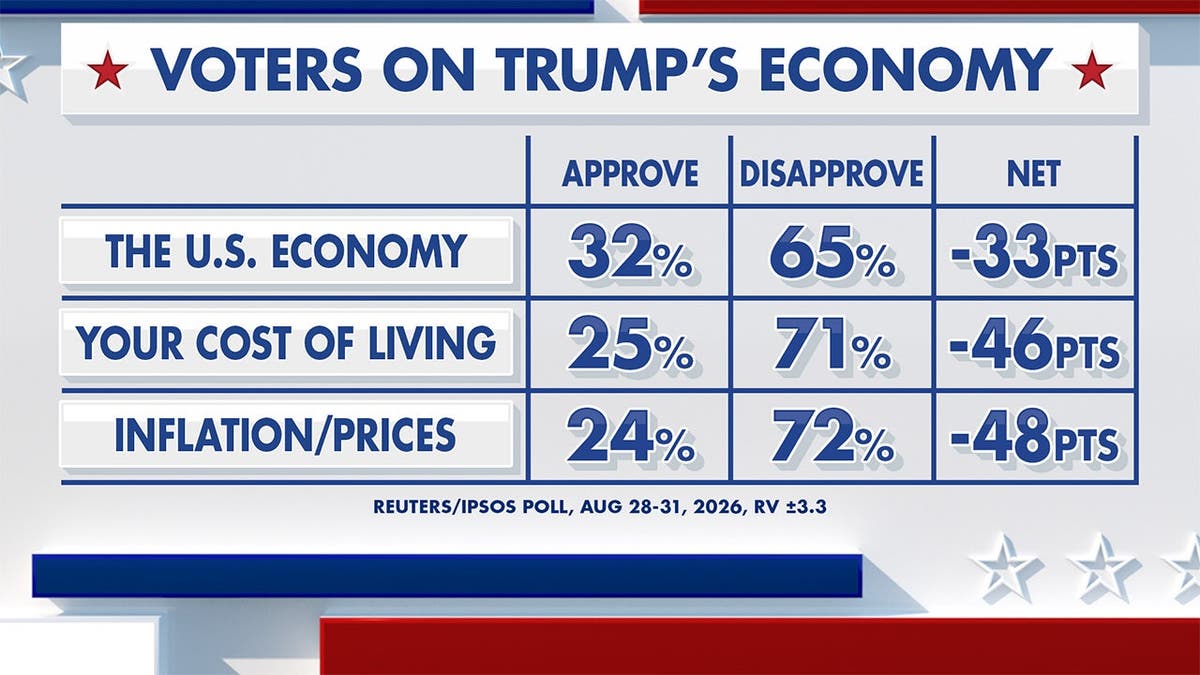
Janelle King, co-chair of Let’s Win for America Action, explored a recent Fox News poll that revealed widespread economic dissatisfaction among voters. While President Trump emphasizes the long-term benefits of his economic policies, voters are feeling immediate financial pressures. King also expressed concerns about the increasing influence of far-left politics in key Midwest primaries, suggesting a shift towards emotional voting.
In less than eight weeks, millions of Americans will choose their next congressperson. Polls indicate that the state of the economy will significantly influence their decisions. The economy stands as the top issue for voters, and many Americans are dissatisfied with it. However, this is not the entire story. History shows that voters consider a range of issues.
The Multifaceted Role of the Economy in Elections
The economy has been central to elections for decades, reinforced by strategist James Carville’s focus on “the economy, stupid.” This focus remains significant in the Trump era, where in recent midterms, 47% of voters in 2022 and 18% in 2018 ranked the economy as their top concern. In 2018, Republicans lost 42 seats, highlighting the importance of related issues like healthcare, which ranked higher that year.
Speaker Hakeem Jeffries recently rejected proposals like Medicare for All, and Fox News Power Rankings continue to assess President Trump’s economic performance. Even when the economy appeared strong in the past, healthcare also played a crucial role in shaping election outcomes.
Diverse Economic Perspectives
Voters have differing views on the economy based on personal experiences. Trump’s economic performance features strong points, such as the creation of 162,000 jobs and stable unemployment. The stock market has grown despite volatility. Nevertheless, only about a third of voters approve of Trump’s handling of the economy.
A July poll showed that only 24% approved of his management of inflation and prices. Rising costs of essential goods have exacerbated dissatisfaction. Democrats aiming for November success target these financial strains and Trump’s low approval ratings.
Voters’ Response to Economic Optimism
During Biden’s presidency in 2022, the economy rebounded, but inflation concerns persistently affected voters. Gas prices and other issues challenged the administration’s messaging. This led to the GOP winning the House after a net loss of nine Democratic seats. Historical data suggest that efforts to paint an optimistic economic picture may face skepticism.
Trump’s current economic approval rating stands at -33 points. Statements from Vice President JD Vance and others draw parallels to previous Biden administration messages, suggesting familiar strategies.
Doubt Over Alternatives
Despite economic dissatisfaction, voters are not fully inclined toward the Democratic alternative. Democratic leaders like Abdul El-Sayed propose policies like Medicare for All, while others focus on modifying Trump’s economic agenda. Voter preference remains evenly split between parties.
House Race Developments
Fox News Power Rankings suggest Democrats are positioned to take the House with 212 seats, compared to the GOP’s 206. However, 17 closely contested seats could sway results. Potential shifts in Missouri and Ohio’s projected GOP seats may affect outcomes.
Missouri and Ohio Predictions
Missouri recently saw a Supreme Court ruling impacting district maps. Ohio’s races witness personal controversies and shifting dynamics, potentially impacting the competitive landscape. With ongoing developments, close monitoring and further adjustments remain possible.
Follow Rémy Numa on Twitter for ongoing political updates.