Viking Age Textile Production Site Unearthed in Denmark
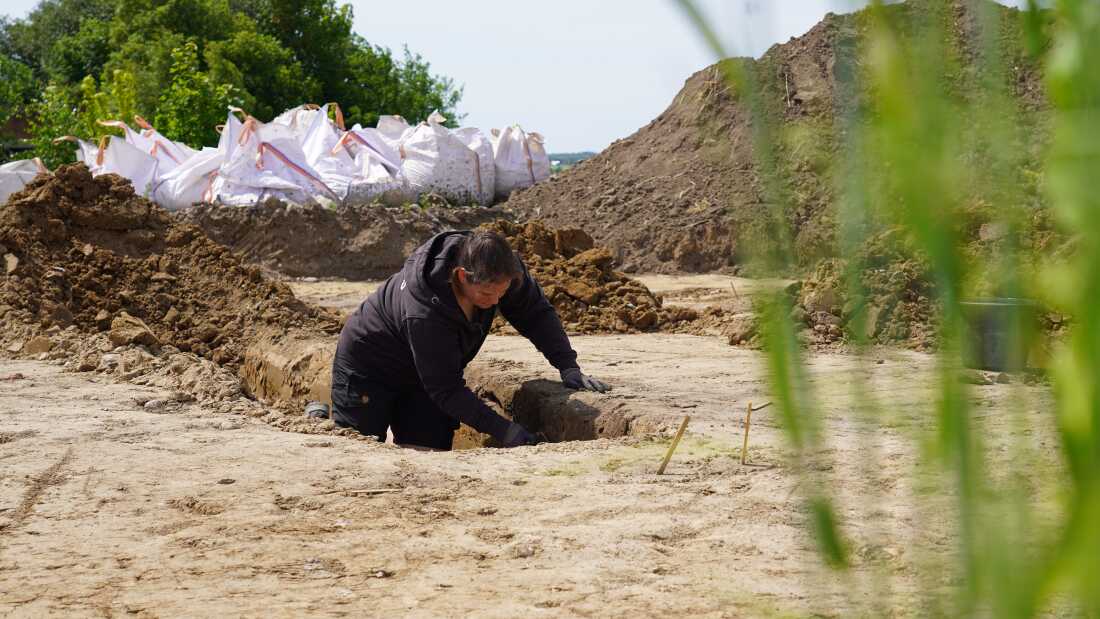
Archaeologists in Denmark have uncovered a Viking Age textile production site that dates back more than 1,000 years, highlighting the complexity of Viking society. Located in Søften, near Aarhus on the Jutland peninsula, this expansive 100,000-square-meter location includes areas dedicated to flax processing and features over 80 pit houses. These semi-subterranean dwellings functioned as workshops and homes.
Dating from the late Iron Age to the early Viking Age between A.D. 600 and 950, the site reveals a distinct focus on textile production, differentiating it from other settlements of the era. Archaeologist Liv Stidsing Reher-Langberg led the 10-month excavation, uncovering numerous artifacts such as spindle whorls and weight looms, providing evidence of the activities carried out in the pit houses. Additional finds include silver coins, glass beads, and pottery.
“We have a clear focus on textile production, which makes this settlement different from other kinds of settlements of this period.” — Liv Stidsing Reher-Langberg
Experts identified dedicated areas for production and crafts within the site. A singular residential home suggests that oversight was exercised by a powerful figure who managed resources and production. Reher-Langberg noted that metal detector enthusiasts had found several silver coins in the area over the past thirty years, sparking interest through a trial excavation conducted 1½ years prior to road and industrial area construction.
Moesgaard Museum historian Kasper Andersen views the Søften discovery as essential to understanding the local economic, cultural, and political framework of the time. During the Viking era, Aarhus, known as Aros, operated as a hub for royalty and international trade. A nearby Viking site in Lisbjerg, likely occupied by nobility members, was discovered last year. It is believed that goods and resources from settlements like Søften were integral to an extensive international trade network.
“When you have a production site of this scale, it cannot be only because of the local area. It needs to be understood as part of a greater network, a much bigger international perspective.” — Kasper Andersen
Reher-Langberg anticipates future carbon dating and pollen analysis to shed light on the specific textile production activities conducted at Søften.
The Viking Age, spanning A.D. 793 to 1066, was marked by Norsemen’s raids, colonization, conquest, and trade across Europe, even extending to North America. Andersen emphasizes that Vikings were far from being merely simple, uncivilized marauders. The scale of production at Søften signals a highly organized society with established production lines and access to broader markets beyond local needs.
“To have a place like Søften, you need a very well-organized society with a production line, and you also need a market to have the production.” — Kasper Andersen
Thus, the textiles from Søften contributed to markets far larger than just the local area.