U.S. Faces Record-Breaking Heat Wave
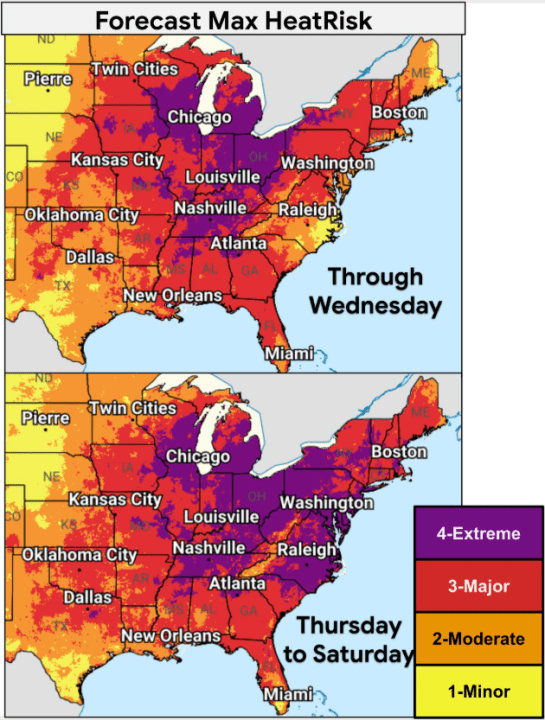
Communities across the central and eastern United States are confronting an intense and potentially dangerous heat wave. The combination of extreme heat and high humidity, just before the July Fourth holiday, poses a significant risk. According to Chief Meteorologist Brian James, the heat index could reach between 105 and 115°F in some areas.
As of Tuesday, the Midwest and South have already experienced heat indices in the triple digits. Cities such as Chicago and Minneapolis recorded temperatures over 100°F. Forecasters are predicting that high temperatures will persist, particularly in the lower Great Lakes, mid-Atlantic, and the Mississippi and Ohio River valleys. Some regions could encounter record highs later in the week, according to meteorologist Bryan Putnam of the National Weather Service (NWS).
Cities hosting events for America’s 250th anniversary will likely experience their highest temperatures this year. This impacts major urban areas like New York, Philadelphia, Washington, and Baltimore, as well as Midwestern spots such as Chicago and Detroit. Southern cities, including Dallas and Memphis, will also endure the intense heat.
National Weather Service projects that several cities will witness daily heat records falling during the days ahead:
- Wednesday: Binghamton, NY (91°F), Cleveland, OH (97°F), Washington Dulles, VA (100°F).
- Thursday: Albany, NY (99°F), Boston, MA (101°F), Newark, NJ (104°F).
- Friday: Baltimore, MD (104°F), Raleigh-Durham, NC (102°F), Richmond, VA (101°F).
- Saturday: Baltimore/Washington International, MD (101°F), Charlotte, NC (100°F), Richmond, VA (102°F).
This extreme weather event results from a ‘heat dome’ causing air to sink and trapping heat. The National Oceanic and Atmospheric Administration (NOAA) explains that this condition leads to minimal cloud formation and limited rain, intensifying surface heat.
The high-pressure system steering the heat wave also diverts storms, reducing the cooling effects of summer thunderstorms. The NWS advises checking on friends and family, especially vulnerable populations such as young children, older adults, and individuals with chronic conditions.
Experts suggest drinking plenty of fluids, taking breaks in the shade, avoiding strenuous outdoor activities, and never leaving children or pets in parked vehicles.