Reflecting on Mission San Juan Capistrano’s Historical Evolution
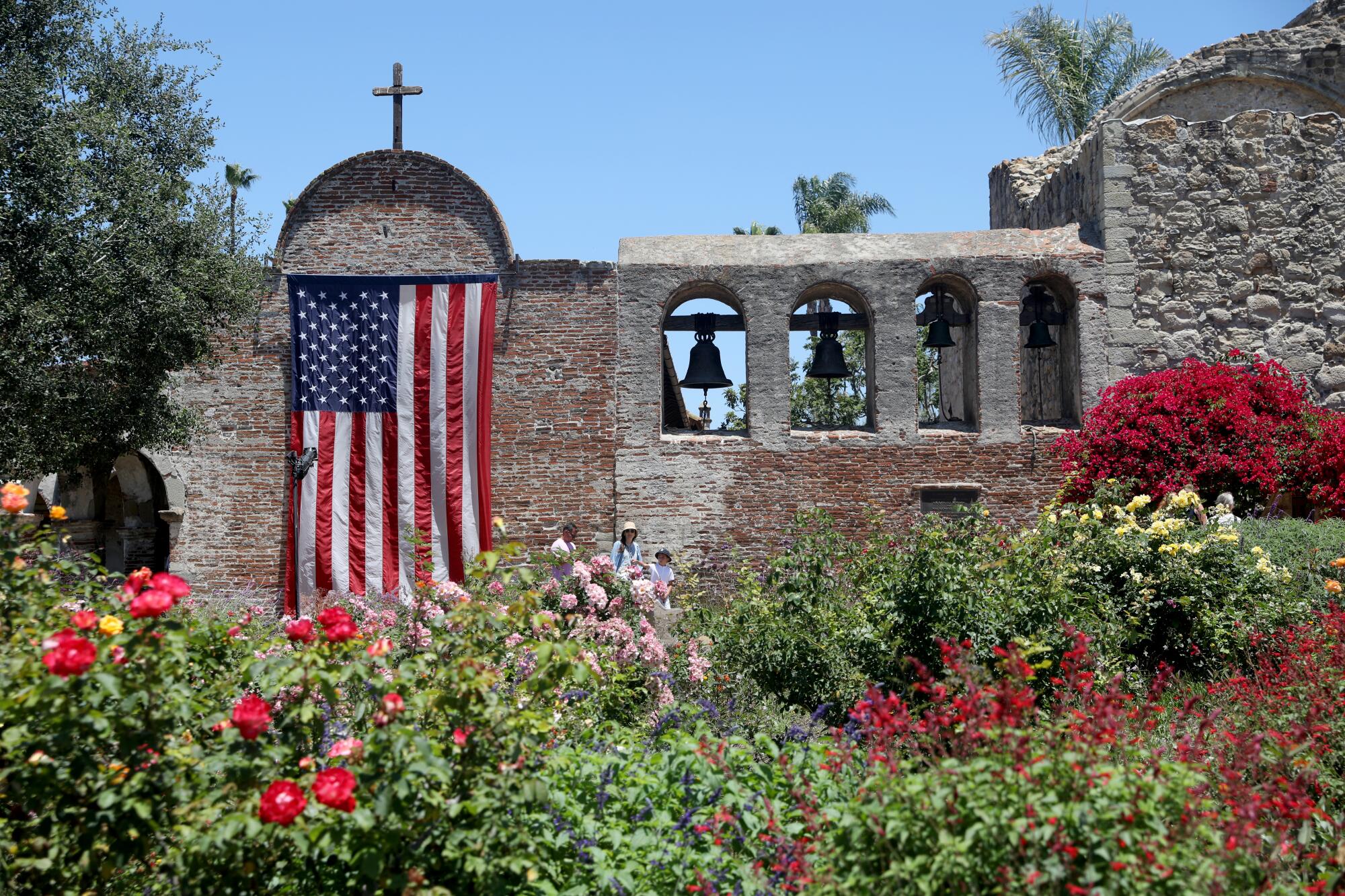
A visit to San Juan Capistrano last month offered a glimpse into both the past and future of the United States. In this city of approximately 35,000, the historical mission stands as a central symbol, embodying the legacy of Old California. Established by the Catholic Church in the 18th and 19th centuries, the mission system laid the foundation for modern California.
San Juan Capistrano represents a part of Orange County that persistently supported President Trump. Walking through downtown, one could see Trump’s influence, with decals and banners celebrating both the mission’s and the nation’s 250th birthdays, a historical period the president seeks to associate with patriotism towards him.
The narratives of Mission San Juan Capistrano reflect the complex history of Orange County, marked by affluence, conservative values, and tensions around immigration. While early visits highlighted a romanticized version of history, contemporary exhibits provide a more nuanced account. The Indigenous Acjachemen people’s existence transformed under colonial forces, as the mission acknowledges its impact.
Historical recounting is not ‘woke’ but it challenges sanitized narratives. New exhibits address environmental impacts and forced cultural changes due to the mission system. Father Junípero Serra, founder of the California mission chain and canonized by Pope Francis, remains a focal point amid historical controversy.
This evolving perspective aligns with a broader push for more truthful national reflections. Acknowledging past mistakes doesn’t diminish love for the country, as seen in personal stories of perseverance despite discrimination, such as those of local families like mine.
Amid demographic changes, Orange County has embraced its diverse identity, no longer reflecting the homogeneous past. The mission tour starkly concludes at the Great Stone Church ruins, a reminder of democracy’s fragility, with lessons gleaned from history essential for preserving stability.
The only way to preserve our republic is to strengthen the pillars of our present with the mortar of our past.
Parallel stories emerge at places like Heritage Barbecue nearby, opened by Danny Castillo. Criticized initially due to his Mexican American heritage, Castillo proudly highlights the diverse team’s culinary success. His venture demonstrates the broader American tapestry, blending cultural and historical insights to unite people over shared experiences.
Castillo, though not partaking in the mission tour, encapsulates its lessons daily in his establishment, emphasizing the American ethos of collective creation. His story reminds us that while solutions remain elusive, continuous efforts lead to progress.