U.S. Intensifies Economic Pressure on Iran with New Sanctions Package
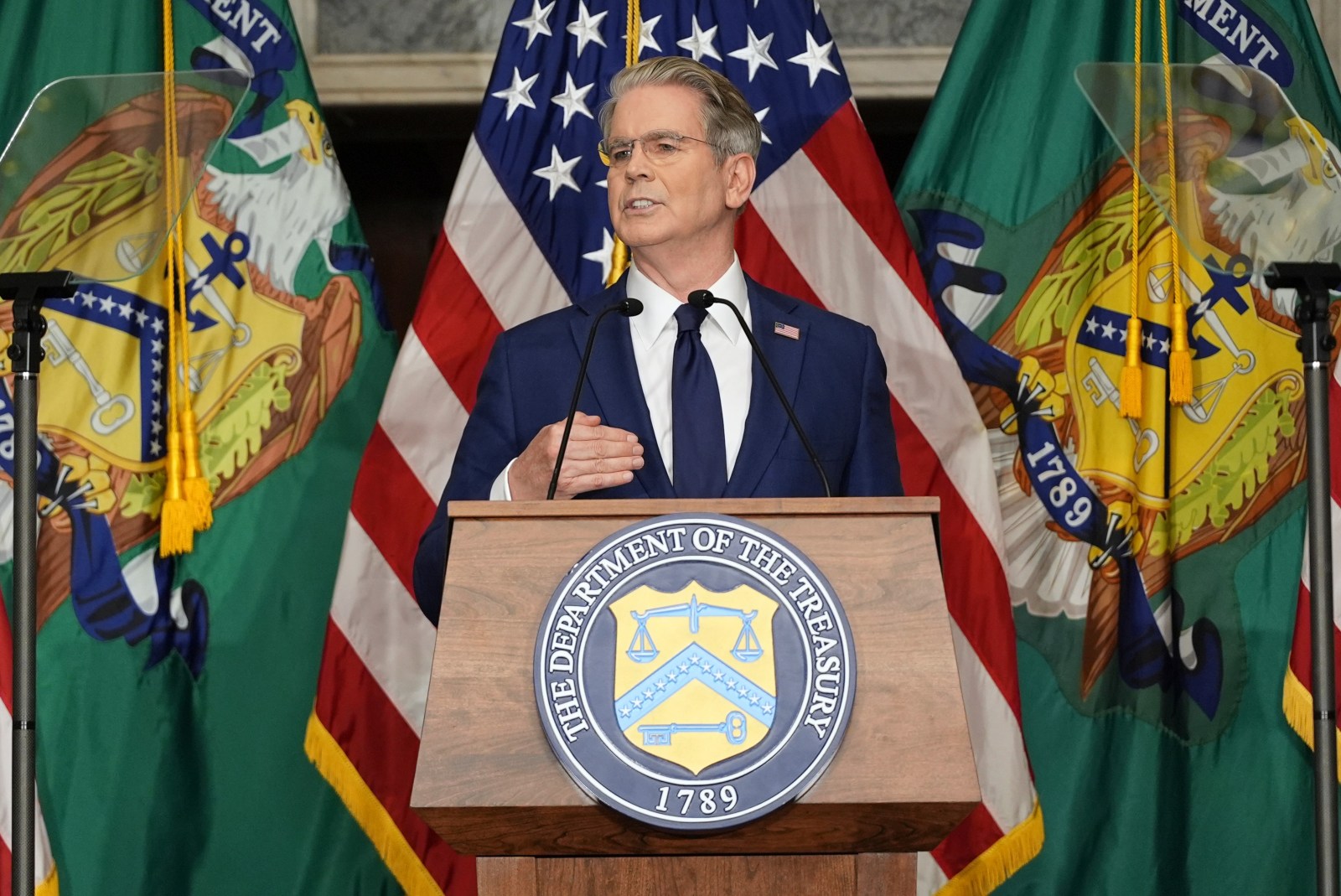
The Trump administration has initiated a new round of economic pressure against Iran, targeting its financial structure extensively. On Monday, a comprehensive set of sanctions, enforcement strategies, and diplomatic efforts were announced, all aimed at weakening Iran’s economic framework. Treasury officials revealed this endeavor, named ‘Operation Economic Outcast,’ which seeks to target countries, companies, and individuals who continue financial engagements with Tehran.
Treasury Secretary Scott Bessent stated, ‘Let there be no ambiguity as to the position of the United States: economic engagement of any kind with this murderous regime will expose those responsible to the full reach of American power,’ during a Monday press briefing. This announcement represents a significant step-up in President Donald Trump’s pressure strategy aimed at Iran, with the goal of increasing the country’s economic isolation amid its battles with inflation, currency challenges, and trade limitations.
Bessent emphasized that the intention is to disrupt every financial lifeline that supports Iran’s government and the Islamic Revolutionary Guard Corps. Analysts, however, perceive a shift in enforcement technique rather than entirely new sanctions. Pierre Pahlavi, a professor at the Canadian Forces College, noted, ‘The label is new; the toolbox is not entirely new,’ via email correspondence with Newsweek. He explained that it is the systematic, robust, and extraterritorial use of legal measures that has changed.
This initiative’s critical focus is on third-country parties that assist Iran in oil trading, financial transactions, and sanctions evasion, potentially increasing pressure on Tehran and the networks sustaining its economy. Iran quickly denounced this move, as Foreign Ministry spokesperson Esmail Baghaei warned of Tehran’s forceful retaliation against any U.S. sanctions expansion. Iran’s newly appointed top security official deemed support of these measures as tantamount to an ‘act of war.’
The latest confrontation follows a series of setbacks for Tehran, including the United Arab Emirates’ decision last week to suspend all trade with Iran.
Despite these measures, Iran leverages the Strait of Hormuz, an essential energy passage, where threats against commercial shipping have significantly affected global energy transit.
Expansion of Sanctions Into Five Strategic Sectors
The administration extended sanctions across five crucial sectors believed vital for Iran’s economic stability: digital assets, technology, gold, aviation, and shipping. This expansion will facilitate sanctions on foreign individuals and entities involved in these spheres within Iran’s economy.
Iran’s utilization of cryptocurrency, gold markets, and international shipping networks to circumvent current restrictions while procuring technology and advocating military efforts was highlighted by Treasury.
Furthermore, as Iran’s currency plummets to a historic low, trading at around 2.02 million to one U.S. dollar, the economic strain deepens.
Prices for staple goods have surged, with rice costing about 60 percent more than before the war and beef prices rising by more than 150 percent.
The International Monetary Fund forecasts a contraction of over 5 percent within Iran’s economy this year.
Nearly 60 Entities, Individuals, and Vessels Sanctioned
The Office of Foreign Assets Control has sanctioned around 60 entities, individuals, and vessels tied to Iranian oil networks, cyber actions, missile development, and procurement schemes. These designations focus on disrupting revenue through companies operating in areas like Hong Kong, the United Arab Emirates, Singapore, and China.
Crackdown on Iran’s Oil Trade and Shadow Fleet
A significant portion of the new measures targets Iran’s petroleum sector and maritime transport networks. Sanctions against brokers, vessels, and companies assisting in transporting Iranian crude oil through shadow fleet operations have been instated. Several identified tankers were reported carrying millions of barrels of Iranian oil despite existing constraints.
Moreover, guidance was issued, advising businesses regarding sanctions risks associated with shipping in the Strait of Hormuz.
Cyber Networks and Weapons Procurement Focus
The sanctions also extend to Iranian cyber actors implicated in compromising U.S. government agencies, critical infrastructure sectors, healthcare, defense contractors, and finance. Individuals linked to Iran’s Ministry of Intelligence and Security were identified for engaging in cyber-based actions against American interests.
Additionally, networks in East Asia and the Middle East involved in acquiring equipment for missile development and nuclear studies through front companies are also targeted.
Warning to Foreign Governments and Businesses
One of the most expansive facets of this initiative centers on third countries. The Treasury has stated that representatives from the Treasury, State, and War departments will engage internationally and establish timelines for ceasing Iran-related operations. Non-compliance could lead to expanded secondary sanctions and exclusion from U.S. financial systems.
This holds special relevance to China, Iran’s largest oil buyer in recent years. Kpler reports that China was the destination for more than 80 percent of Iran’s oil exports in 2025, approximately 1.38 million barrels daily.
China has, however, significantly decreased purchases amidst the U.S.-Israeli conflict onset in February. Imports recorded a decrease to around 785,000 barrels daily in June— a three-year low, although a slight recovery was seen in July before reducing again to about 534,000 barrels daily in August.
Pahlavi told Newsweek that China’s role could prove critical to the success of the campaign.
‘China is the central question,’ he remarked, noting that U.S. pressure could be intensified through sanctions on intermediaries and oil transportation firms. He stressed that significantly reducing Iran’s oil revenue rests on foreign corporations weighing U.S. financial access against Iranian crude discounts.
Treasury’s announcement underscored references to China’s firms and Iranian oil consignments destined for China. Bessent remarked, ‘No one is above the reach of U.S. sanctions,’ targeting any party facilitating transactions contributing to Iran’s economic sustainability.
These measures epitomize one of the Trump administration’s most determined efforts yet to economically isolate Tehran, prompting Iranian officials’ caution that heightened pressure could engender a response.
(Note: This article was updated from earlier reporting to reflect the latest figures for China’s June imports from Kpler, which were higher than previously estimated.)