Mike Noland’s Journey with South Shore Line and Rail Innovations
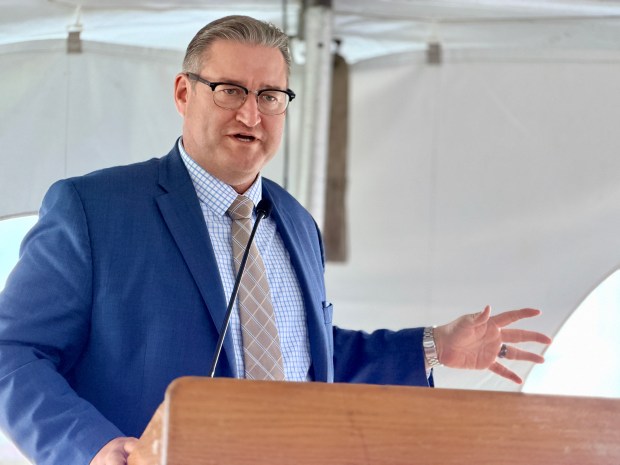
On his second day in the role, Mike Noland attended a public meeting in Munster. He was focused on extending the South Shore Line service from Hammond to Dyer. “The first day of the environmental process for the West Lake Corridor,” Noland, who recently retired as president and general manager of the Northern Indiana Commuter Transportation District, recalled of October 28, 2014, at Munster’s Center for Visual and Performing Arts. Posterboards filled the room, laying out potential routes.
The Regional Development Authority’s (RDA) new 20-year strategic plan proposes further expansion of the commuter rail line. Future stops could include Crown Point, Merrillville, and Valparaiso. Even in retirement, Noland continues to finalize the Monon Corridor project, which started full service on April 1, according to his successor, David Dech.
Noland’s background features vast commuter rail service experience in the Chicago region, including time spent with Metra Electric. “I started at Metra in 1983, early in its development,” Noland shared. Freight railroads were seeking to exit the passenger service business. Traditional commuter systems were financially unsustainable. The Chicago Rock Island and Pacific went bankrupt in 1976, with liquidation following in 1980.
NICTD President David Dech expressed excitement on April 16, 2026, about the groundbreaking for Hammond’s new South Shore Line station and the Monon Corridor service commencement. “Sounds familiar, right? A fiscal cliff?” The formation of Metra, Noland’s career starting point, parallels NICTD’s creation, tasked with managing South Shore Line service. A government agency was formed to fill the void left by the private sector.
This fiscal cliff has contemporary echoes. The Illinois Legislature faced demands for more public transit funds in Chicago this spring. Similarly, the Indiana General Assembly reached a funding agreement with NICTD to boost the South Shore Line service. NICTD agreed to biennial fare increases to manage rising costs after pandemic-related financial strains.
Noland’s career began in the personnel department, now called human relations. He attended law school at night, finishing in 1989. “I must have been doing something right,” he remarked upon becoming chief HR officer at 30. In five years, he advanced to general counsel. Prior to leaving Metra, Noland was second-in-command to troubled CEO Phil Pagano, who tragically took his own life. This led to a shift to Iowa Pacific, a private sector short line railroad. “It was invaluable experience,” Noland commented on his role there.
At Metra, the workforce included 3,000 employees, with 600 in management. The short line model was versatile; even owners participated in day-to-day tasks. “Anything someone needed was your job.” The South Shore Line operates similarly, Noland explained. Kelly Wenger, NICTD’s strategic planning director, manages grants, minority businesses, and Title 6 compliance. Her responsibilities would require a team of 70 at a large railroad, he noted. “You do more with less, and things get done.”
Noland was VP of HR for Iowa Pacific’s European division while it managed U.S. rail operations. Gerald Hanas, Noland’s predecessor, connected him to an executive recruiter in summer 2014. Hanas was integral to NICTD’s history, serving as president for 37 years. He stayed on as a consultant to help guide Noland through NICTD’s institutional history and strategic planning.
Upon reviewing the 20-year service plan, Noland asked, “Why is this a 20-year plan? Let’s go!” He and Hanas initially communicated daily. Now, Noland guides Dech, who is navigating the new complexities. Over time, their interactions are expected to decrease.
Noland’s initial initiative at NICTD was hiring Metra retiree George Hardwich for an external operations perspective. Hardwich generated a comprehensive list of opportunities and challenges after engaging with train crews and passengers. “He was a truthful advisor,” Noland stated.
“Everybody wants on-time trains. It’s a key performance indicator,” Noland emphasized. The railroad had historically added time to schedules to meet this goal instead of resolving underlying issues. “On-time performance and customer satisfaction are vital,” said Noland. Delays were common due to outdated speed restrictions, but adjustments improved efficiency. Raising speeds from 15 to 30 mph increased schedule effectiveness significantly.
Improvements to tracks in East Chicago and Hegewisch removed speed limits to enhance safety and efficiency. This was all before significant infrastructure updates. “The Double Track NWI project inconvenienced passengers,” acknowledged Noland. Installing a second track between Gary and Michigan City reduced wait times, enabling simultaneous train movements.
The Monon Corridor project allowed realignment near Hammond by moving the Hammond Gateway Station three blocks. Although it required removing 60 homes, local governance supported this change. “Not all residents were pleased,” Noland said, “but no lawsuits followed.” These projects necessitated the acquisition of 200 homes.
Effective coordination with Metra remains essential. The initial 14.5 miles of South Shore trains run on Metra tracks. Joint investments in Metra’s Electric system simplified future improvements. A high-level study, shared costs, and actionable data resulted in noticeable service enhancements.
Metra CEO Jim Derwinski identified bridges slowing trains to 50 mph, lower than the 65 mph limit. Noland conducted tests with cameras and proved safe higher-speeds. Consequently, schedule improvements were implemented. Past structural changes, including adding a fourth track, further augmented capacity.
Adjustments permitted more trains per day. Bidirectional signals allowed flexible track use, creating schedule efficiencies. NICTD plans to shift the South Bend station to the west side of the airport. “Eliminating grade crossings boosts federal funding chances,” according to Dech. Few projects achieve 11 to 14-minute travel time savings per train, Noland stated. “We’ve achieved much, yet more remains.”