The Legacy of Jackson Pollock and Lee Krasner: A Partnership in Art
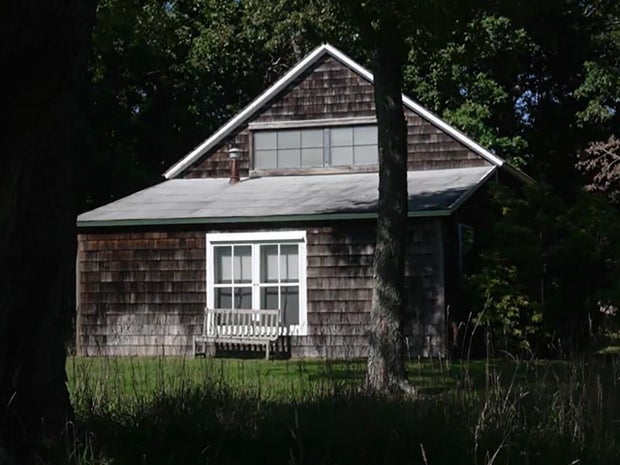
Located in Springs, New York, the Pollock-Krasner House and Study Center marks a spot of artistic revolution. Jackson Pollock and Lee Krasner, renowned Abstract Expressionists, moved here in 1945. Their influence on the art world was significant during this period.
The farmhouse provided both a home and a creative workspace for Pollock and Krasner. Remarkably, the house lacked plumbing and heating upon their arrival. Matthew K. Ward, the Center’s director, noted their choice of isolation to focus on their artwork. Today, managed by Stony Brook University, the house retains its historical authenticity.
Ward revealed Pollock’s custom-made speaker system, adorned with paint—an example of the vibrant life within this creative space.
Krasner worked in an upstairs bedroom offering views of Accabonac Creek. Pollock utilized the barn, his creative methods deemed unconventional. He laid canvases on the floor, employing techniques like pouring and dripping paint. According to Ward, Pollock’s physical style of painting is still palpable through the barn floor.
Pollock’s work radically altered the art scene. In 1949, Life magazine questioned if Pollock was the greatest living painter. Yet, Krasner often remained in his shadow. She gained more recognition with the exhibition “Krasner and Pollock: Past Continuous” at the Metropolitan Museum of Art.
Brinda Kumar, a co-curator, emphasized the concept of “creative adjacency” between Krasner and Pollock. Krasner’s works contrast with Pollock’s, showcasing their artistic dialogue.
Pollock’s origins trace back to Cody, Wyoming, while Krasner hailed from Brooklyn as the daughter of Jewish immigrants. Their connection seemed intriguing to David Breslin, another co-curator. Pollock valued Krasner’s intelligence, while Krasner found a mystery in Pollock’s work.
Breslin acknowledged Krasner’s famous remark: “Unfortunately, I have the fortune of being married to Jackson Pollock.” Their relationship faced challenges, particularly due to Pollock’s drinking and affairs.
Krasner’s career flourished after Pollock’s untimely death in 1956. She pursued large-scale projects, moving into Pollock’s studio. Her works like “Through Blue” reflect her newfound artistic freedom.
Lee Krasner lived on at the Springs house for 28 years after Pollock’s death, committed to preserving his legacy while establishing her own. According to Ward, she envisioned their legacies intertwined.
The exhibition “Krasner and Pollock: Past Continuous” aims to redefine their historical portrayal, asserting Krasner’s equal status in the art world.
“Krasner and Pollock: Past Continuous” remains on display at the Metropolitan Museum of Art, inviting visitors to explore the impact of these two artists.
For further insights, the exhibition catalogue, prepared by David Breslin and Brinda Kumar, offers a comprehensive look into their joint and individual art histories.