Dance Theatre of Harlem’s Impactful Return to Chicago
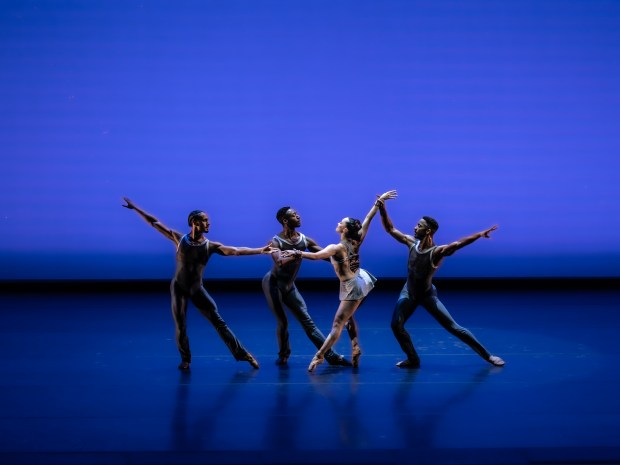
Robert Garland’s ‘Return’ marked a significant moment. It was not only a literal return of the Dance Theatre of Harlem to Chicago after a decade, but also a representation of its rich history and ethos. Garland’s plotless neoclassical funk ballet, first staged in 1999 with music by James Brown and Aretha Franklin, showcased what Garland referred to as ‘all of himself in one place.’ This performance was a central feature of the company’s new season dedicated to North American dance.
The Dance Theatre of Harlem, founded by New York City Ballet principal dancer Arthur Mitchell in 1969, emerged during the civil rights movement. At a time when Black representation in ballet was rare, Mitchell began teaching ballet in a Harlem garage. Despite some advancement in diversity, the American ballet scene has been slow to embrace full integration. George Balanchine’s vision for an inclusive art form remains only partially realized; for instance, only 10% of the New York City Ballet’s roster is Black. Still, Mitchell’s perseverance carved a path, showing that ballet is open to all.
Returning after a financial-induced hiatus that spanned eight years, the Dance Theatre of Harlem’s comeback was highlighted by ‘Return’ in 2014. The company reestablished itself with performances that engaged with social and political themes, returning to Chicago with a substantial following. For many locals, this performance was about witnessing the blend of classical ballet with funk-soul music, as demonstrated by soloists Carly Greene and Micah Bullard. Their movements, surefooted and inspired by varying dance styles, captivated the audience.
The company paired ‘Return’ with Balanchine’s 1960 ‘Donizetti Variations,’ employing European ballet influences alongside vibrant Harlem traditions. Despite the age of some elements in Balanchine’s works, the Dance Theatre of Harlem handled the material with poise and elegance. Kamala Saara and Kouadio Davis delivered notable performances, exemplifying the company’s versatility.
Another highlight was John Taras’ ‘Firebird,’ interpreted through a Caribbean lens. Originally choreographed by Michel Fokine in 1910, and reimagined by Taras in 1982, ‘Firebird’ involved a shift from a Slavic forest to a tropical setting. Geoffrey Holder’s scenic and costume designs, evoking tropical fauna and flora, enriched this vibrant ballet.
The narrative follows a man, performed by Derek Brockington, who receives a feather from the enchanting Firebird, danced by Alexandra Hutchinson. The feather becomes a key element as the man faces danger from Jhaelin McQuay’s character, the Prince of Evil, in his love story involving the Princess of Unreal Beauty, portrayed by Kamala Saara. Hutchinson’s portrayal of the Firebird was both elegant and dynamic, as she invoked the creature’s essence with finesse.
Taras’ ‘Firebird,’ a distinguished piece within the Dance Theatre of Harlem’s repertoire, evokes a sense of timelessness, transcending its 1980s roots. Despite its vintage charm, the performance felt modern, and the ensemble’s execution left a lasting impression. The company’s performance in Chicago highlighted this enduring appeal, showcasing the resilience and evolution of the Dance Theatre of Harlem.
Freelance critic Lauren Warnecke captured this essence perfectly, recognizing the transformative nature of the evening brought to life by the dynamic and talented dancers of the Dance Theatre of Harlem.